

Key Points:
- There is a recognized link between colitis and autism, with children on the autism spectrum experiencing gastrointestinal issues, including IBD.
- Research suggests that inflammation and immune system abnormalities may be factors contributing to both autism and inflammatory bowel disease.
- ABA therapy can help address behavior issues associated with autism, including those triggered by gastrointestinal distress, offering support for families dealing with both conditions.
Autism spectrum disorder (ASD) is a developmental disorder that impacts an individual’s skills in relation to social interaction, behavior, and communication. While the primary features of autism are well known, research has also highlighted that up to 69% of individuals with autism experience gastrointestinal (GI) issues, such as colitis, a type of inflammatory bowel disease (IBD).
The connection between colitis and autism has sparked interest among medical professionals, as these co-occurring conditions can complicate the management of autism. In this article, we will explore the potential link between autism and inflammatory bowel disease, the symptoms of both conditions, and how they intersect in children with ASD.
Is There a Link Between Autism and Colitis?
Yes, there appears to be a connection between colitis and autism. Children with autism may be more likely to experience gastrointestinal issues, including colitis, compared to the general population. Inflammatory bowel diseases, such as ulcerative colitis and Crohn’s disease, are more common in children with autism, although the reasons behind this connection are still being explored.
One possibility is that the immune system and inflammation play a role in both conditions. It’s believed that some children with autism may have an immune system that functions differently, potentially leading to both behavioral and gastrointestinal symptoms.
The underlying causes of the connection between colitis and autism are complex and involve factors such as genetics, environmental influences, and gut microbiota imbalances.

What Causes the Link Between Autism and Inflammatory Bowel Disease?
The relationship between autism and colitis is not yet fully understood, but there are several theories that researchers are exploring to explain this connection. Some possible explanations include:
1. Immune System Dysregulation
In both autism and inflammatory bowel disease, the immune system plays a crucial role. In people with autism, there may be an overactive or dysregulated immune response that affects brain development and function. Similarly, in individuals with colitis, the immune system attacks the lining of the gastrointestinal tract, leading to inflammation.
These immune system abnormalities may contribute to the development of both autism and inflammatory bowel disease, although more research is needed to confirm this theory.
2. Gut-Brain Axis
The gut-brain axis refers to the communication network between the gut and the brain. Gut microbiota—the community of microorganisms living in the digestive system—can influence brain function and behavior.
Children with autism often have an imbalance in their gut microbiota, which may contribute to gastrointestinal issues like colitis. This imbalance in gut bacteria may also affect how the brain processes sensory information and emotional regulation, potentially exacerbating both gastrointestinal and behavioral symptoms.
3. Genetic Factors
There may also be a genetic component to the link between colitis and autism. Certain genes involved in immune function and gut health may predispose children to both conditions.
For example, mutations in genes related to immune system function, such as those involved in inflammation, could make an individual more susceptible to both autism and inflammatory bowel disease.
7 Symptoms of Colitis and Autism in Children
When autism and inflammatory bowel disease co-occur, it can be challenging for parents to differentiate between symptoms of each condition. Both disorders can cause behavioral and physical symptoms, but there are distinct signs that parents can watch for.
Symptoms of autism include:
1. Communication Difficulties
Children with autism may struggle with verbal and nonverbal communication, including difficulty making eye contact, understanding social cues, or using speech. These challenges can affect how they express themselves and connect with others.
2. Repetitive Behaviors
Behaviors like hand-flapping, repetitive speech, or rigid routines are common in children with autism. These actions often provide comfort or predictability in their daily environment.
3. Sensory Sensitivities
Many children with autism experience heightened sensitivities to lights, sounds, textures, or other sensory stimuli. These sensitivities can lead to discomfort or strong reactions in certain settings.
4. Social Skills
Difficulty with social interaction, including making friends or understanding social norms, is a hallmark of autism. This can make group settings and peer relationships especially challenging.
Symptoms of Inflammatory Bowel Disease (IBD) and Colitis include:
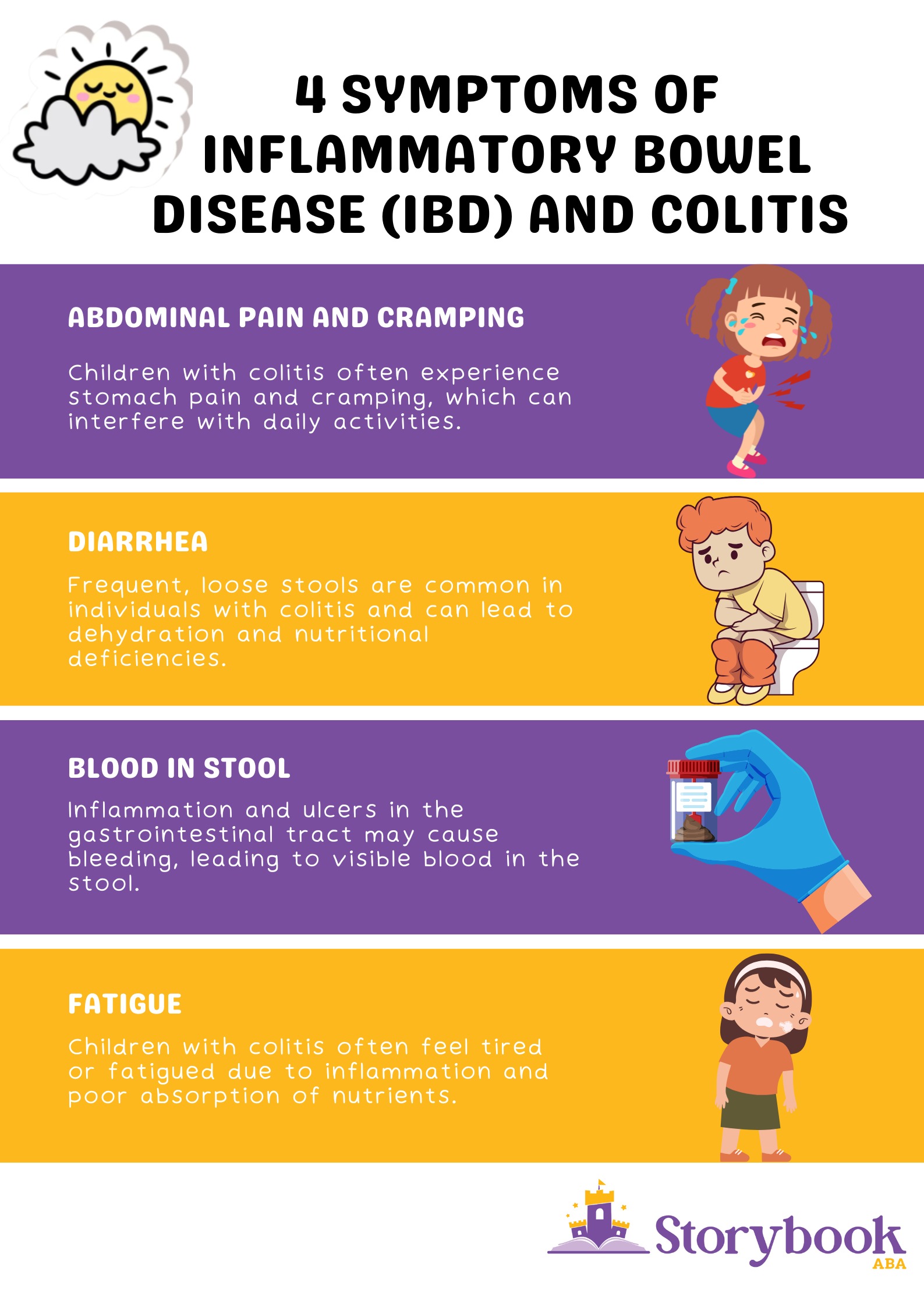
Overlapping symptoms of autism and colitis include:
5. Irritability and Discomfort
Children with both autism and colitis may experience irritability due to physical discomfort from gastrointestinal distress or emotional regulation difficulties.
6. Sleep Disruptions
Both autism and IBD can cause sleep disturbances, whether due to discomfort, pain, or sensory sensitivities.
7. Changes in Appetite
Children with autism and colitis may exhibit changes in eating habits, either refusing to eat due to sensory sensitivities or avoiding food due to stomach pain.
Bruxism—teeth grinding or jaw clenching—is another condition that often overlaps with autism and, like colitis, may be linked to underlying sensory or neurological factors. To better understand this connection and explore practical treatment options, check out our article, “Is Bruxism a Sign of Autism? Causes and Treatments Explained.”
How Can Parents Manage Both Autism and Colitis?
Managing both autism and colitis can be challenging, but there are strategies parents can use to improve their child’s quality of life. It’s essential to address both the physical and behavioral symptoms to help the child feel more comfortable and supported. Below are some tips to consider:
1. Work with Medical Professionals
It’s crucial to have a team of healthcare providers involved in the child’s care, including pediatricians, gastroenterologists, and specialists in autism.
Medical professionals can help develop a treatment plan for managing colitis symptoms, such as anti-inflammatory medications or dietary changes, while also addressing autism-related concerns. Regular checkups and monitoring can ensure that both conditions are being appropriately managed.
2. Implement Dietary Changes
Diet plays an important role in managing both autism and inflammatory bowel disease. Many children with autism have food sensitivities or restrictive eating habits, which can make managing colitis more difficult.
Working with a nutritionist or dietitian can help ensure that the child is getting the right nutrients while avoiding foods that trigger gastrointestinal flare-ups. A gluten-free, casein-free diet is sometimes recommended for children with autism, and it may also help reduce inflammation in the gut for those with colitis.
3. Consider Behavioral Interventions
Since both autism and colitis can impact a child’s behavior, early interventions can be highly beneficial. Applied Behavior Analysis (ABA) therapy is one of the most effective treatments for managing behavioral symptoms in children with autism.
ABA therapy focuses on teaching new skills and reinforcing positive behaviors while reducing challenging behaviors. This can help children manage stress, anxiety, and irritability related to both autism and gastrointestinal issues.
4. Promote Emotional Regulation
Children with autism may struggle with emotional regulation, which can be exacerbated by the discomfort of colitis. Helping the child develop coping strategies, such as deep breathing exercises or relaxation techniques, can reduce anxiety and emotional distress. A calm and structured environment can also promote emotional well-being and reduce behavioral outbursts.
Get the Support You Need with ABA Therapy
If your child is struggling with both colitis and autism, Storybook ABA offers ABA therapy programs in Maryland and Virginia that can help improve communication, reduce behavioral challenges, and support emotional regulation.
Our team works with families to develop customized therapy programs tailored to each child’s needs, taking into account both the behavioral aspects of autism and the physical symptoms of colitis.
If your child is facing challenges with both behavioral and gastrointestinal symptoms, our team of experienced therapists can provide the support and care needed to improve their quality of life.
Contact us today to learn more about how ABA therapy in Maryland and Virginia can benefit your child and your family.