

Key Points:
- Bruxism—the grinding or clenching of teeth—can be a common behavior in children with autism, but it isn’t exclusive to those on the spectrum.
- The causes of bruxism in autism are multifaceted and may involve anxiety, sensory sensitivities, and other underlying factors.
- Effective treatments for bruxism include behavioral strategies, relaxation techniques, and sometimes dental interventions.
Studies indicate that approximately 57.5% of autistic children engage in some form of tooth grinding. Bruxism, or the habitual grinding or clenching of teeth, is a common issue that many children face.
However, for parents of children with autism, bruxism can sometimes become a more noticeable or disruptive behavior. While it’s not exclusive to autism, children with autism may be more likely to experience bruxism compared to their neurotypical peers.
The link between bruxism and autism is complex, and understanding why children on the spectrum grind or clench their teeth can help parents find effective ways to manage this behavior.
This article will explore the potential causes of bruxism in children with autism, how it relates to other symptoms of autism, and, most importantly, strategies for treatment. Understanding bruxism and its causes will help ensure that children with autism get the care they need to manage their behaviors.
Is Bruxism a Sign of Autism?
Yes, bruxism can be a sign of autism. Children with autism are more likely to exhibit bruxism behaviors than their typically developing peers. While bruxism is not exclusive to autism, it is prevalent in many children on the spectrum. The underlying causes of this condition can be varied and complex, often related to anxiety, sensory sensitivities, or even physical discomfort.
It’s important to note that bruxism isn’t necessarily a diagnostic feature of autism, but it can be a common co-occurring issue. Understanding why it occurs in children with autism can help caregivers and professionals develop strategies to manage the behavior more effectively.
What Causes Bruxism in Children with Autism?
Understanding the causes of bruxism in children with autism can help parents address the behavior. Bruxism is often triggered by a combination of psychological, physiological, and environmental factors. Here are a few key factors that may contribute to bruxism in children with autism:
1. Anxiety and Stress
One of the primary triggers for bruxism in children with autism is anxiety. Many children on the spectrum experience heightened levels of anxiety, whether due to sensory overload, social challenges, or difficulty with transitions. When a child feels overwhelmed, they may clench or grind their teeth as an unconscious coping mechanism.
2. Sensory Sensitivities
Children with autism often have sensory processing difficulties, which means they may be hypersensitive to certain stimuli. For instance, some children are sensitive to noise, textures, or visual stimuli. These sensitivities can lead to increased stress, which might manifest as bruxism. Additionally, some children might grind their teeth as a way to self-regulate or cope with overwhelming sensory experiences.
3. Neurological Factors
Bruxism can also stem from neurological factors, including issues with the brain’s motor control and coordination. Children with autism may have motor planning difficulties, and grinding their teeth could be a result of that. It might also be linked to other neurological issues, such as sleep disturbances or irregularities in brain chemistry, that can contribute to clenching or grinding.
4. Physical Discomfort
Some children with autism may have difficulty communicating when they’re experiencing discomfort or pain. Issues like tooth or jaw misalignment, or other undiagnosed physical concerns, can cause children to grind their teeth. Bruxism may, in these cases, be a sign that the child is trying to self-soothe due to underlying pain.
How Can Parents Identify Bruxism in Children with Autism?
Identifying bruxism in children with autism is crucial to ensuring proper management. Parents should be aware of the signs and symptoms of bruxism, which may include:
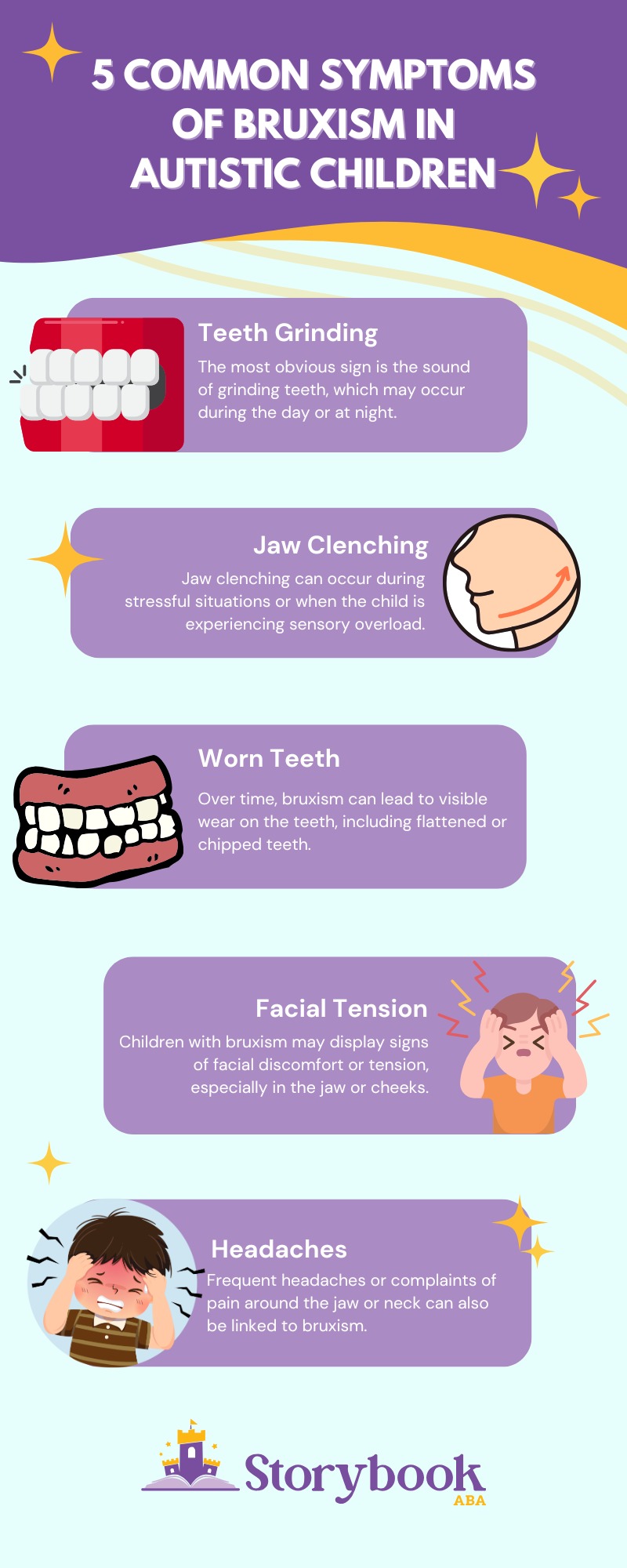
If parents notice any of these signs, it’s important to consult with a healthcare professional or a pediatric dentist. The dentist can help assess the damage to the teeth and determine if bruxism is a cause for concern.
Bruxism—chronic teeth grinding or jaw clenching—is just one of many co-occurring conditions individuals with autism may experience. Another important but often overlooked concern is how epilepsy can intersect with autism and impact overall health outcomes. If you’re interested in understanding the broader picture, including how epilepsy may influence life expectancy in individuals with autism, be sure to read our article, “Epilepsy and Autism Life Expectancy: What You Need to Know.”
How to Treat Bruxism in Children with Autism
Treating bruxism in children with autism requires a multi-faceted approach, as it may involve addressing underlying anxiety, sensory sensitivities, or physical discomfort. Here are several effective treatment options:
1. Behavioral Interventions
Since bruxism is often linked to stress or anxiety, behavioral interventions can be extremely effective. Applied Behavior Analysis (ABA) therapy is one of the most widely used methods to address undesirable behaviors in children with autism.
A trained behavior therapist can work with your child to identify triggers for bruxism and teach coping mechanisms to manage anxiety and stress.
ABA therapy may involve reinforcing relaxation techniques, teaching alternative behaviors, and providing positive reinforcement for not engaging in teeth grinding. This is especially helpful for children who engage in bruxism due to emotional regulation difficulties.
2. Relaxation Techniques
Since anxiety is a significant trigger for bruxism, helping children manage their stress through relaxation techniques can be beneficial. Techniques such as deep breathing, progressive muscle relaxation, and guided imagery can help reduce overall stress levels and prevent teeth grinding.
3. Dental Interventions
For children with more severe bruxism, a pediatric dentist may recommend the use of a mouth guard or night guard to protect the teeth from further damage. This can be especially helpful for children who grind their teeth at night.
The mouth guard prevents tooth wear and alleviates jaw tension caused by bruxism. In some cases, a dentist may also evaluate the child’s bite or tooth alignment to ensure that there are no underlying dental issues contributing to the behavior.
4. Sensory Integration Therapy
For children with autism who experience sensory sensitivities, sensory integration therapy may help. This type of therapy is designed to help children process sensory information more effectively.
It can reduce sensory overload and minimize the anxiety that often leads to bruxism. Sensory integration therapy involves activities that focus on the child’s sense of touch, hearing, sight, and movement to help them better regulate their responses to sensory stimuli.
5. Medication
In some cases, medication may be prescribed to help manage underlying conditions contributing to bruxism. For example, anti-anxiety medications can help reduce stress, while muscle relaxants may help alleviate jaw tension. It’s essential to work closely with a pediatrician to determine whether medication is appropriate for your child’s specific needs.
Take the First Step Toward Positive Change with ABA Therapy
If your child is struggling with bruxism or other autism-related behaviors, Storybook ABA offers ABA therapy in Maryland and Virginia to help address both behavioral and sensory challenges. Our experienced team works with children to develop personalized plans that target problem behaviors, including bruxism, while teaching more positive ways of coping with stress and anxiety.
If you are looking for personalized support to help your child manage their behavior, our team is here to help. Contact us today to learn how our ABA therapy in Maryland and Virginia can support your child’s development and well-being. We are committed to helping children on the autism spectrum live happier and more fulfilling lives.