

Key Points:
- Autism tics in adults are less studied but are becoming a focus of research, highlighting the connection between tics and autism spectrum disorder (ASD).
- Tics in adults with autism may manifest differently than in those without ASD and can affect daily life, relationships, and well-being.
- ABA therapy can be effective in helping adults manage tics and other related challenges of autism.
Autism spectrum disorder (ASD) is often associated with its hallmark symptoms of social communication difficulties and repetitive behaviors. However, research indicates that about 18.4% of adults with autism may also experience tics, which are sudden, repetitive movements or sounds. These tics, which are often linked with other neurological conditions like Tourette syndrome, can complicate the daily lives of those with autism.
While much of the focus of autism research has historically centered on children, increasing attention is now being given to how autism affects individuals as they age.
The autism tics in adults can often be underrecognized or misunderstood, making it essential to explore the unique connection between tics and autism in adulthood. This article will dive into what tics are, how they manifest in adults with autism, and how interventions, such as ABA therapy, can help improve quality of life.
What Are Tics and How Do They Relate to Autism?
Tics are sudden, involuntary movements or sounds that can be repeated many times. In some cases, these tics can be simple, like blinking or throat clearing, while in others, they might involve more complex behaviors like jumping or vocalizing words. The exact cause of tics is not fully understood, but they are believed to be connected to neurobiological factors that affect the brain’s motor control systems.
For adults with autism, tics are often a more significant concern than for the general population. Adults with autism may be at a higher risk of developing tics compared to those without the condition.
This connection could be because of the neurological and sensory processing differences seen in autism. Tics in adults with autism may also evolve over time and vary in their intensity and frequency.
Understanding autism tics in adults requires recognizing that these movements or sounds can sometimes be exacerbated by stress, anxiety, or sensory overload—common experiences for individuals with ASD. In fact, the presence of tics might be more noticeable in adults with autism when they are in high-stress environments or during situations that require social interaction.
What Are the Different Types of Tics in Adults with Autism?
Not all tics are the same, and the nature of autism tics in adults can vary greatly. Some adults may have only mild tics, while others may experience more noticeable and disruptive behaviors. Understanding the different types of tics is crucial to addressing them effectively.
Here are the most common types of tics observed in adults with autism:
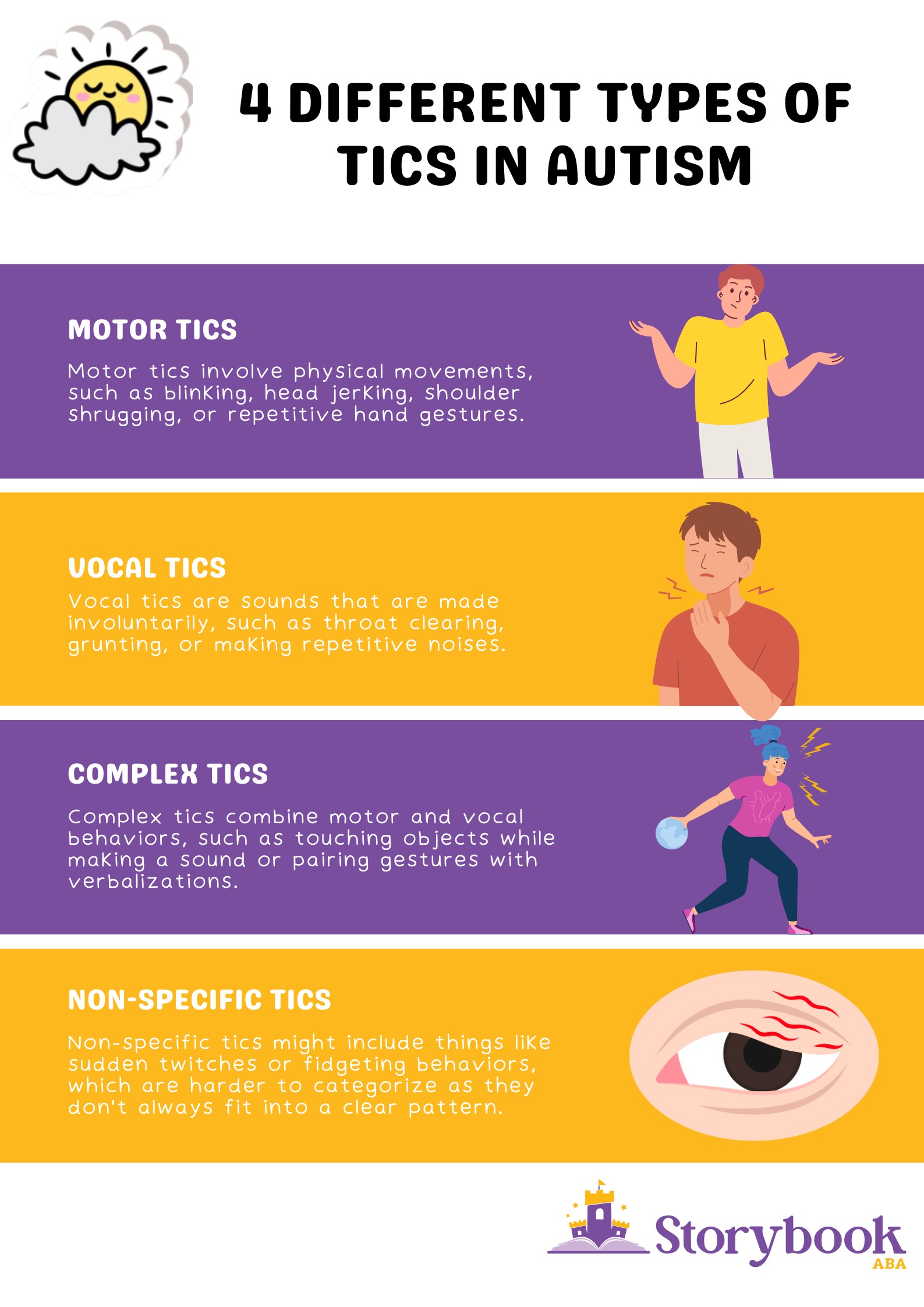
4 Causes of Tics in Adults with Autism
The exact cause of tics in adults with autism is not fully understood, but several factors may contribute. Understanding these factors is essential for managing and addressing tics in those with ASD. Below are some of the most common causes:
1. Neurological Differences
Autism affects brain development and neurobiology, which can contribute to motor control issues, including tics. Abnormalities in areas of the brain responsible for movement regulation, such as the basal ganglia, have been implicated in both tics and autism.
These neurological differences can result in tics as a secondary symptom of autism, particularly in individuals with more significant sensory and motor challenges.
2. Genetic Factors
Genetics also plays a role in the development of tics. Some adults with autism may have a genetic predisposition to develop tics, similar to how individuals with Tourette syndrome can have a hereditary component.
3. Sensory Sensitivities
Many individuals with autism experience heightened or decreased sensory sensitivities. These sensory differences can trigger tics as a form of self-regulation or release of pent-up tension. For example, certain environmental factors like loud noises, bright lights, or even certain textures may lead to an increase in tics.
4. Social Anxiety and Stress
Social anxiety and stress are common in adults with autism, which can trigger or exacerbate tics. The pressure of social interactions, workplace environments, or other high-stress situations can lead to an increase in both motor and vocal tics.
The difficulty with social communication and the need to navigate complex social norms can result in heightened stress levels, which may cause tics to become more frequent or intense.
How Can Tics Be Managed in Adults with Autism?
Managing autism tics in adults requires a comprehensive approach that takes into account the individual’s sensory sensitivities, stress levels, and neurological differences. Fortunately, there are several strategies and therapies available that can help manage tics and improve quality of life. Below are some examples:
1. ABA Therapy
ABA therapy (Applied Behavior Analysis) is one of the most effective treatments for addressing the challenges of autism. ABA can help adults with autism learn strategies to reduce tics and increase social skills.
Through structured interventions, ABA therapists can work with individuals to identify triggers for tics and develop coping strategies, like relaxation techniques or sensory breaks, to help minimize their impact.
2. Cognitive Behavioral Therapy (CBT)
Cognitive Behavioral Therapy is another therapeutic approach that can help individuals manage stress and anxiety, which are often triggers for tics. CBT focuses on changing negative thought patterns that contribute to anxiety and developing healthier coping mechanisms.
CBT can be particularly helpful for individuals with autism who experience heightened stress in social situations or during times of change.
3. Medication
In some cases, medications may be prescribed to help manage tics. Medications such as antipsychotics, muscle relaxants, or stimulants may help reduce the severity or frequency of tics. However, medications should always be considered alongside behavioral interventions and should be closely monitored by a healthcare provider.
4. Sensory Integration Techniques
Since sensory sensitivities can play a role in triggering tics, sensory integration techniques can be beneficial. Occupational therapists may work with adults with autism to help them develop strategies to manage sensory overload and reduce the likelihood of tics.
If you’re interested in learning more about subtle or often overlooked traits on the spectrum, check out our article, “5 Secondary Autism Symptoms in Teens You May Not Have Noticed.” It offers insight into lesser-known behaviors that can help deepen your understanding beyond primary diagnoses.
Take the First Step Toward Positive Change with ABA Therapy
If you are an adult with autism or have a loved one who struggles with autism tics, Storybook ABA offers effective ABA therapy in Maryland and Virginia to address these challenges. Our experienced team provides tailored interventions that help reduce tics, manage sensory sensitivities, and improve overall well-being.
ABA therapy can provide you with the tools and strategies necessary to manage autism-related tics and enhance your quality of life. Reach out to us to learn how we can support you or your loved one on their journey toward a more fulfilling life.