
Discover the Best Vitamins and Supplements That Support Autism

Key Points:

  • Certain vitamins and supplements for autism may help improve common symptoms like irritability, sleep problems, and nutrient deficiencies.
  • Nutrients such as omega-3s, magnesium, and vitamin D have shown promising roles in supporting children with autism spectrum disorder (ASD).
  • Supplements should not replace professional care and should be considered part of a comprehensive support plan that includes behavioral therapies.

Children with autism spectrum disorder (ASD) often face a variety of challenges, with studies indicating up to 86% of individuals with autism experiencing at least one form of comorbid condition.


While Applied Behavior Analysis (ABA) therapy remains a gold-standard approach in managing ASD, many parents also explore dietary strategies to support their child’s development. This includes the careful use of vitamins and supplements for autism to help address common nutrient deficiencies and support neurological function.


In this article, we will explore how certain vitamins and supplements may help support children with autism, alongside their ongoing therapy and treatment. With proper guidance from healthcare professionals, many families find that targeted supplementation can enhance their child’s well-being and development. 


Vitamins and Supplements for Autism: Do They Help?

Yes, certain vitamins and supplements for autism may offer benefits when used appropriately alongside behavioral therapy and medical care. Research suggests that children with autism often have nutrient deficiencies or imbalances that, when addressed, may improve mood, sleep, focus, and even reduce irritability. 


However, no supplement alone is a cure for autism, and results can vary depending on individual needs and coexisting conditions. The goal of supplementation in autism care is to support the body’s natural processes—such as brain development, neurotransmitter function, and immune health—by filling nutritional gaps that may be present due to restrictive diets or metabolic differences.


Why Do Children with Autism Need Nutritional Support?

Many autistic children are selective eaters with some displaying feeding difficulties, including preferences for limited textures or types of food. This can lead to nutrient deficiencies that affect energy, cognition, and behavior.


In addition to restricted diets, children with autism may have:

  • Gastrointestinal (GI) issues that impair nutrient absorption
  • Increased oxidative stress requires  more antioxidants
  • Altered metabolism affecting vitamin B6, folate, or others


These biological factors make autism supplements not just helpful but sometimes necessary to support development and quality of life.


What Vitamins Are Good for Autism?

Certain vitamins are commonly used in autism management due to their potential to support various aspects of health and development. These vitamins are often recommended to help address common deficiencies and to improve neurological function, mood, and overall well-being. Below are some of the most common ones and the roles they play:


1. Vitamin B6 with Magnesium

Vitamin B6 helps regulate neurotransmitters like serotonin and dopamine, which are often implicated in autism-related behaviors. Magnesium supports calming effects and enhances B6 absorption.


2. Vitamin D

Vitamin D supports brain development, immune function, and mood regulation. Studies have found that many children with autism have low vitamin D levels.


3. Vitamin C

Vitamin C acts as a potent antioxidant and supports neurotransmitter production. It may reduce oxidative stress, which is commonly elevated in children with ASD.


4. Folate and Methylated B Vitamins

Folic acid, especially in its methylated form (like methylfolate), supports DNA synthesis and detoxification. Some children with autism have gene mutations (MTHFR) that affect folate metabolism.


What Are the Best Supplements for Autism Beyond Vitamins?

Beyond basic vitamins, several other nutritional supplements for autism have been reported to support various aspects of a child’s health and development. These supplements can help address specific needs, such as improving gut health, promoting better sleep, and enhancing cognitive function. Below are some examples:


1. Omega-3 Fatty Acids (DHA and EPA)

Omega-3 fatty acids are essential for brain development and function. They may help improve mood, focus, and hyperactivity, supporting children with autism in managing some behavioral challenges and enhancing cognitive abilities.


2. Probiotics

Gut health plays a key role in overall well-being, especially in children with autism who often face digestive issues. Probiotics help balance gut bacteria, which may support better digestion and contribute to improvements in mood and behavior.


3. Melatonin

Sleep problems are common in children with autism, affecting their mood and daily function. Melatonin can help with sleep onset and quality, leading to better sleep and potentially reducing irritability and improving focus.


4. Zinc

Zinc supports immune function and cognitive health, both of which are important for children with autism. Ensuring adequate zinc levels can help with focus, behavior, and even food preferences in children with picky eating habits.


5. L-Carnitine

L-Carnitine plays a role in energy production, which is important for overall vitality. It may help improve behavior, focus, and muscle tone, increasing alertness and helping children stay more engaged throughout the day.


What Natural Supplements Help with Autism Symptoms?

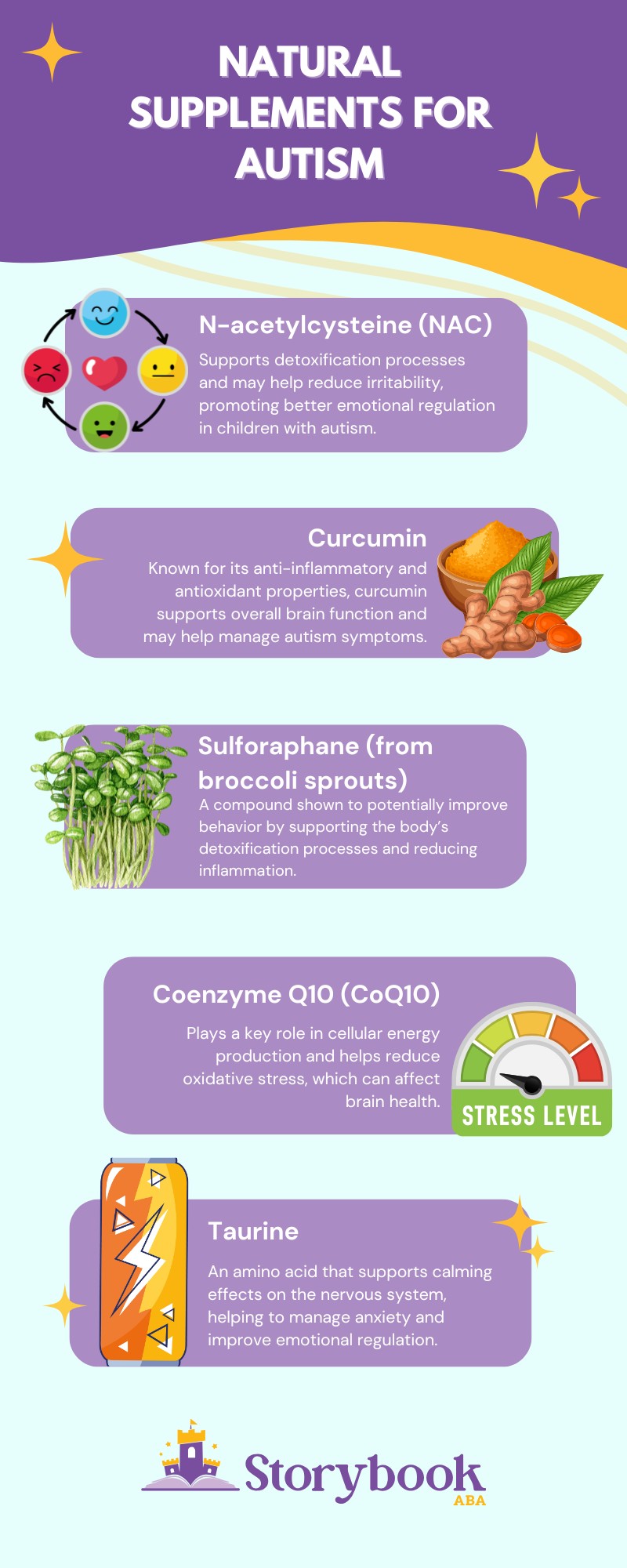
If you’re looking for more natural or integrative approaches, several other nutrients and plant-based options have shown potential in early research or anecdotal use. Below are some natural supplements to consider:


vitamins and supplements for autism


While these supplements aren’t as commonly used as vitamins or omega-3s, they may provide added support when tailored to the individual’s needs.

Are Vitamins and Supplements Safe for Autism?

For many parents, the idea of using vitamins and supplements to support their child with autism can feel both hopeful and overwhelming. The good news is that when chosen carefully and used under the guidance of a healthcare professional, many supplements can be safe and beneficial. 


That said, not all supplements are created equal, and more isn’t always better. Some children may be sensitive to certain ingredients, fillers, or high doses. It’s important to work with a pediatrician, dietitian, or specialist who understands autism to develop a personalized plan. 


At the end of the day, supplements aren’t a cure, but they can be a valuable part of a bigger picture—supporting your child’s well-being alongside therapies like ABA, a balanced diet, and plenty of love and patience.


For a deeper understanding of how supplements like probiotics can support autism recovery as part of a comprehensive approach, check out our article, “What You Need to Know About Probiotics and Autism Recovery.” It explores how these supplements fit alongside therapies like ABA, nutrition, and care to help enhance your child’s overall well-being.


How to Choose the Right Supplements for Your Child with Autism

Choosing the right combination of autism supplements can feel overwhelming due to the wide range of options available and the varying needs of each child. It’s important to approach supplementation carefully, considering your child’s specific symptoms, behaviors, and overall health. 


Here are some steps to make the process more manageable and help ensure the best possible outcomes for your child:


1. Get Nutritional Testing

Functional testing can help pinpoint any nutrient deficiencies or metabolic imbalances specific to your child. This allows you to base supplementation on actual needs, ensuring a more targeted and effective approach.


2. Consult with a Specialist

It’s essential to work with a pediatrician, dietitian, or integrative physician who understands autism. A specialist can guide supplement choices, considering potential interactions with other treatments or medications your child may be receiving.


3. Start Low and Go Slow

Introducing one supplement at a time allows you to closely monitor its effects and identify any sensitivities. This gradual approach minimizes the risk of overwhelming your child’s system and helps pinpoint the most effective solutions.


4. Choose Reputable Brands

Opt for brands that offer third-party testing and maintain transparency with their ingredients. Selecting hypoallergenic and clean-label products ensures that the supplements are free from unnecessary fillers, preservatives, and potentially harmful additives.


5. Track Progress

Maintaining a detailed log of your child’s symptoms, mood, sleep patterns, and behavior helps track any changes. This record allows you to make adjustments to the supplement regimen based on observable improvements or side effects.

 

vitamins and supplements for autism


Can Supplements Replace Interventions Like ABA Therapy?

No, supplements should never replace interventions like ABA therapy. While they can support overall well-being and behavior regulation, only ABA therapy addresses core autism symptoms through structured interventions.


ABA helps children develop communication skills, adaptive behaviors, and reduce problem behaviors using evidence-based techniques. Nutritional support can complement this by improving sleep, mood, and focus, making therapy more effective.


Maximize Your Child’s Success with ABA Therapy in Maryland and Virginia

At Storybook ABA, we understand that every child with autism has unique needs. While vitamins and supplements for autism can play a valuable role in supporting physical health and behavior, structured therapy remains essential for lasting growth.


Storybook ABA offers personalized ABA therapy in Maryland and Virginia, designed to help your child thrive. Our therapists use proven methods to teach communication, improve social skills, and reduce challenging behaviors, while working closely with families for the best outcomes.


If you’re seeking comprehensive autism support, combining effective therapy with lifestyle and nutritional guidance, contact us today to learn more.