

It’s not used to treat autism itself, but rather the associated symptoms that interfere with safety and engagement in therapy.
How Is Risperidone Dosed for Adults with Autism?
Determining the correct risperidone dosage for autism in adults requires a careful, individualized approach. Factors such as age, weight, metabolism, coexisting conditions, and other medications all influence dosing decisions. Below are some common dosing guidelines:
- Starting Dose: 0.25 mg to 0.5 mg once or twice daily
- Titration Schedule: Increase by 0.25–0.5 mg increments every few days to weeks
- Common Maintenance Dose: 1–2 mg/day
- Maximum Dose: Up to 4 mg/day (though higher doses increase side effect risk and are rarely used long-term)
Risperidone can be taken with or without food, and consistency in timing (morning vs. evening) helps manage side effects like drowsiness.
What Are the Benefits of Risperidone for Autistic Adults?
When used appropriately, risperidone may allow adults with autism to participate more effectively in therapy, live more independently, and experience fewer safety concerns. The benefits vary by individual but are most notable in adults experiencing severe behavioral disruptions.
The documented benefits of Risperidone for autistic adults include:
1. Reduced Aggressive Behaviors
Risperidone can help reduce physical aggression, self-injury, and severe tantrums, making environments safer for both the individual and those around them.
2. Enhanced Therapy Engagement
By lowering irritability and impulsivity, risperidone may improve focus and cooperation, allowing autistic adults to benefit more from therapies like ABA or occupational therapy.
3. Increased Routine Flexibility
With fewer anxiety-driven responses, individuals may better tolerate schedule changes or transitions, leading to smoother daily routines and reduced emotional distress.
4. Stronger Social Connections
Risperidone may reduce social barriers by lessening reactive behaviors, helping individuals form and maintain healthier relationships with caregivers, peers, and support staff.
5. Mood Stability
The medication can help balance mood fluctuations, reducing the intensity of emotional outbursts and supporting more consistent emotional regulation throughout the day.
What Side Effects Should Caregivers Watch For?
Like any medication affecting the brain, risperidone comes with potential side effects. Monitoring is essential, especially during the first few weeks of use or after a dosage change. Side effects can be mild, but some may require dose adjustment or discontinuation.
The common side effects to watch out for include:
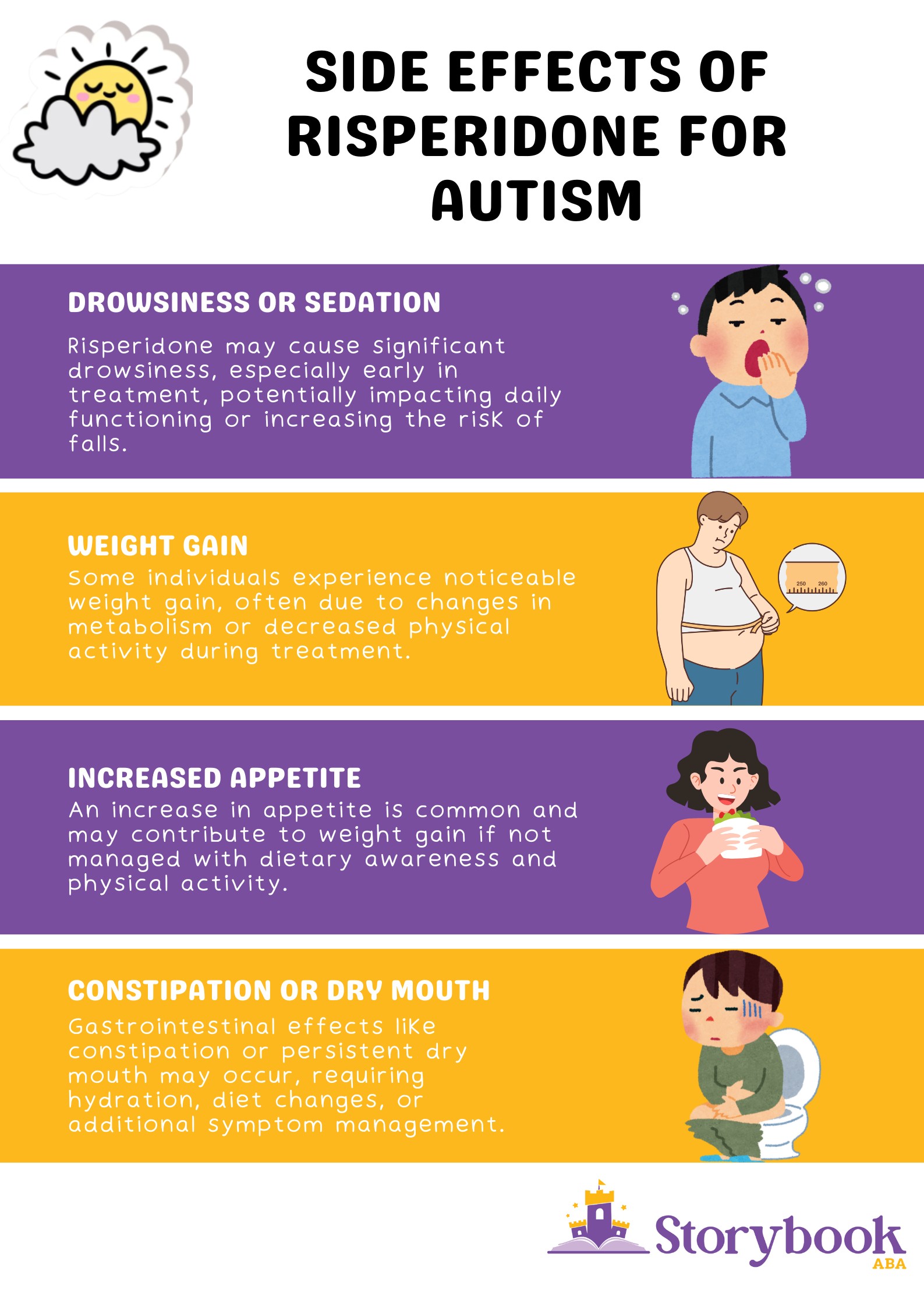
Regular lab monitoring (e.g., metabolic panel, lipid profile) is often recommended for adults on long-term risperidone.
What Should Caregivers and Families Know Before Starting?
Before starting risperidone for autism in adults, caregivers should have a clear discussion with the prescribing doctor. Talk about the specific symptoms being targeted and what improvements might realistically look like. Ask about how long it may take to see effects and what side effects to expect.
Caregivers should also be prepared for regular monitoring. Risperidone can affect weight, blood sugar, and cholesterol, so lab tests may be required over time. Tracking behavioral changes and side effects daily can help guide treatment adjustments and keep things on track.
Additionally, strong communication with the healthcare team is key. Staying involved and asking questions helps caregivers feel more confident and ensures the medication is used safely and effectively to support their loved one’s needs.
How Long Do Adults with Autism Stay on Risperidone?
The duration of treatment with risperidone varies. Some individuals only need it short-term to stabilize a crisis period, while others may benefit from longer use in combination with therapy and environmental supports.
A few guiding principles:
- Short-Term Use: May be appropriate during periods of crisis or major transition
- Long-Term Use: Considered for persistent aggression or mood dysregulation
- Regular Reviews: Medication should be reviewed every 3–6 months to assess benefits vs. side effects
- Gradual Tapering: If behaviors stabilize, tapering off the medication should be done slowly and under supervision
Risperidone is most effective when part of a comprehensive treatment plan, not a standalone solution.
Who Should Not Take Risperidone?
Risperidone isn’t suitable for everyone. People with certain health conditions or sensitivities may experience more side effects or complications. This makes individualized evaluation and ongoing monitoring especially important before and during treatment. Below are some potential contraindications and cautions to consider:
- History of diabetes or metabolic syndrome
- Seizure disorders
- Heart rhythm problems or cardiac conditions
- Allergic reaction to risperidone or other antipsychotics
- Older adults with dementia-related psychosis (increased risk of stroke)
Always disclose full medical history to the prescribing provider and review all current medications to avoid interactions.

Can ABA Therapy Work Alongside Risperidone?
Yes, ABA therapy and risperidone can work hand-in-hand to manage challenging behaviors more effectively. Medication may reduce aggression or anxiety to a level where a person can engage more successfully in therapy. ABA strategies then help replace problem behaviors with functional skills.
Rather than seeing risperidone as a replacement for therapy, it should be viewed as a support tool. Medications can open the door to learning, but behavioral interventions teach lasting, transferable skills. Together, these two approaches can offer a more holistic path toward independence and improved quality of life.
Empower Your Child with ABA Therapy in Maryland and Virginia
Managing behaviors associated with autism often requires more than just medication. While understanding the right risperidone dosage for autism in adults is a critical piece of care, real change often comes from structured behavioral support.
At Storybook ABA, we provide high-quality ABA therapy in Maryland and Virginia, working with autistic individuals and their families to develop life skills, improve communication, and reduce unsafe behaviors through evidence-based strategies.
Whether risperidone is part of your treatment plan or not, ABA therapy can help autistic adults build independence, emotional regulation, and social understanding. Our personalized programs focus on the person, not just the symptoms. Contact us today to learn how our team can support your family’s journey with autism.