

For children with autism and language delays, enhancing these systems may create a more supportive environment for communication growth.
Which Children with Autism Might Benefit Most from Folic Acid?
Not all children with autism will benefit equally from folic acid supplementation. However, research has identified certain biomarkers and clinical signs that may point to a higher chance of response.
Indicators that may suggest folic acid could help include:
1. Folate Receptor Alpha Autoantibodies (FRAAs)
FRAAs block folate transport into the brain and are present in a notable percentage of children with autism, potentially impacting neurodevelopment and cognitive function.
2. History of Speech Regression
Children with autism who experience challenges with speech patterns or plateauing language skills may benefit from early intervention and targeted support to address communication challenges and facilitate language development.
3. Low Cerebrospinal Fluid (CSF) Folate
Low CSF folate levels, though rare, can be identified through a lumbar puncture and may indicate an underlying issue affecting brain function, especially in children with severe symptoms.
4. Family History of Autoimmune Conditions
A family history of autoimmune diseases may increase the likelihood of autoimmune-related issues in a child with autism, highlighting the need for careful monitoring and early detection of related health concerns.
5. Responders to B12 or Methylated Vitamins
Children with autism who show improvement from B12 or methylated vitamin supplementation may have a metabolic or genetic predisposition that warrants continued focus on these nutrients for further support.
In many cases, a neurologist or integrative pediatrician may recommend testing for folate receptor antibodies before suggesting high-dose folinic acid (a more bioavailable form than standard folic acid).

What Types of Folic Acid Supplements Are Used?
When discussing folic acid and autism speech, it’s important to distinguish between different forms of folate. Not all are created equal, and some are more effective for children with specific metabolic or absorption challenges.
Common forms of folate supplements include:
1. Folic Acid
Folic acid is the synthetic form of folate commonly found in supplements. It’s cost-effective but may be less beneficial for individuals with methylation issues or genetic mutations affecting folate metabolism.
2. Folinic Acid (Leucovorin)
Folinic acid, a prescription form of folate, bypasses certain metabolic steps. It’s often used in autism-related studies to address folate deficiency and support brain function in individuals with metabolic challenges.
3. L-Methylfolate (5-MTHF)
L-Methylfolate (5-MTHF) is the active, bioavailable form of folate that plays a crucial role in cellular functions. It’s particularly beneficial for children with MTHFR mutations, improving folate metabolism and brain health.
4. Methylated Multivitamins
Methylated multivitamins typically include B9 (methylfolate) along with other B vitamins like B6 and B12. These work together synergistically to support metabolic functions, particularly for those with genetic mutations impacting nutrient absorption.
Each form has different applications, and parents should always consult with their child’s healthcare provider to determine the best approach, particularly regarding dosage and monitoring.
Are There Risks or Side Effects of Folic Acid Supplementation?
Folic acid is generally considered safe, especially at standard doses. However, high-dose folinic acid or other medical-grade formulations should only be used under the supervision of a qualified practitioner.
Potential side effects may include:
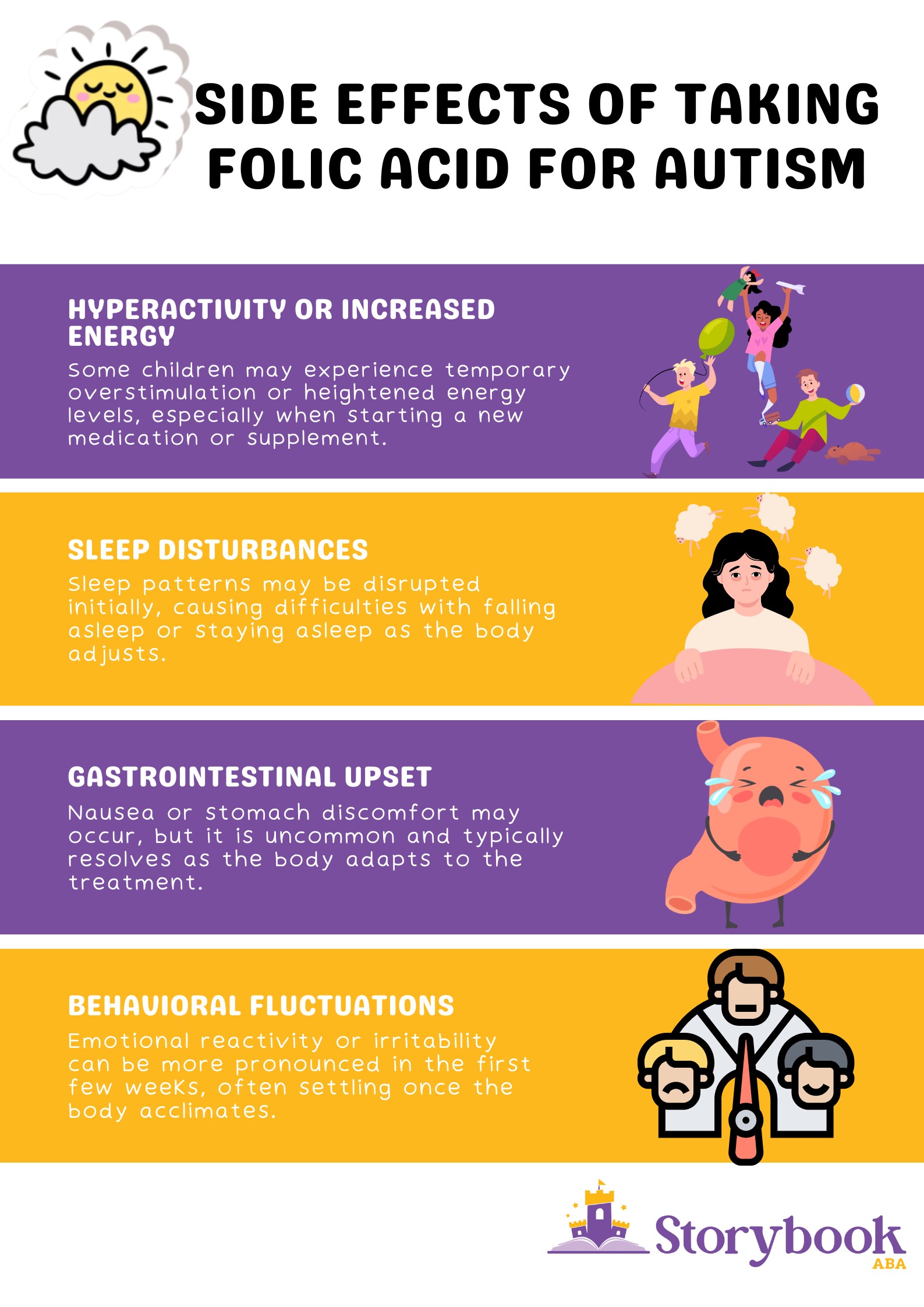
Adjusting the dosage or switching forms (e.g., from folinic to methylfolate) often resolves these issues. It’s crucial to track changes and maintain regular check-ins with the prescribing doctor.
How Can Parents Track Progress from Folic Acid Supplementation?
Tracking your child’s response to folate-based supplements like folic acid can be crucial in determining their effectiveness. Consistent observation is necessary since improvements, particularly in speech and language development, can be gradual and may not be immediately noticeable.
While supplementation alone is not a cure-all, it can help create a more supportive internal environment, potentially enhancing the effectiveness of other interventions. It’s important to monitor progress over time and communicate regularly with your child’s doctor to ensure that the supplement is contributing positively to their overall development.
Should Folic Acid Be Used Alone or With Other Therapies?
Folic acid supplementation works best as part of a comprehensive treatment plan. It is not a substitute for proven, skill-building therapies like Applied Behavior Analysis (ABA) or speech therapy.
Many families choose to integrate nutritional support, biomedical interventions, and traditional therapy services to meet their child’s unique needs. By reducing neurological stress or improving biochemical function, folic acid may help enhance a child’s readiness to engage in therapy and learn. To explore how medications can also support this process, read our article, What Medications for Autism are Available and How They Work.
Get Personalized Support with ABA Therapy
While supplements like folinic acid can support neurological health, they are most effective when combined with structured learning. At Storybook ABA, we provide high-quality ABA therapy in Maryland and ABA therapy in Virginia, tailored to help children improve speech, language, social skills, and behavior.
Our therapists work closely with families to create programs that align with each child’s strengths and challenges. Whether your child is just beginning to use words or working on longer sentences, ABA can help break down communication goals into manageable, teachable steps.
Looking to support your child’s language growth? Contact us today and learn how our personalized ABA therapy can help your child thrive alongside other supportive strategies.