

Key Points:
- Autism separation anxiety often stems from challenges with transitions, communication, and sensory regulation.
- Proactive strategies like visual schedules, social stories, and caregiver consistency can reduce distress.
- Parents play a critical role in creating structured, predictable environments to ease separation.
Separation anxiety is common in young children, but when a child is autistic, this anxiety can become more intense, prolonged, and disruptive to daily life. According to research, children with autism are more likely to experience anxiety disorders, with separation anxiety being prevalent in up to 14% of autistic children.
Parents navigating autism separation anxiety often find that their child’s distress isn’t simply about missing a caregiver—it’s tied to deeper challenges with predictability, sensory input, and difficulty processing emotional change. Understanding the root causes of this distress is the first step toward effective support.
What Is Separation Anxiety in Autism?
Separation anxiety refers to persistent and overwhelming distress experienced by autistic children when they are away from a primary caregiver. This anxiety may show up as crying, meltdowns, clinging, refusal to attend school, or withdrawal. Managing it involves combining visual supports, routines, desensitization strategies, and gradual exposure—all tailored to a child’s individual needs and abilities.
Separation anxiety in autistic children differs from typical development due to unique sensory sensitivities, difficulty with transitions, and challenges in verbalizing emotions. Effective intervention involves more than comforting words; it requires consistency, predictability, and communication strategies that align with how your child perceives and interacts with the world.
Why Do Autistic Children Struggle More With Separation?
Autistic children often struggle with separation due to difficulty understanding time, change, and emotional nuances. This creates anxiety when a parent or caregiver leaves, even temporarily.
They may not fully grasp that the separation is temporary or may associate separations with unpredictable or overwhelming environments, like noisy schools or unfamiliar places. For many, sensory overload, changes in routine, or fear of unfamiliar social interactions heighten the stress of being apart.
Additionally, challenges with expressive and receptive language can make it harder for autistic children to ask for reassurance or understand verbal explanations about where you’re going and when you’ll return. These difficulties can lead to behavioral responses such as screaming, self-injury, hiding, or clinging behavior.
How Can Parents Prepare Their Child for Separation?
Preparation is a cornerstone of managing autism-related separation anxiety. Autistic children thrive on predictability. Clear, visual, and consistent preparation can reduce the unknowns that fuel anxiety.
Start by introducing the concept of separation in a controlled, low-stress environment. Practice short periods apart at home before extending them to new settings like school or a therapy session.
Ways to prepare your child for separation include:
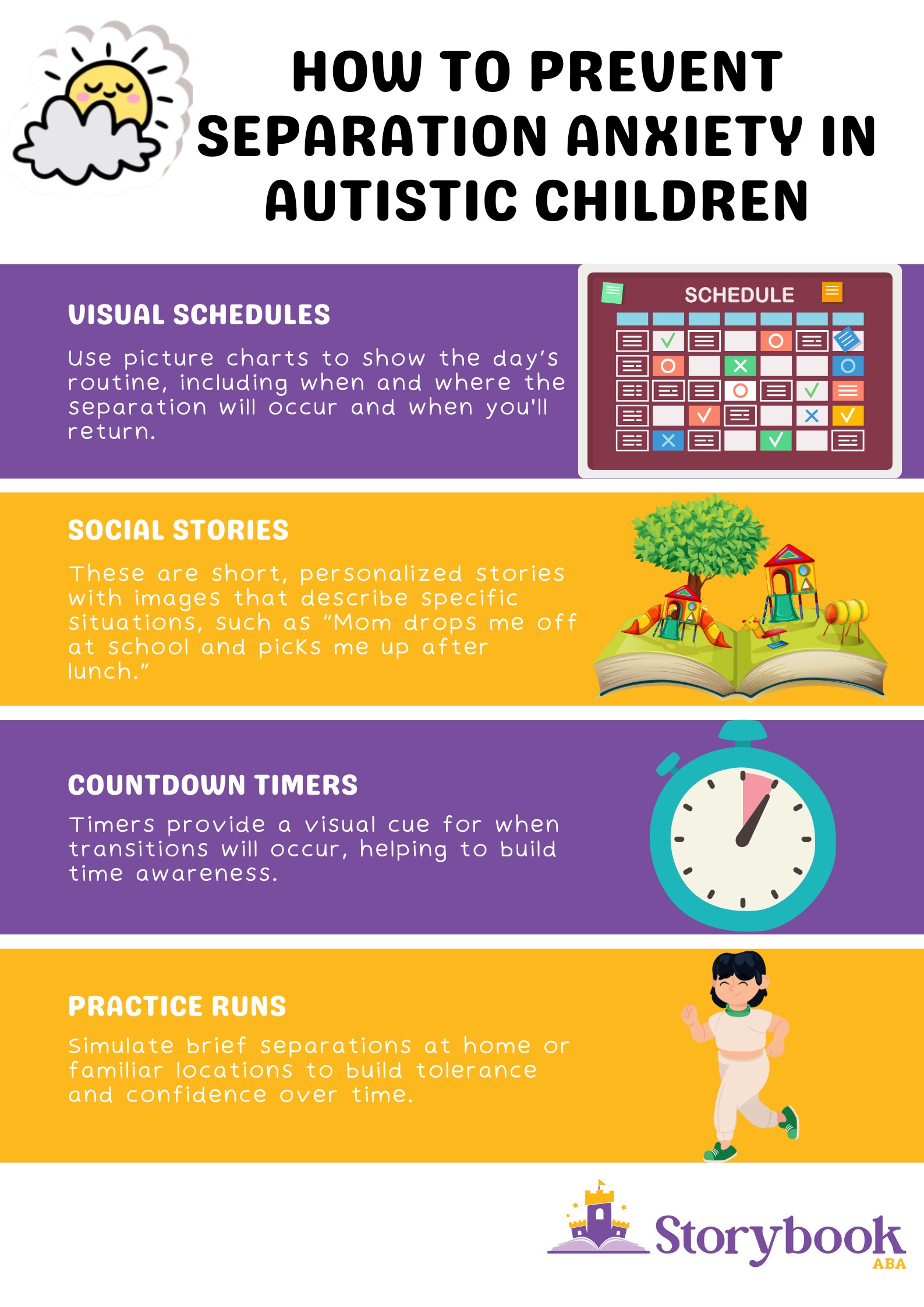
Avoid last-minute goodbyes, as these can increase anxiety. Instead, make the transition a predictable, practiced routine.
What Should Parents Do During a Difficult Drop-Off?
During a difficult drop-off, parents should stay calm, consistent, and reassuring. It’s important to validate the child’s feelings without reinforcing anxiety. Use a predictable routine—such as a special goodbye phrase or short ritual—to create a sense of safety. Avoid lingering, as it can increase distress. Instead, confidently pass the child to a trusted adult and trust the transition process.
Teachers and caregivers can help by offering a warm welcome and redirecting the child to an engaging activity. If separation anxiety persists, parents should collaborate with therapists or school staff to develop supportive strategies. Over time, consistency and empathy can build trust and ease the emotional burden of daily separations.
What Are Some Home-Based Strategies for Ongoing Support?
Managing autism separation anxiety doesn’t stop at the school gates or therapy room. Consistency at home builds resilience and trust, both key to long-term success.
Parents can support their child by integrating separation-related activities into daily routines. These at-home efforts can strengthen your child’s coping mechanisms and emotional understanding.
At-home strategies include:
1. Maintain Consistent Routines Throughout the Day
Establishing a predictable structure for meals, play, and bedtime helps reduce anxiety by giving children clear expectations. Routine makes the world feel safer and minimizes the need for constant emotional vigilance.
2. Help Children Recognize and Label Emotions
Use tools like emotion charts or mirrors during calm moments to teach your child how to identify and name what they’re feeling. Building emotional literacy gives them a stronger foundation for self-regulation during stressful separations.
3. Celebrate and Reinforce Small Acts of Bravery
Recognize and praise even brief moments of independent behavior. Specific praise—like noting calmness when you step away—builds confidence and reinforces the child’s sense of capability.
4. Use Visual Calendars to Track Separation Events
Visual schedules help children anticipate daily events like school drop-offs or a parent leaving for work. Seeing when you’ll return provides reassurance and structure, reducing emotional uncertainty.
5. Read Books That Normalize Separation
Stories like The Kissing Hand and Llama Llama Misses Mama give children relatable examples of handling separation. These books can prompt helpful conversations and emotional validation in a gentle, accessible way.
The goal is to create a secure home environment where your child feels equipped to handle change, even in small doses.
When Should You Seek Professional Support?
While some separation anxiety is expected, especially during developmental transitions, prolonged distress that interferes with daily functioning may need professional intervention.
You might notice signs like school refusal, self-injurious behavior, regression in toilet training, or extreme panic at minor separations. In such cases, behavioral therapy can provide structured, evidence-based tools to address the underlying factors fueling anxiety.
Applied Behavior Analysis (ABA) therapy is one approach often used to teach coping skills, reduce anxiety-driven behaviors, and promote independence in autistic children. The key is finding a provider experienced in emotional regulation and family-centered care.
How Can ABA Therapy Help With Autism and Separation Anxiety?
ABA therapy can be a powerful tool for helping children with autism manage separation anxiety. ABA works by identifying the triggers for a child’s distress and using positive reinforcement and gradual exposure to build tolerance to separation.
Rather than “pushing through” anxiety, ABA therapy breaks down the process into manageable steps tailored to each child’s ability. Over time, children learn to understand the separation process, regulate their emotions, and engage in alternative behaviors that are more adaptive.
Therapists also work closely with parents, teaching them how to use consistent strategies at home and reinforcing coping skills across settings. When ABA is used to target emotional and behavioral needs specifically related to separation, it becomes part of a holistic, individualized support system—one that may also include calming techniques like Breathing Exercises That Help Autistic Individuals Feel Grounded.
How to Navigate Separation Anxiety With Empathy and Structure
Helping a child with autism manage separation anxiety is an ongoing journey. It requires empathy, repetition, and strategic planning. Though the process may feel slow at times, each small gain is meaningful.
By implementing structured routines, preparing your child visually and emotionally, and using strategies that promote security and predictability, you are not just easing anxiety—you’re building lifelong coping skills.
If you’re feeling stuck or overwhelmed, remember that professional support is available, and you don’t have to go through it alone.
Support for Your Child’s Progress with ABA Therapy
Storybook ABA provides family-focused, individualized ABA therapy in Virginia and Maryland, specializing in helping children on the autism spectrum navigate real-world challenges, like separation anxiety. Our therapists use evidence-based strategies to help your child develop emotional resilience, communication skills, and independence in daily routines.
We work closely with parents to make sure strategies are effective both in therapy and at home. Whether you’re managing the first day of preschool or daily transitions, we’re here to help your child build confidence and reduce anxiety with compassionate, data-driven care.
Contact us today to learn how personalized ABA therapy can support your child’s emotional development and ease separation-related struggles.