

Key Points:
- Autistic shutdowns involve withdrawal or non-responsiveness and differ significantly from panic attacks in both cause and presentation.
- Caregivers can support shutdown recovery through nonverbal reassurance, sensory regulation, and respecting boundaries.
- Preparation, environmental control, and understanding emotional overload are crucial to preventing or minimizing shutdown episodes.
When a child experiences an autistic shutdown, it can feel overwhelming for both the child and the caregiver. These moments often occur when a child becomes emotionally, cognitively, or sensorily overwhelmed. Unlike meltdowns, shutdowns tend to look more like withdrawal than outbursts.
Understanding the difference between an autistic shutdown and. a panic attack is essential for providing appropriate support. While they may appear similar at first glance, each involves very different internal experiences and needs. Knowing how to help during a shutdown can prevent further distress and support long-term emotional regulation.
What Is the Difference Between an Autistic Shutdown vs Panic Attack?
An autistic shutdown involves emotional or sensory overload that leads to withdrawal, stillness, or silence, while a panic attack is rooted in acute fear and involves heightened physical responses.
During a shutdown, an autistic child might stop talking, avoid eye contact, lie down, or retreat to a corner. They may appear frozen or disconnected. Panic attacks, on the other hand, involve rapid heartbeat, hyperventilation, sweating, or a sense of doom. The child may verbally express panic or fear and display frantic behavior.
Shutdowns are often a result of overstimulation, social exhaustion, or executive functioning overload. Meanwhile, panic attacks stem from a fear-based response, often triggered by phobias, past trauma, or overwhelming anxiety.
Mislabeling one for the other can lead to the wrong type of response. Knowing what is happening guides how you can actually help, not just react.
What Does an Autistic Shutdown Look Like?
An autistic shutdown can be subtle or intense, and not every child will respond the same way. However, there are consistent behavioral patterns that many parents can learn to recognize.
Children may suddenly go quiet, curl into a ball, or sit motionless. Others might hide under tables or blankets or disengage completely from their surroundings. These shutdowns can last anywhere from a few minutes to several hours, depending on the child and the context.
Signs of a shutdown might include:
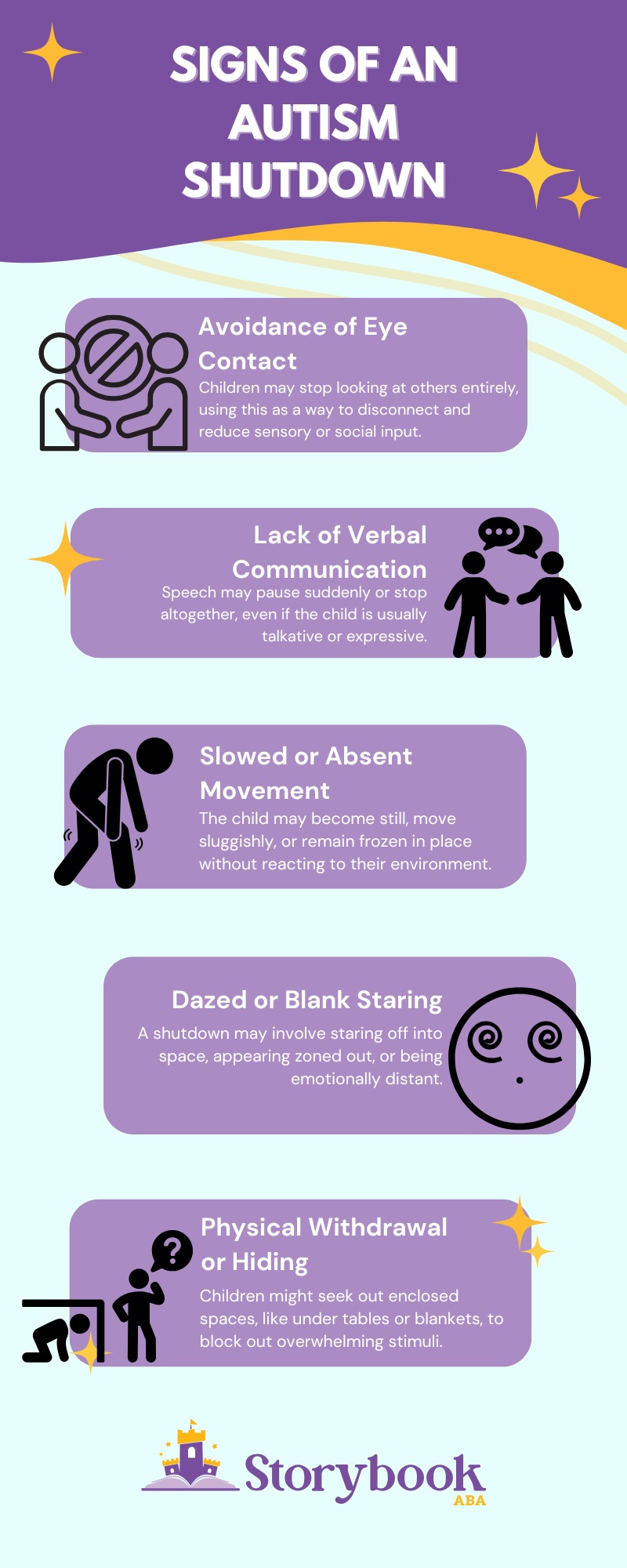
Unlike meltdowns, shutdowns are internalized. They may look less distressing from the outside, but they often signal profound emotional exhaustion or overwhelm.
What Causes Shutdowns in Autistic Children?
Shutdowns usually result from a build-up of stress, overstimulation, or cumulative emotional fatigue. They’re not random—they happen when a child’s brain and body are overwhelmed and can no longer process incoming information effectively.
Sensory overload is one of the most common causes. Loud environments, bright lights, or chaotic settings can push a child past their tolerance limit. Social exhaustion from too much interaction, especially in non-preferred settings like school or social events, is another common trigger. Understanding your child’s specific triggers is key to prevention and early intervention.
How Can You Help a Child During an Autistic Shutdown?
Responding to a shutdown requires calm, patience, and awareness. Your goal is to reduce demands, create a safe space, and allow your child to recover without pressure.
Don’t rush them to talk or engage. Unlike a tantrum or meltdown that may need redirection, shutdowns require space and quiet to decompress.
Supportive strategies during a shutdown include:
1. Provide a Calm, Low-Stimulation Environment
Quickly guide your child to a quiet area with minimal noise, dim lighting, and fewer people. This helps reduce sensory overload and gives them the conditions needed to begin calming down.
2. Offer Familiar Nonverbal Comfort
Rather than using words, provide comforting items like a soft toy, weighted blanket, or sensory object. These familiar tools can ground your child without adding pressure to communicate.
3. Avoid Verbal Demands or Questions
During a shutdown, even simple questions can feel overwhelming. Avoid asking for explanations or prompting interaction—your child needs mental space to process and self-regulate.
4. Stay Present Without Hovering
Remain close by to ensure safety, but keep your energy calm and unobtrusive. Just being there, without trying to fix or rush the situation, offers reassurance and support.
5. Focus on Recovery, Not Resolution
The aim isn’t to end the shutdown but to support your child while their nervous system resets. Gentle presence and a secure environment are the most powerful tools for recovery.
Don’t try to “snap them out of it.” The goal isn’t to end the shutdown quickly but to provide a safe, regulated environment where they can recover naturally.
What Should You Avoid During a Shutdown?
During an autistic shutdown, it’s important to avoid adding pressure or stimulation. Don’t ask questions, demand eye contact, or try to force conversation—these can increase distress. Avoid physical touch unless you’re sure it’s comforting to the child. Also, don’t mislabel the behavior as defiance or laziness, as shutdowns are a sign of emotional or sensory overwhelm, not intentional resistance.
Trying to “snap them out of it” or rushing the recovery process can make things worse. Instead, focus on staying calm, giving space, and offering quiet support. Respect their need for time and safety to regain regulation.
How Can You Prevent Shutdowns in the Future?
While it’s not always possible to prevent every shutdown, understanding patterns and triggers can significantly reduce their frequency and intensity. Prevention starts with observation and routine.
Create environments and routines that support your child’s sensory and emotional needs. Helping them recognize early signs of distress can also empower them to use coping strategies before overwhelm sets in.
Preventive strategies include:
1. Build Predictable, Structured Routines
Creating a consistent daily schedule helps reduce anxiety by making the day more predictable. Children are less likely to become overwhelmed when they know what to expect and when transitions are clearly defined.
2. Use Visual Supports to Reinforce Expectations
Visual tools like picture schedules, first-then boards, and timers can ease transitions and clarify routines. These supports reduce verbal demands and offer clear cues, which help children feel more in control.
3. Provide Access to Personalized Sensory Tools
Equip your child with tools that match their sensory profile, such as noise-canceling headphones, chewables, or fidgets. Having access to a quiet space at school or home can prevent escalation into shutdown territory.
4. Conduct Regular Emotional Check-Ins
Use emotion charts or ask simple mood-based questions at set times during the day. These check-ins help children recognize and name stress before it builds into overwhelm.
5. Teach and Practice Coping Skills When Calm
Introduce breathing exercises, grounding strategies, or hand signals to request breaks during calm moments. Practicing these regularly helps children recall and use them in more challenging situations.
Tailor these tools to your child’s specific needs. Prevention isn’t about perfection—it’s about staying responsive and proactive.
Should You Talk About the Shutdown Afterwards?
Yes—but timing and tone matter. Once your child is calm and regulated, it’s helpful to gently discuss the event. This isn’t about blaming or analyzing in detail. It’s about reflection and planning for the future.
Your child may or may not want to talk about it, and that’s okay. For some, drawing or using communication aids might be easier than verbal discussion. Use this time to validate their experience and work together on better coping strategies. These conversations help build trust and self-awareness, both of which are essential in long-term emotional development. Exploring these unique ways of expressing needs and preferences can also shed light on other important aspects of life, such as eating habits. To gain deeper insight into this, check out our article, Understanding the Unique Eating Patterns in Autistic Adults.
How Can ABA Therapy Support Children Who Experience Shutdowns?
ABA therapy can help children develop tools to better navigate overwhelming environments and emotional regulation. It’s not about “fixing” shutdowns, but about teaching skills that reduce their frequency and support recovery.
Therapists begin by conducting functional assessments to identify what triggers a shutdown and how the child responds. Then, they create individualized strategies to promote emotional understanding, communication, and coping skills.
When done ethically and collaboratively, ABA gives families a practical toolkit—not just for shutdowns, but for many of life’s transitions and stressors.
Create Structure and Support with ABA Therapy
Storybook ABA offers compassionate, family-centered ABA therapy in Maryland and Virginia, tailored to support children navigating emotional regulation challenges—such as autistic shutdowns. We focus on helping children build the skills they need to manage overwhelm, advocate for their needs, and recover from shutdowns safely and confidently.
Our experienced team works directly with families to understand each child’s triggers, strengths, and goals. From sensory regulation plans to social-emotional coaching, our therapy is rooted in understanding and respect.
Reach out to us to learn how personalized ABA therapy can support your child’s development and reduce the frequency of shutdowns in meaningful, lasting ways.