

Key Points:
- Stress management for autism requires tailored strategies that address sensory sensitivities and social challenges.
- Effective stress reduction includes routine building, sensory tools, communication techniques, and mindfulness practices.
- Support from professionals like ABA therapists can help autistic individuals and families develop sustainable coping skills.
Stress is a common experience for everyone, but for individuals with autism, it can feel overwhelming and constant. Autism-related stress often stems from sensory sensitivities, communication difficulties, and unexpected changes in routine—all of which require specialized strategies to manage effectively.
According to research, up to 84% of autistic individuals experience anxiety, which can significantly intensify daily stress. This underscores the importance of personalized, consistent support that aligns with each person’s sensory, emotional, and cognitive profile.
In this article, we’ll explore practical and compassionate stress management strategies tailored to the unique needs of autistic individuals, including routines, sensory tools, relaxation methods, and therapeutic support.
Does Stress Management for Autism Require Unique Approaches?
Yes, stress management for autism requires specific strategies that recognize sensory, cognitive, and emotional differences unique to autistic individuals. Typical stress reduction techniques may not fully address the causes or manifestations of stress in autism.
Unlike neurotypical individuals, autistic people often experience sensory overload, difficulty with change, and social stress, which contribute heavily to their stress levels. These factors call for personalized, consistent, and sensory-aware interventions rather than generic advice like “just relax” or “take deep breaths.” Acknowledging these distinct needs is the first step toward effective stress management.
What Are the Primary Causes of Stress in Autistic Individuals?
Stress in autistic individuals often stems from sensory overload, changes in routine, and social challenges. These can trigger emotional distress, anxiety, and sometimes behavioral outbursts. Understanding the root causes helps caregivers and professionals design better stress management plans.
Sensory overload occurs when the brain receives too much input from lights, sounds, textures, or smells, causing discomfort or panic. Changes in routine disrupt predictability, which autistic individuals rely on for a sense of security. Social interactions can be confusing or exhausting due to difficulties interpreting nonverbal cues and navigating expectations.
How Can Routine and Predictability Help Reduce Stress?
Building a predictable daily routine helps reduce anxiety by providing structure and familiarity. Autistic individuals often thrive on routine because it minimizes uncertainty and sensory surprises.
A well-designed routine balances necessary activities with breaks and preferred sensory experiences. It should be consistent yet flexible enough to adapt without causing distress. Using visual schedules and timers supports understanding and transition between activities.
Key elements for effective routine-based stress reduction include:
1. Establishing Consistent Timing for Daily Activities
Having set times for meals, sleep, and major activities helps autistic individuals feel secure and reduces the anxiety of unpredictability. Consistency fosters emotional stability and improves transitions between tasks throughout the day.
2. Using Visual Supports to Structure the Day
Visual schedules—such as picture charts, calendars, or apps—provide clear expectations and help individuals understand what’s coming next. This reduces stress caused by uncertainty and improves cooperation during daily routines.
3. Providing Transition Warnings Before Changes
Giving advance notice before switching activities allows time to mentally prepare, reducing distress. Verbal cues, timers, or countdown visuals help ease transitions and prevent emotional overload from sudden changes.
4. Incorporating Preferred Activities and Sensory Breaks
Including enjoyable or calming activities—like quiet time, favorite games, or sensory play—within a daily schedule offers needed relief. These breaks help regulate emotions and prevent stress from building up throughout the day.
5. Planning Flexibility to Reduce Rigidity Stress
While structure is important, unexpected events do happen. Teaching flexibility through gentle exposure to changes and using coping tools helps autistic individuals manage disruptions without panic or distress.
What Role Do Sensory Strategies Play in Managing Stress?
Sensory integration techniques are crucial because sensory overload is a common stress trigger in autism. Tailoring sensory input helps the nervous system regulate better and reduces meltdowns or shutdowns.
These strategies involve both sensory “diet” adjustments and calming tools:
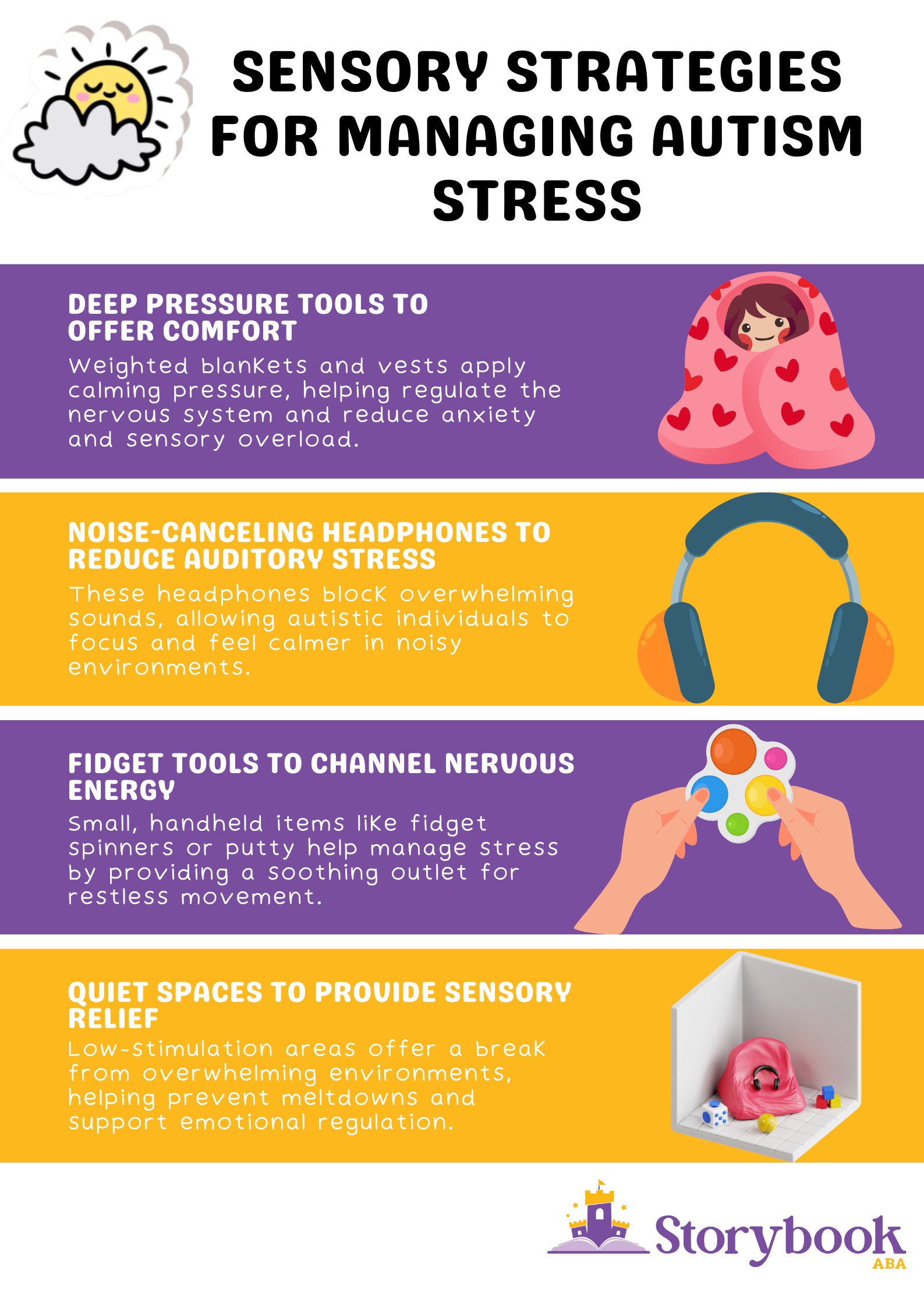
Regular use of sensory strategies creates an environment that supports calm and focus, reducing overall stress levels.
How Can Communication Support Lower Stress in Autism?
Improving communication skills is a key strategy in lowering stress for autistic individuals. Difficulty expressing needs or emotions can lead to frustration, anxiety, and behavioral outbursts. By using communication tools like visual supports, social stories, and assistive technology, individuals can better express themselves and understand others.
Teaching self-advocacy and emotional vocabulary empowers autistic people to signal discomfort or ask for help. Caregivers and professionals can also model calm behavior and offer regular check-ins to build trust. Strengthening communication reduces misunderstandings and fosters a more predictable, supportive environment—ultimately helping to reduce overall stress.
What Relaxation Techniques Are Effective for Autistic Individuals?
Many relaxation techniques designed for neurotypical people can be adapted for autism, provided sensory preferences and cognitive styles are considered. These approaches help regulate the autonomic nervous system and reduce stress responses.
Effective techniques include:
1. Deep Breathing with Visual Cues
Deep breathing exercises help regulate the nervous system and can be tailored for autistic individuals using visual guides like colored animations or apps. These visual aids simplify instruction and create a more engaging, sensory-friendly experience.
2. Progressive Muscle Relaxation
This technique involves tensing and releasing muscle groups to help individuals recognize and release physical tension. For autistic individuals, it can foster awareness of bodily stress signals and support emotional regulation.
3. Mindfulness and Meditation
Short, structured mindfulness sessions that focus on calming visuals or familiar sounds can help reduce anxiety. Using sensory-friendly materials ensures the practice remains soothing rather than overwhelming or frustrating.
4. Movement-Based Relaxation
Gentle physical activities such as yoga, walking, or swinging support sensory integration and emotional regulation. These rhythmic movements are often soothing and can be easily incorporated into daily routines.
5. Creative Outlets
Art, music, or crafts allow for nonverbal emotional expression, offering a therapeutic way to process stress. These activities also support focus and self-regulation in a calming, enjoyable format tailored to individual preferences.
Patience and adaptation are key when introducing relaxation methods; success often depends on gradual exposure and personalization.
How Does ABA Therapy Support Stress Management for Autism?
ABA therapy supports stress management in autism by teaching coping skills, improving emotional regulation, and creating predictable routines. Through individualized strategies and positive reinforcement, ABA helps autistic individuals reduce anxiety and navigate challenging situations more calmly.
Therapists identify stress triggers, introduce calming alternatives, and gradually expose individuals to difficult scenarios in a safe, structured way. By improving communication and social understanding, ABA also reduces frustration, empowering individuals to express needs and manage emotions more effectively in daily life—an approach that can be especially helpful when addressing challenges like time perception. To explore this further, check out our article Autism and Time Blindness: Why It Happens and What You Can Do.
Get Professional Support with ABA Therapy
Stress management for autism can be complex, but professional guidance makes a significant difference. Storybook ABA provides compassionate and personalized ABA therapy in Virginia and Maryland, designed to help autistic individuals build practical coping skills.
Our therapists work closely with families to understand each person’s stress triggers and strengths, developing tailored strategies that improve emotional regulation and reduce anxiety. With consistent, supportive ABA therapy, individuals gain tools to manage stress more independently and live fuller, calmer lives.
Contact us today to learn how our services can support your family’s journey toward effective stress management and improved well-being.