

Key Points:
- In-home ABA therapy offers personalized, real-world support in a child’s natural environment.
- Parents value the convenience, flexibility, and strong collaboration it allows.
- ABA therapy providers in Virginia like Storybook help families feel empowered and supported from the start.
When your child receives a diagnosis of autism spectrum disorder (ASD), the decisions that follow can feel overwhelming. From school accommodations to therapy choices, the path forward is filled with questions. One of the biggest? Where should therapy take place.
Increasingly, families searching for ABA therapy in Virginia are choosing in-home services. And for good reason. ABA therapy providers in Virginia like Storybook have seen a clear shift—parents are realizing that home-based therapy isn’t just convenient, it can be transformational for both children and their families.
This article dives into why more parents are opting for in-home ABA therapy and what you should know if you’re considering the same.
The Value of Learning in a Natural Environment
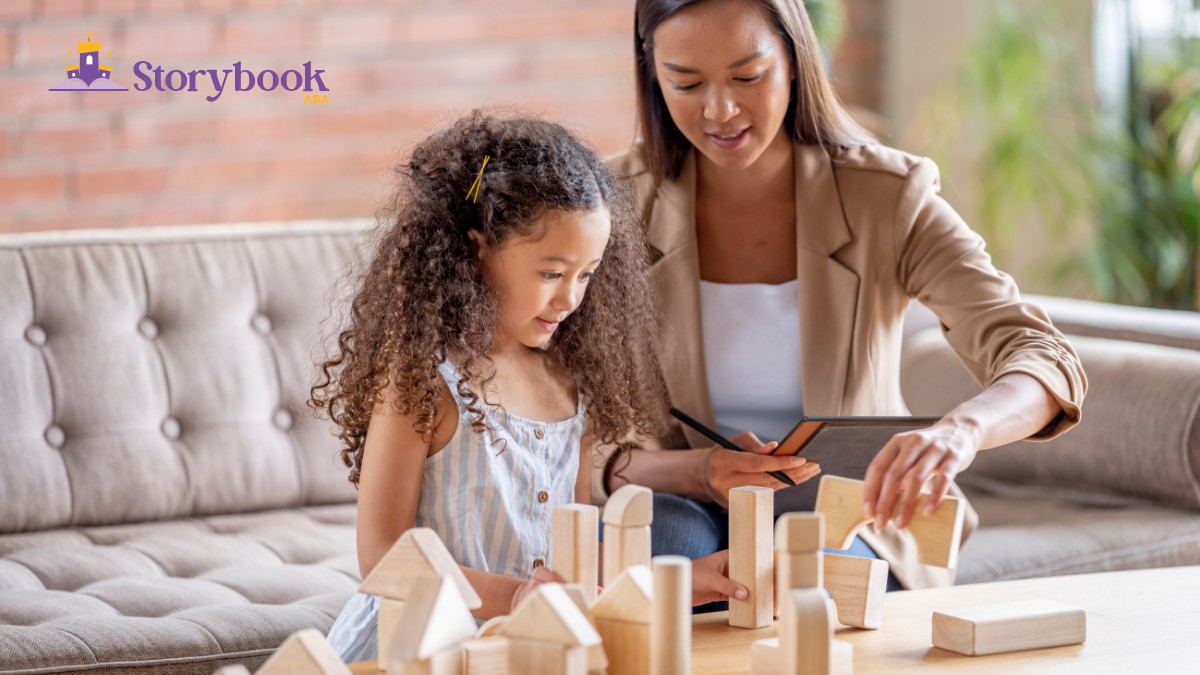
For many kids, the home is their comfort zone. It’s where they eat breakfast, have meltdowns, play with siblings, and interact with real-life challenges. In-home ABA therapy leverages this setting to make learning as meaningful—and transferable—as possible.
Unlike clinic-based sessions, in-home therapy happens in the exact environment where your child is expected to use those skills. That might include:
- Asking for help in the kitchen.
- Handling transitions between activities.
- Following directions in their bedroom or living room.
- Playing appropriately with a sibling.
By embedding ABA strategies into a child’s day-to-day routines, we help turn learning into living. And that’s what long-term progress is all about.
What Makes In-Home ABA Therapy Stand Out
Parents in Virginia are recognizing the unique benefits of in-home ABA therapy compared to center-based programs. Here are the standout reasons more families are choosing it:
1. More Personalized Therapy
In-home ABA therapy is fully customized—not just to your child’s behavior needs, but also your family’s dynamics and daily routines.
- We can incorporate household-specific tasks into therapy goals, like brushing teeth in your bathroom or practicing waiting for a turn with your family game.
- Therapists can observe naturally occurring issues—like trouble transitioning after tablet time or difficulty getting dressed—and address them in real time.
That level of individualization is hard to replicate in a clinic setting.
2. Direct Parent Involvement
At home, parents are more likely to be involved—both passively (by observing sessions) and actively (by being coached on strategies). This promotes carryover of skills and helps parents feel more confident managing behaviors when therapists aren’t around.
At Storybook, we’ve seen that when parents are part of the process, kids often make faster, more sustainable progress. You’ll learn how to reinforce skills naturally during meals, bath time, play, and even errands.
3. Convenience and Flexibility
Virginia families are busy—between work, other children, appointments, and school pickups, time is limited. In-home therapy means:
- No commuting to a clinic several times a week.
- Less disruption to daily routines.
- More flexibility in scheduling, especially for early morning or after-school sessions.
For many families, that convenience reduces stress, which is a win for everyone.
How In-Home ABA Helps Build Skills That Stick
While all ABA therapy aims to build lasting behavior change, the in-home model can be especially effective when it comes to generalization—a fancy word for using learned skills across different places, people, and situations.
Here’s how that plays out:
- Real-world practice: Learning to ask for help in a clinic is one thing. Doing it in the middle of a kitchen meltdown is another. Home therapy helps bridge that gap.
- Family participation: Therapists can model techniques for parents and siblings, increasing consistency across caregivers.
- Contextual relevance: Teaching a child to clean up their toys is more meaningful when it’s their toys on their floor.
With in-home therapy, progress isn’t just measured by how well a child performs in sessions—it’s about how smoothly those new behaviors show up throughout their daily life.
Common Goals Addressed in In-Home ABA Therapy
ABA therapy covers a broad range of goals—and in-home services allow those goals to be targeted in practical, natural ways.
Here are some of the most common areas we focus on:
1. Communication Skills
- Teaching functional requests (e.g., “I want juice,” “Help me”)
- Expanding vocabulary and sentence use
- Supporting non-verbal communication, like pointing or using a communication device
2. Daily Living and Self-Care
- Dressing independently
- Toileting routines
- Washing hands or brushing teeth
These skills are often best taught in the actual bathroom, bedroom, or kitchen the child uses every day.
3. Behavior Reduction
- Managing tantrums or aggression
- Reducing elopement (running off)
- Teaching safer, more appropriate alternatives to problem behavior
Therapists use positive reinforcement and proactive strategies—not punishment—to support behavior change that lasts.
4. Social and Play Skills
- Learning how to share and take turns with siblings
- Building cooperative play skills
- Responding to greetings or initiating conversation
Because the home often includes siblings and parents, it’s a perfect environment for practicing social behavior in real-time.
What to Ask Before Starting In-Home ABA Therapy
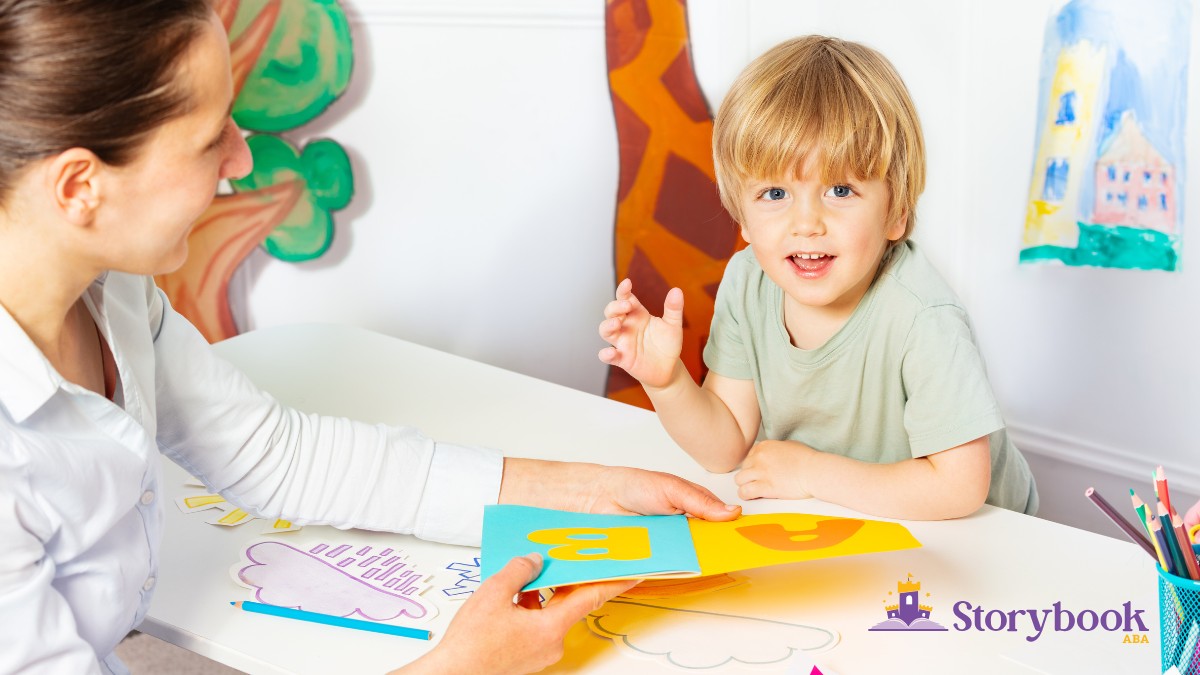
Not all in-home ABA providers are the same. It’s important to ask questions so you can find a team that fits your values, expectations, and goals.
Before starting services, consider asking:
- Who will be working with my child at home?
Look for BCBAs (Board Certified Behavior Analysts) overseeing therapy and RBTs (Registered Behavior Technicians) providing direct services.
- How often will you update me on progress?
Consistent communication and transparency are key. You should know what’s working, what’s not, and what the plan is.
- How do you adapt goals to our home routines?
The more flexible and collaborative your provider is, the better your outcomes will be.
- How do you include parents in the process?
You want a provider who sees you as a partner—not just an observer.
At Storybook, we welcome these conversations. We believe that successful ABA therapy depends on shared goals, mutual respect, and continuous learning—together.
Addressing Concerns About In-Home ABA Therapy
Naturally, some parents worry about what in-home therapy might be like. Common questions include:
- Will my child behave differently at home with a therapist present?
Possibly at first, but most kids settle into the routine quickly. Familiar settings often help reduce anxiety.
- What if our home isn’t “set up” for therapy?
No special room or tools are needed. We use the spaces and materials you already have—because that’s what your child interacts with daily.
- Can we switch to center-based therapy later?
Absolutely. Many families start with in-home services and transition later if needed. Flexibility is part of the process.
Final Thoughts
The shift toward in-home ABA therapy in Virginia reflects a broader change in how families view autism support—not as something clinical and removed, but as something deeply integrated into family life.
At Storybook, we’re proud to offer in-home ABA therapy that meets children where they are—literally and emotionally. We focus on real progress, everyday victories, and supporting families through it all.
Get in touch today to learn more about how our ABA therapy in Virginia can help your child grow, communicate, and thrive at home—right where it matters most.