
Key Points:
- Asperger’s Syndrome is no longer diagnosed separately but falls under Autism Spectrum Disorder (ASD) in the DSM-5.
- The main difference between ASD and Asperger’s historically involves early language development and cognitive abilities.
- Understanding nuanced behavioral, social, and functional traits helps caregivers support individualized needs effectively.
Understanding the difference between ASD and Asperger’s can feel confusing, especially for parents trying to support a newly diagnosed child. Although the term “Asperger’s Syndrome” was used for many years, it’s now considered part of Autism Spectrum Disorder (ASD).
In this article, we’ll go over how Asperger’s was once defined, how it differs from other autism profiles, and what parents need to know when it comes to support, interventions, and expectations.
Difference Between ASD and Asperger’s: Quick Explanation
There is no longer a formal medical difference between ASD and Asperger’s. Asperger’s Syndrome is now considered part of the broader diagnosis of Autism Spectrum Disorder (ASD). However, it is often used informally to refer to individuals with average or above-average intelligence and no significant delays in language development.
Under DSM-IV (prior to 2013), Asperger’s was classified separately. But with the DSM-5, it was folded into ASD to improve diagnostic consistency. Still, many families and providers use the term “Asperger’s” to describe a specific autism profile—typically involving high-functioning individuals who experience challenges with social communication but show strong language skills and cognitive ability.

Why Was Asperger’s Removed as a Separate Diagnosis?
This change was made to unify the understanding of autism as a spectrum rather than a set of distinct disorders. Because of this, professionals struggled with diagnostic accuracy. The Diagnostic and Statistical Manual of Mental Disorders, 5th Edition (DSM-5), now uses the umbrella term “Autism Spectrum Disorder” to include:
- Autistic Disorder
- Asperger’s Syndrome
- Childhood Disintegrative Disorder
Rather than labeling by type, ASD diagnoses are now based on:
- Social communication challenges
- Restricted/repetitive behaviors
- Level of support needed (Level 1, 2, or 3)
This dimensional model allows for a more personalized diagnosis and treatment plan.
What Were the Typical Characteristics of Asperger’s?
When Asperger’s was a distinct diagnosis, it referred to individuals with autism traits but with no significant language delay or intellectual disability. Understanding these historical traits can still be useful when discussing support strategies.
Here’s what typically defined Asperger’s:
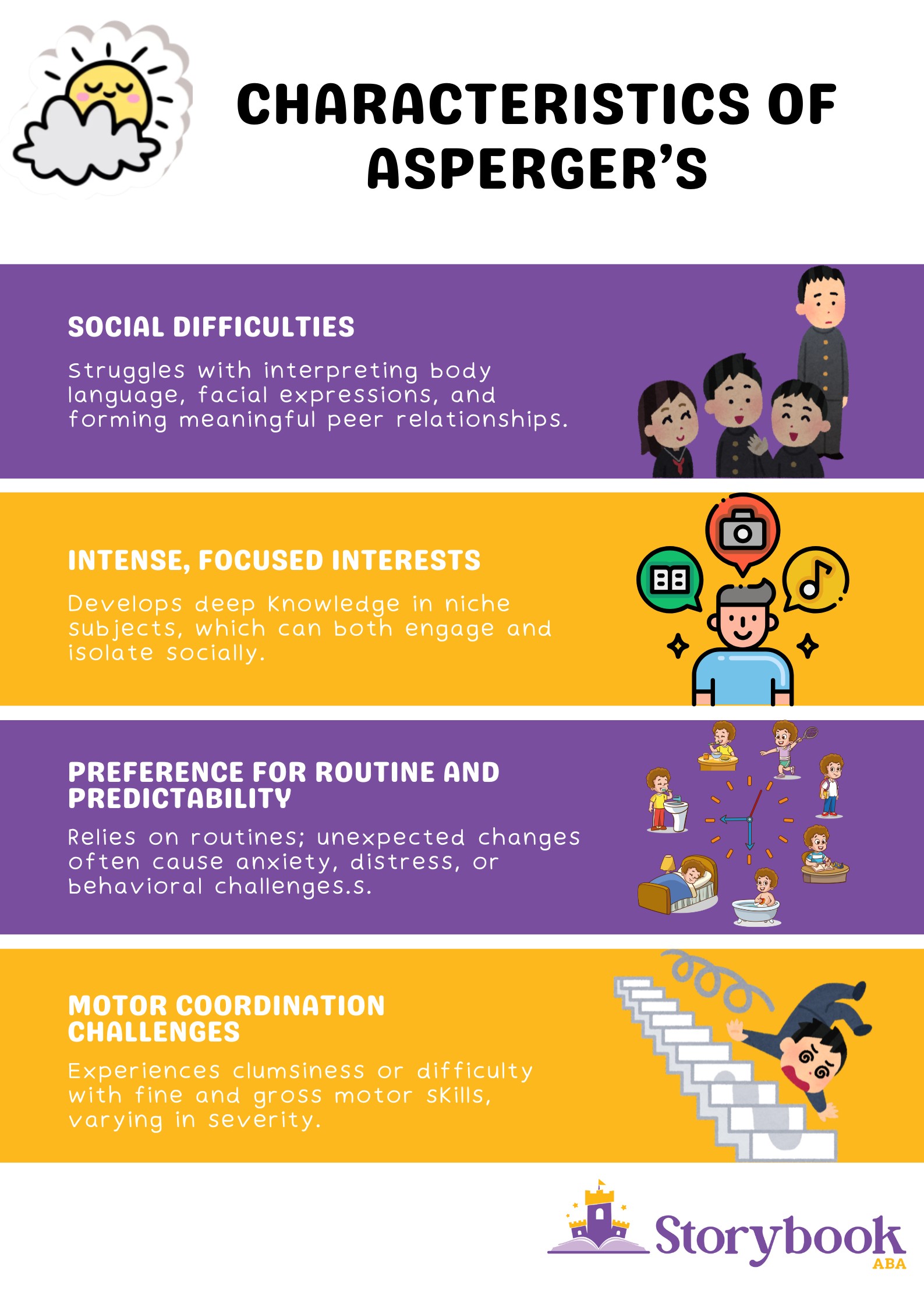
These traits align with what today might be considered “Level 1 ASD”—requiring support but functioning independently in many areas.
Is There Still Value in the Asperger’s Label?
For many families, “Asperger’s” continues to be a meaningful identity. Some adults diagnosed before 2013 still prefer the term and find it more descriptive of their experience. However, from a clinical and insurance standpoint, only Autism Spectrum Disorder is recognized.
Still, it’s okay to refer to your child as “having Asperger’s traits” or “previously diagnosed with Asperger’s” while understanding that services and therapies will be framed around the broader ASD diagnosis.
What Are the Key Differences Between Asperger’s and Autism?
Though the DSM no longer recognizes Asperger’s separately, many parents still ask: What is the difference between Asperger’s and autism? The difference lies in presentation—especially early in development.
Below are some key distinctions based on how these terms are still used informally:
1. Language Development
Children with Asperger’s typically speak on time or early, while some autistic children experience speech delays or need alternative communication methods.
2. Cognitive Ability
Asperger’s was associated with average to high intelligence. Autism can include a wider range of cognitive profiles, including intellectual disability.
3. Social Engagement
Kids formerly diagnosed with Asperger’s may want to interact but struggle with social rules. Those with ASD may show less interest in peer relationships or social games.
4. Repetitive Behaviors
Repetitive routines or behaviors appear in both, but children with autism may display these behaviors more intensely or frequently.
5. Sensory Processing
Both groups may have sensory sensitivities, but autistic children might show stronger reactions to sensory input like lights, textures, or sounds.
What Should Parents Look for When Seeking Support?
Whether your child has a formal ASD diagnosis or fits what was once called Asperger’s, early and consistent intervention makes a big difference. Parent involvement is crucial in teaching social, behavioral, and life skills.
When evaluating what kind of support your child needs, focus on:
- Social communication skills
- Adaptive behavior (e.g., dressing, hygiene)
- School readiness or academic strengths/challenges
- Sensory sensitivities
- Flexibility and coping with change
Regardless of diagnostic label, your child’s individual needs—and strengths—should drive the support plan.
How Can ABA Therapy Support Children With Asperger’s or ASD?
Applied Behavior Analysis (ABA) therapy is a leading evidence-based treatment for children across the autism spectrum. It helps teach communication, social skills, daily living skills, and more—through structured, goal-oriented interventions.
For children with Asperger’s-like traits, ABA can focus on building subtle social understanding, like recognizing sarcasm or taking turns in conversation. For others, therapy may center on building foundational skills like following instructions or tolerating transitions. These challenges can sometimes lead to overwhelming moments, which is why we recommend checking out our article Proven Tips & Techniques for Autism Meltdown Management for effective strategies to handle these situations with confidence.
When Should Parents Consider an Autism Evaluation?
Parents should consider an autism evaluation if their child shows persistent signs of social communication difficulties, such as limited eye contact, delayed speech, or trouble understanding social cues. Other indicators include repetitive behaviors, intense interests, or challenges with changes in routine.
Early concerns like lack of response to name, delayed babbling, or limited gestures by 12–18 months also warrant evaluation. Getting an early diagnosis helps families access therapies and supports that can significantly improve developmental outcomes.
Encourage Lifelong Learning With ABA Therapy
Whether your child has a recent ASD diagnosis or exhibits traits formerly labeled as Asperger’s, ABA therapy can help them grow with confidence and independence. At Storybook ABA, we offer compassionate, individualized ABA therapy in Maryland and Virginia, focusing on building meaningful skills through evidence-based methods.
Our team partners closely with parents to create structured plans that support your child’s strengths while addressing daily challenges. Every child deserves the tools to thrive—no matter where they fall on the spectrum.
Get in touch with us to learn how ABA therapy with Storybook ABA can support your child’s social, emotional, and behavioral development.