
Key Points:
- Music therapy can help children with autism improve communication, emotional regulation, and social interaction.
- Techniques such as rhythm games, singing, and instrument play are widely used in structured sessions.
- Music therapy works best when personalized and combined with evidence-based interventions like ABA therapy.
Music therapy for autism is gaining recognition as a supportive tool for enhancing developmental skills in children. According to the American Music Therapy Association, music interventions can improve cognitive, emotional, and social functioning in individuals with autism spectrum disorder (ASD).
For children who are often nonverbal or have difficulty connecting with others, music provides a non-threatening medium for expression, interaction, and regulation. In this article, we’ll go over what music therapy is, how it benefits autism, and how parents can integrate it into their child’s daily life.
What Is Music Therapy for Autism?
Music therapy for autism involves using music-based activities—like singing, rhythm, and movement—to promote developmental goals in children with ASD. These sessions are led by certified music therapists and customized to fit each child’s individual needs.
The structure of music therapy makes it especially helpful for children with autism. The predictability of rhythm, repetition in melodies, and emotional expression embedded in music align well with how many children with autism process information. By integrating music with therapeutic goals, children can improve communication, self-regulation, and motor coordination while engaging in something enjoyable.
How Does Music Therapy Help Autistic Children?
Music therapy helps autistic children by creating a safe, structured space where they can express themselves, develop social connections, and improve communication. The rhythm and repetition in music can support language development, motor coordination, and emotional regulation—areas often challenging for children on the autism spectrum.
Through activities like singing, drumming, or movement to music, children can engage without the pressure of traditional verbal interaction. Music can also reduce anxiety, increase attention span, and encourage imitation and turn-taking, which are foundational for building social skills. By meeting children where they are, music therapy offers a motivating, nonjudgmental way to foster growth and connection.
What Are the Benefits of Music Therapy for Autism?
The benefits of music therapy for autistic children extend across many functional areas. Music can often reach children in ways that traditional methods can’t. Below are several clinically supported benefits:
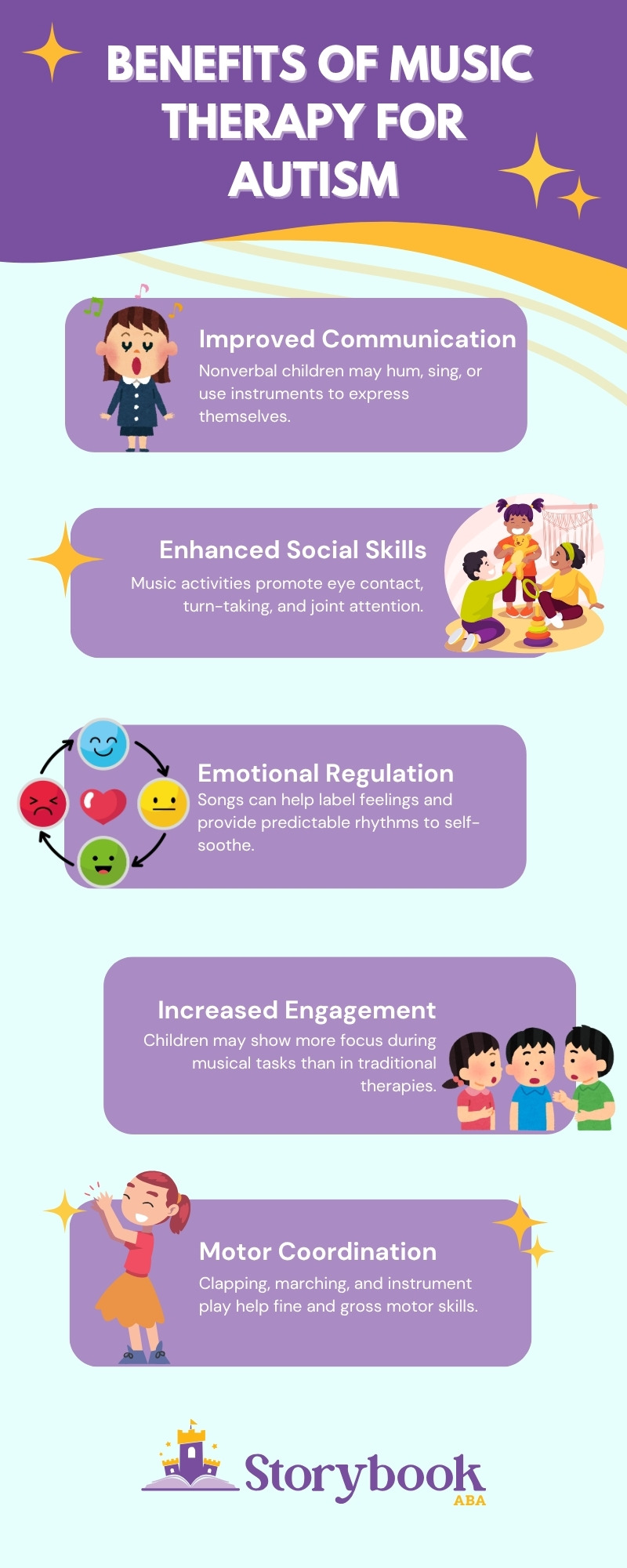
When done consistently and intentionally, music therapy can significantly enhance a child’s quality of life and daily functioning.
Is Music Therapy Really Effective?
While it is not a standalone treatment, music therapy is most effective when integrated with other interventions. It complements ABA therapy, speech-language therapy, and occupational therapy by targeting overlapping developmental goals in a motivating and engaging way.
It’s important for parents to choose licensed music therapists who are trained to work with children with autism. Individualized plans ensure that the sessions are not just musical experiences but meaningful, progress-driven interventions.
5 Techniques Used in Music Therapy for Children with Autism
Music therapy sessions are not just about playing music casually—they are intentional, goal-oriented, and therapeutic. A variety of structured techniques are used, depending on each child’s strengths and challenges.
Below are common methods used by certified music therapists:
1. Rhythm and Movement Activities
These activities use clapping, drumming, or dancing to improve coordination, self-regulation, and body awareness while also encouraging participation and following structured routines.
2. Instrument Play
Playing instruments like drums, shakers, or keyboards builds fine and gross motor skills, encourages turn-taking, and supports sensory integration through tactile and auditory feedback.
3. Singing and Vocalization
Singing helps promote speech development, articulation, and expressive language by using melody and repetition to make verbal communication more engaging and easier to recall.
4. Music-Based Storytelling
Combining stories with music enhances listening skills, attention span, and comprehension, while offering a creative way to teach emotional concepts and daily routines.
5. Improvisation and Songwriting
Creating music spontaneously or writing songs together fosters emotional expression, strengthens self-identity, and helps children process feelings in a supportive, nonverbal way.
Who Can Benefit Most from Music Therapy?
Music therapy can benefit individuals of all ages, but it is especially effective for children with autism, developmental delays, speech and language disorders, and emotional or behavioral challenges.
These individuals often respond well to music’s structured yet flexible nature, which can support communication, social skills, and emotional regulation. People with neurological conditions, such as Parkinson’s disease, dementia, or brain injuries, can also benefit from music therapy.
The rhythmic and melodic elements of music help stimulate brain activity, improve motor coordination, and enhance memory. Because sessions are tailored to individual needs, music therapy is a versatile and impactful approach for a wide range of developmental and therapeutic goals.
How Can Parents Support Music Therapy at Home?
Parents play a crucial role in reinforcing the benefits of music therapy beyond the therapy room. Incorporating musical activities into daily routines can make therapy more effective and consistent.
Here are some simple ways parents can bring music into the home:
1. Create a Playlist
Build playlists with calming or energizing songs tailored to your child’s needs. Use them during transitions, bedtime, or playtime to support mood and routine consistency.
2. Sing Together
Incorporate simple songs into daily activities like dressing, eating, or cleaning. Singing makes routines more engaging and encourages your child to participate and communicate.
3. Instrument Corner
Designate a small space with child-safe instruments like shakers or drums. This encourages exploration, creativity, and sensory input through sound and touch.
4. Dance Breaks
Use short, fun dance sessions to release energy, improve coordination, and foster body awareness. Dancing together also promotes bonding and turn-taking.
5. Storytime with Music
Enhance storytime by adding gentle music or rhythmically singing the words. This builds attention, language skills, and emotional connection to the story.
Consistency and repetition are key. Even short musical routines can lead to long-term developmental gains.
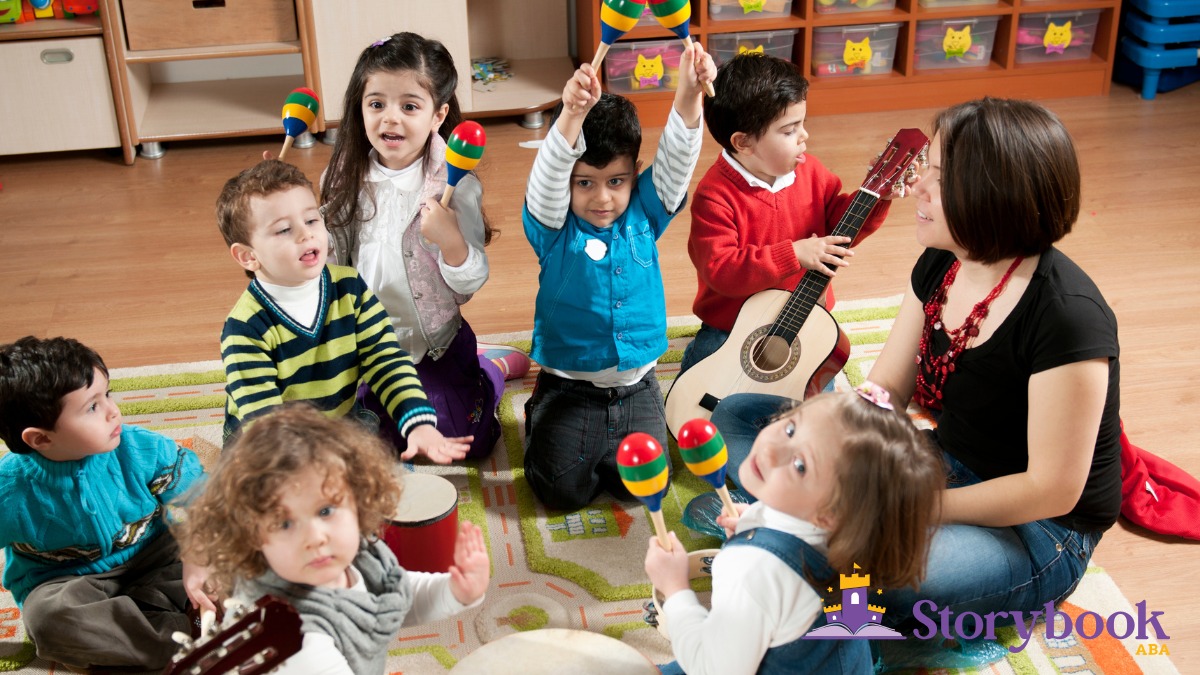
Integrating Music Therapy with ABA
When music therapy is paired with applied behavior analysis (ABA), it can accelerate learning in areas like language, behavior, and social engagement. ABA provides the structure, data, and behavioral science, while music adds a layer of motivation and emotional connection.
Here’s how they can work together:
- Reinforcing Skills: Music is used as a reward within ABA-based task systems.
- Generalization: Skills taught in ABA can be practiced in music contexts to aid transfer.
- Joint Sessions: Music therapists and ABA professionals collaborate to align goals.
Integrating services creates a more holistic approach to supporting your child’s growth.
Encourage Lifelong Learning With ABA Therapy
Music therapy is a powerful tool that can unlock communication and emotional growth in children with autism, especially when used alongside structured interventions like ABA therapy. At Storybook ABA, we focus on individualized, data-driven care that supports your child’s full potential.
We offer ABA therapy in Virginia and Maryland, working closely with families to create comprehensive, effective support plans. Contact us today to explore how Storybook ABA can help your child grow through evidence-based care tailored to their needs.