

Key Points:
- Proprioception in autistic adults often affects balance, body awareness, coordination, and comfort in daily routines.
- Difficulties with proprioceptive input can lead to sensory-seeking behaviors, fatigue, or trouble navigating physical space.
- Simple, structured strategies and sensory supports can enhance regulation, focus, and independence.
For many autistic adults, sensory experiences shape everyday life in ways that are both subtle and overwhelming. One commonly overlooked sensory system is proprioception—the body’s ability to sense its position and movement.
Proprioception in autistic adults can be either underresponsive or inconsistent, leading to difficulties in coordination, posture, or even simple daily tasks like walking in crowds or using appropriate force when handling objects. According to research, at least 80% of autistic individuals experience poor motor coordination.
These challenges aren’t always visible, but they can deeply affect self-esteem, independence, and social confidence. Understanding how proprioception works, how it shows up in autistic adults, and what strategies can help is a key step toward improved comfort and function.
What Is Proprioception in Autistic Adults?
Proprioception in autistic adults refers to the way individuals on the spectrum perceive their body’s position, movement, and force. Some may have a muted sense of body awareness, while others might seek intense movement or pressure to feel grounded and regulated.
Proprioceptive input comes from muscles, joints, and ligaments, informing us how our body is moving without relying on vision. For example, you know where your hand is even when your eyes are closed—that’s proprioception at work. In autism, this internal feedback loop might not function in the same way, leading to a range of motor or sensory regulation challenges.
How Does Proprioception Affect Daily Life?
Proprioceptive differences can impact multiple areas of life for autistic adults, from physical coordination to emotional regulation. Inconsistent or low proprioceptive input often makes the world feel unpredictable or disorienting. This can lead to exhaustion, frustration, or unintentional social missteps.
You might see signs of proprioceptive difficulties in:
- Clumsiness or frequent tripping
- Using too much or too little force (e.g., slamming a door, weak handshake)
- Difficulty judging distances between the body and objects
- Trouble with fine motor skills, like writing or typing
These challenges may be mistaken for inattentiveness or behavioral issues, but they’re often rooted in sensory regulation, not lack of effort or care.
What Causes Proprioceptive Differences in Autism?
Proprioceptive challenges in autism are believed to result from differences in sensory processing and neural connectivity. Essentially, the messages sent between the body and brain may not be interpreted in typical ways.
This doesn’t mean the individual lacks proprioceptive ability, but rather that the feedback may be delayed, weakened, or overwhelming. For some, physical movements feel disconnected from intention. For others, their body’s position feels vague until they press against something or move rapidly.
Autistic adults may adapt by relying on other senses—like vision—to compensate, which can lead to sensory overload or fatigue over time.
What Are Common Signs of Proprioceptive-Seeking Behaviors?
When the body isn’t getting the input it needs, it may naturally seek out ways to stimulate the proprioceptive system. These behaviors are not random—they’re functional efforts to self-regulate and feel more in control of the body.
Common proprioceptive-seeking behaviors in adults include:
- Cracking knuckles, neck, or joints often
- Preferring tight or compressive clothing
- Engaging in deep stretches or pushing against walls
- Using exercise, lifting, or manual labor to focus
Recognizing these signs helps shift the focus from judgment to support. These are not “bad habits”—they’re strategies the nervous system uses to feel balanced.

How Can Adults Improve Proprioceptive Awareness?
There’s no single solution, but many autistic adults benefit from daily routines that include intentional proprioceptive input. These activities are safe, repetitive, and often calming. They help regulate not only sensory processing but also mood and attention.
Below are activities that can strengthen proprioceptive feedback and body awareness over time:
1. Weightlifting or Resistance Training
Engaging in regular strength training provides consistent proprioceptive input while improving muscle tone, coordination, and sensory feedback from joints and tendons.
2. Yoga or Tai Chi
These slow, controlled movements enhance balance, joint awareness, and physical grounding, making them ideal for increasing proprioceptive awareness in a calming way.
3. Carrying Groceries or Pushing Carts
Functional tasks like lifting bags or pushing shopping carts naturally activate deep muscles and reinforce body awareness during everyday routines.
4. Body Scanning or Mindfulness Exercises
Mindfully noticing physical sensations during relaxation strengthens the brain-body connection and improves overall proprioceptive awareness and emotional regulation.
5. Swimming or Water Resistance
Water provides gentle, consistent resistance that stimulates the whole body, offering calming and effective proprioceptive input with minimal joint strain.
6. Using Weighted Blankets or Vests
These tools offer passive deep pressure, helping to regulate the nervous system and enhance proprioceptive feedback without active movement.
7. Squeezing Stress Balls or Using Grip Tools
These handheld tools deliver focused input to the fingers and hands, which can improve fine motor awareness and reduce restlessness.
Choosing what works best should depend on the adult’s comfort level, sensory profile, and daily structure.
What Tools and Products Help With Proprioception?
Beyond activities, some individuals find that certain tools or wearable supports provide immediate proprioceptive relief or regulation. These supports are often subtle and can be easily integrated into work or home settings.
Helpful tools and sensory supports include:
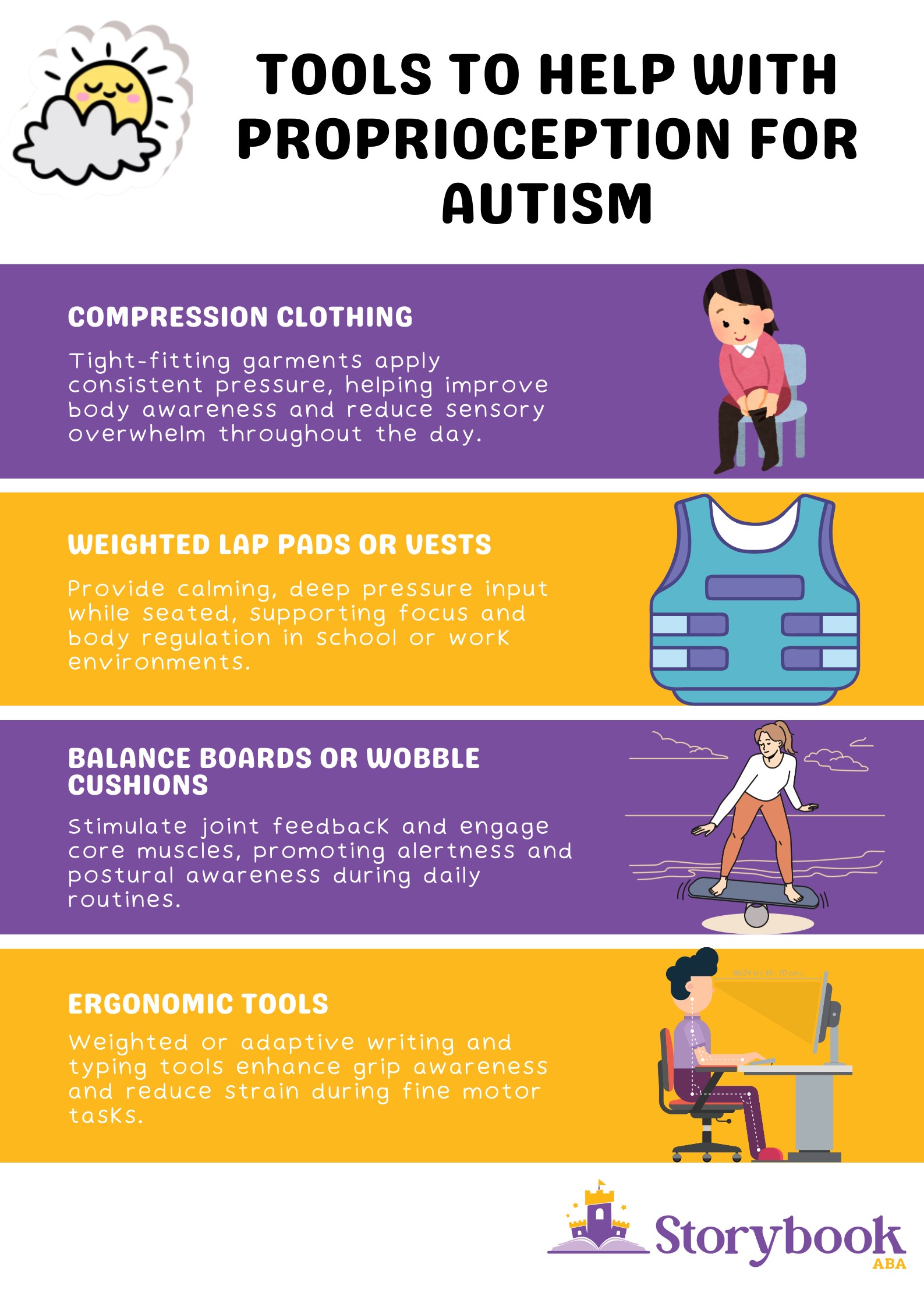
These tools are not one-size-fits-all, but experimenting with different options can uncover what provides the right kind of support without discomfort or distraction.
How Does Proprioception Relate to Anxiety or Burnout?
Many autistic adults experience chronic anxiety or sensory burnout, and proprioception often plays a hidden role in these experiences. When the body constantly feels “off” or undefined, it can trigger stress responses—even in calm environments.
Integrating proprioceptive input into daily routines can reduce these effects and build a sense of stability. It’s not about “fixing” the body—it’s about supporting the sensory system so it can work more comfortably and consistently.
Can ABA Therapy Help Adults With Proprioceptive Needs?
Yes, ABA therapy can help adults with proprioceptive needs by teaching strategies to recognize and manage sensory input effectively. While not a sensory therapy, ABA can incorporate movement breaks, environmental adaptations, and functional routines.
Therapists may collaborate with occupational therapists to ensure proprioceptive supports align with behavioral goals, helping adults and children improve regulation, focus, and independence in daily life.
Guide Your Child’s Progress With ABA Therapy
Understanding proprioception in autistic adults opens the door to more compassionate, effective care. Whether it’s subtle coordination struggles or daily exhaustion from poor sensory feedback, these challenges deserve attention and tailored support. Proprioception isn’t a buzzword—it’s a real, body-based experience that shapes how people feel, function, and relate to the world.
At Storybook ABA, we’re here to support sensory needs across the lifespan. Our team provides individualized ABA therapy in Maryland and Virginia, helping clients and families build supportive routines that reflect real-world challenges and goals.
Get in touch with us to learn how ABA therapy in Maryland or Virginia can help you or your loved one gain clarity, confidence, and greater body awareness through sensory-informed behavioral support.