

Key Points:
- Night terrors are more common in children with autism, often resulting from sensory sensitivities, sleep disorders, or anxiety.
- Children with autism may experience disrupted sleep patterns, leading to an increased likelihood of night terrors.
- Effective management includes creating a calming sleep environment, establishing a consistent bedtime routine, and seeking professional help when necessary.
Children with autism often face unique challenges related to their sensory processing, emotional regulation, and sleep patterns. According to statistics, up to 83% of autistic individuals experience some form of sleep disturbance. One of the most disturbing issues many parents encounter is night terrors.
These episodes of intense fear during sleep can be alarming and difficult for both the child and their caregivers. If you’re wondering whether night terrors are common in autism, the answer is yes.
Many children with autism experience night terrors at a higher rate compared to typically developing children. In this article, we will dive into the causes, symptoms, and potential solutions to help manage night terrors in children with autism.
Are Night Terrors Common in Autism?
Yes, night terrors are common in autism. Children with autism spectrum disorder (ASD) are more likely to experience sleep disturbances, including night terrors, than their neurotypical peers. Night terrors are distinct from nightmares, and they often occur during deep non-REM sleep, leading to sudden and intense episodes of fear that are difficult for the child to wake from.
Children with autism may be particularly susceptible to night terrors due to sensory sensitivities, difficulty with self-regulation, and challenges with sleep hygiene. These factors can contribute to disrupted sleep cycles and increase the likelihood of these distressing episodes.
4 Causes of Night Terrors in Children with Autism?
Understanding the underlying causes of night terrors in children with autism can help parents develop strategies to manage these episodes. There are several potential contributing factors, which may vary depending on the individual child. Below are some examples:
1. Sensory Sensitivities
Many children with autism have heightened sensory sensitivities, which can make it harder for them to relax and feel safe during sleep. Overstimulation from lights, sounds, or textures can trigger anxiety and discomfort, potentially leading to night terrors. A child may experience sensory overload during the day, and this heightened state of alertness can carry over into their sleep cycle.
2. Anxiety and Emotional Regulation Issues
Children with autism often experience anxiety and have difficulty managing their emotions. The stress and anxiety that build up during the day may not be fully processed or resolved before bedtime, resulting in night terrors. The emotional overwhelm can make it hard for the child to feel calm and secure during sleep, contributing to sudden awakenings and intense fear.
3. Sleep Disorders
Many children with autism struggle with sleep-related issues such as insomnia, difficulty falling asleep, or frequent waking during the night. Disruptions in sleep cycles can increase the likelihood of night terrors. Conditions like sleep apnea or restless leg syndrome are also common in children with autism, which may interfere with the quality of sleep and increase the risk of night terrors.
4. Medications and Health Conditions
In some cases, medications used to treat symptoms of autism or other health conditions may contribute to sleep disturbances and night terrors. For example, certain medications may affect the child’s sleep patterns, making it more difficult to achieve restful sleep. Additionally, other medical conditions like gastroesophageal reflux disease (GERD) or seizures could impact sleep quality, potentially triggering night terrors.
If you’re exploring how autism can impact sleep, it’s also worth understanding how physical health plays a role. Our article, Why Colitis is Common in Autism and How to Cope, dives into the gut-brain connection and how gastrointestinal issues like colitis can affect behavior, mood, and even sleep in autistic individuals.
What are the Symptoms of Night Terrors in Children with Autism?
Night terrors can be particularly challenging to identify and manage in children with autism due to differences in communication and behavior. Understanding the signs and symptoms can help parents recognize night terrors and respond appropriately:
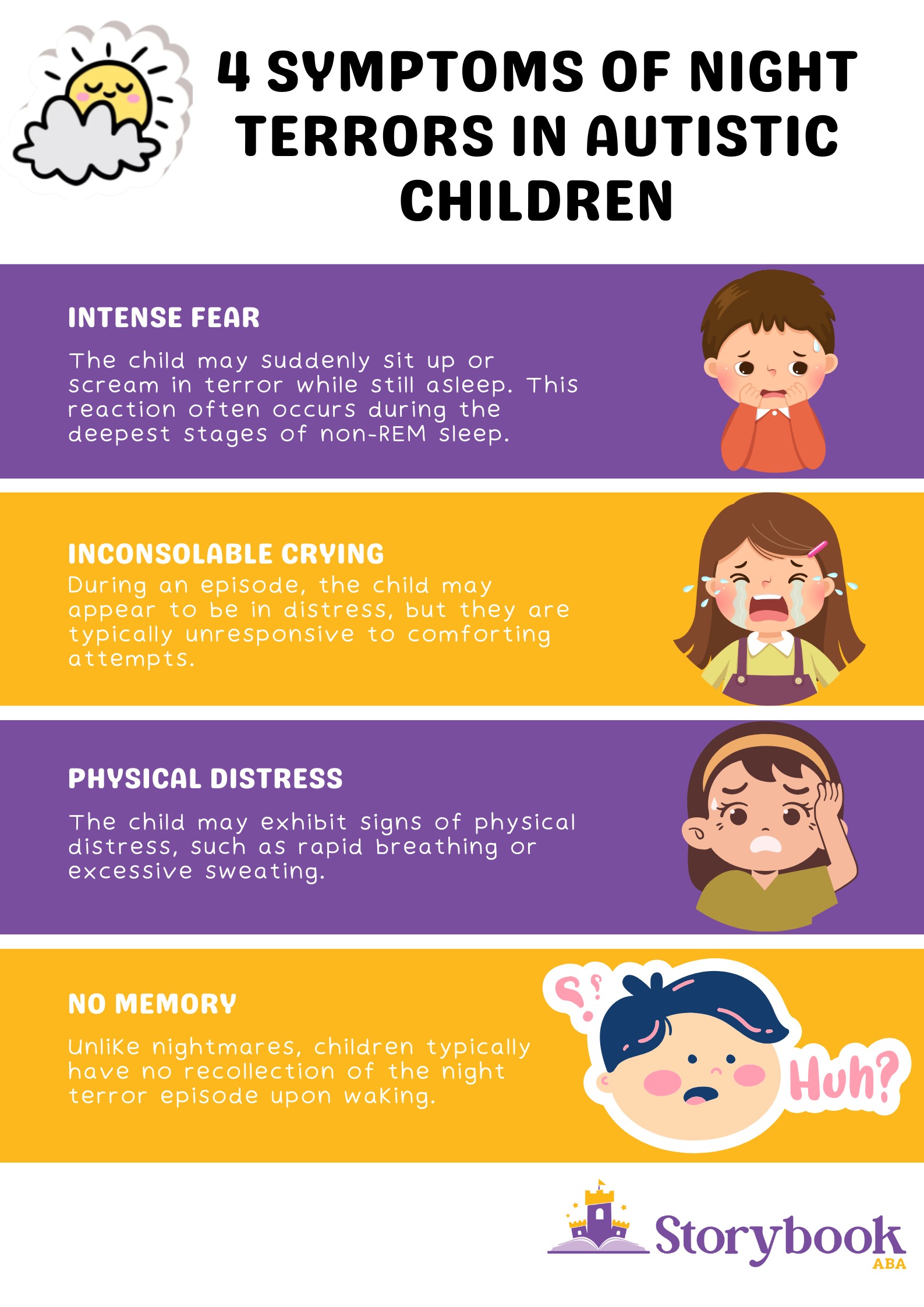
While night terrors can be frightening for parents to witness, it’s important to understand that children do not remember these events and are not intentionally acting out. Their bodies and minds are simply reacting to fear and stress while they are in a deep stage of sleep.
How Can Parents Manage Night Terrors in Children with Autism?
Managing night terrors requires a combination of practical strategies, environmental adjustments, and emotional support. Although night terrors are often temporary, they can be overwhelming for both children and parents. Here are some steps you can take to reduce the frequency and intensity of night terrors:
1. Establish a Calming Bedtime Routine
A consistent and calming bedtime routine is essential for children with autism, especially those who experience sensory sensitivities. A predictable routine can help reduce anxiety and prepare the child for a restful night’s sleep. Activities like reading a book, taking a warm bath, or listening to soft music can signal to the child that it’s time to wind down.
Creating a relaxing environment can also help: dim the lights, reduce noise levels, and ensure that the child’s bedroom feels safe and secure.
2. Ensure Proper Sleep Hygiene
Good sleep hygiene is crucial for children with autism, particularly for those who are prone to night terrors. Set a regular bedtime and wake-up time to help regulate the child’s internal clock. Avoid stimulating activities, such as screen time, close to bedtime. Reducing caffeine and sugar intake, especially in the late afternoon and evening, can also help ensure better sleep quality.
3. Monitor Sensory Inputs
Since children with autism are often hypersensitive to sensory stimuli, adjusting the child’s sleep environment to minimize sensory overload can be beneficial. Consider the following adjustments:
- Use blackout curtains to block out excess light.
- Use a white noise machine or soft music to mask any disturbing sounds.
- Choose comfortable sleepwear that doesn’t irritate the skin.
4. Calm the Child During an Episode
While night terrors can be difficult to manage during the episode itself, it’s important to stay calm and ensure the child’s safety. Avoid trying to wake the child, as this can be disorienting and may make the situation worse.
Instead, gently guide the child back to bed, if possible, and offer reassurance with your presence. Staying calm during the episode can help prevent further distress.
5. Consult with a Healthcare Professional
If night terrors persist or become more frequent, it’s important to consult with a healthcare professional to rule out underlying medical conditions. A pediatrician or sleep specialist may be able to identify any contributing factors, such as sleep apnea or a seizure disorder, and offer treatment options. In some cases, a referral to a sleep clinic may be necessary for further evaluation.
Empower Your Child with ABA Therapy
Storybook ABA offers ABA therapy in Maryland and Virginia to help children with autism manage behavioral challenges, including those associated with night terrors. Applied Behavior Analysis (ABA) therapy focuses on improving communication, emotional regulation, and sleep patterns, all of which can contribute to reducing the frequency of night terrors.
ABA therapy can be highly effective in providing children with the tools they need to manage anxiety, emotional distress, and sensory overload. Our skilled therapists work closely with families to create individualized plans tailored to each child’s unique needs.
If night terrors are affecting your child’s sleep and well-being, Storybook ABA can help. Contact us today to learn how ABA therapy in Maryland and Virginia can provide your child with the skills they need to manage sleep disturbances and improve their overall quality of life.