

2. Self-Injury or Repetitive Harmful Actions
This medication helps decrease self-injury and harmful repetitive actions, supporting overall safety and well-being while reducing the negative impact of such behaviors on daily life.
3. Severe Mood Instability
Aripiprazole stabilizes mood swings, offering emotional regulation and enhancing coping abilities, allowing autistic adults to manage daily stress and social interactions with fewer emotional disruptions.
4. Emotional Outbursts or Explosive Behavior
By addressing mood regulation, aripiprazole minimizes emotional outbursts and explosive behaviors, leading to better emotional control and more consistent behavior in both social and therapeutic environments.
5. Persistent Irritability Unresponsive to Environmental Changes
When irritability persists despite environmental adjustments, aripiprazole can help manage this symptom, leading to reduced frustration and better daily functioning for autistic adults.
While it doesn’t treat autism itself, it targets co-occurring behaviors that make daily functioning more difficult.
How Is Aripiprazole Dosed for Adults with Autism?
There is no one-size-fits-all dosage when prescribing aripiprazole for autistic adults. Dosing should always be based on the individual’s body weight, symptom severity, and how well they tolerate the medication. Physicians typically begin with a low dose and increase slowly to find the most effective, lowest-risk amount.
The typical dosage guide for adults includes:
- Starting Dose: 2–5 mg per day
- Titration: Adjusted weekly or bi-weekly by 2–5 mg
- Common Maintenance Range: 10–15 mg per day
- Maximum Dose: 30 mg per day (though rarely necessary for autism-related symptoms)
Aripiprazole is usually taken once daily and can be taken with or without food. Tablets, liquid, and orally disintegrating forms are available for adults with swallowing difficulties or sensory issues. For a deeper look at alternative treatment options, read our article Understanding the Role of Low Dose Naltrexone in Autism Care.
What Are the Benefits of Aripiprazole in Autistic Adults?
For adults with moderate to severe behavioral symptoms, aripiprazole can offer relief that improves daily life and opens the door for more productive behavioral therapy. While results vary, many individuals and caregivers report a noticeable difference in stability and emotional regulation within the first few weeks.
The benefits of airpiprazole in autistic adults include:
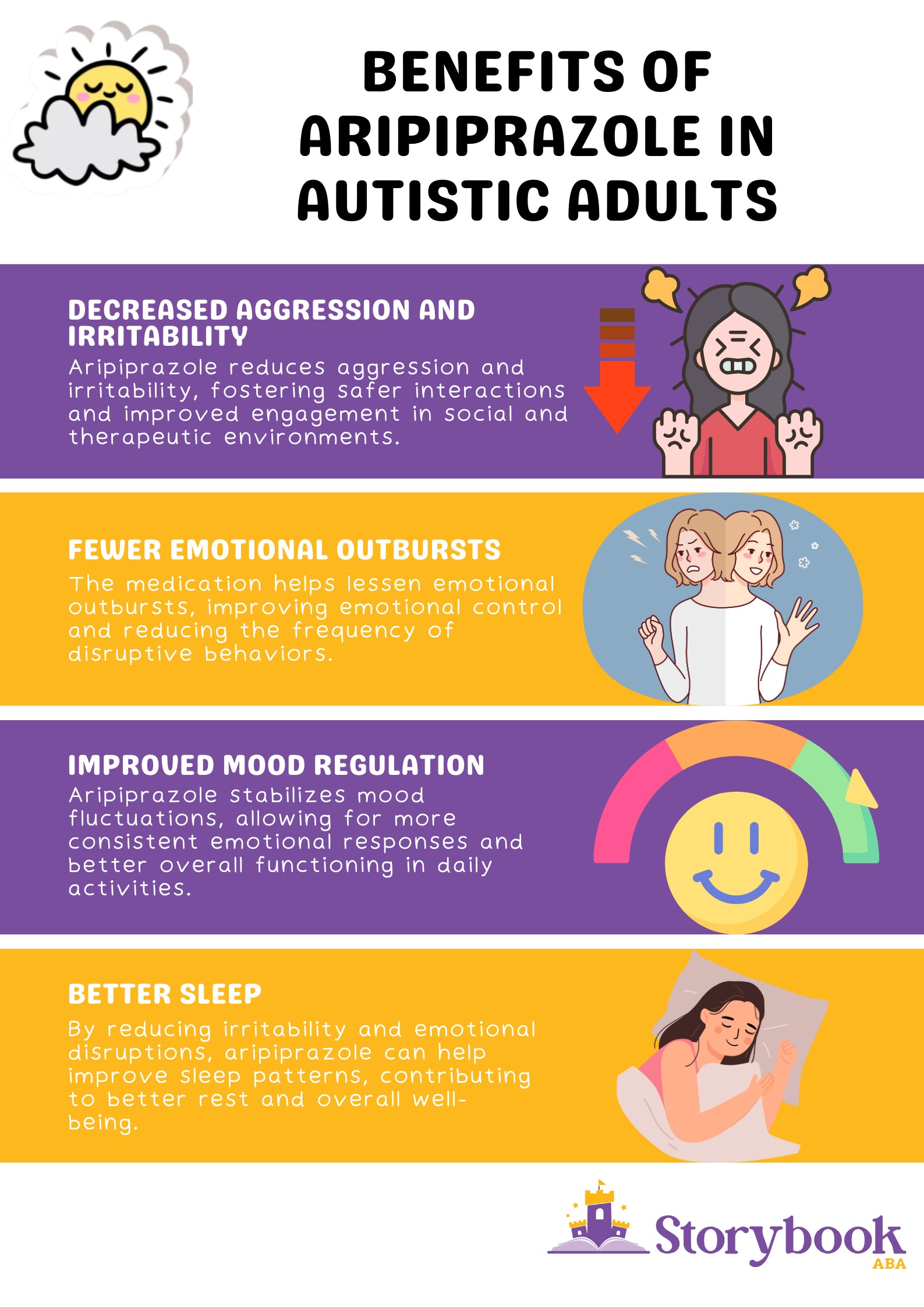
While medication alone isn’t a solution, it can make other interventions more effective by reducing behavioral intensity.
Can Aripiprazole Be Used Long-Term?
Yes, aripiprazole can be used long-term, but with careful monitoring. Many autistic adults remain on it for years if the benefits outweigh the side effects. However, long-term use must involve regular medical reviews to avoid or catch potential metabolic issues or movement disorders.
Some individuals may be able to taper off aripiprazole after stability is achieved and skills are strengthened through behavioral interventions like ABA therapy. Tapering should always be gradual and supervised by a physician.
Are There Side Effects to Consider?
Like all medications, aripiprazole carries potential side effects. Most are mild and improve with dose adjustments, but some require closer monitoring or even discontinuation. Side effects may be more noticeable in individuals sensitive to changes in body sensation or routine.
The common side effects of taking aripiprazole include:
1. Sleepiness or Drowsiness
Aripiprazole may cause drowsiness, especially during the early stages of treatment, affecting daytime functioning. It’s important to monitor energy levels and adjust the dosage if necessary to minimize disruption to daily activities.
2. Restlessness or Akathisia
Some individuals may experience restlessness or akathisia, which is characterized by an inability to sit still or constant pacing. This side effect can be uncomfortable and may require a dose adjustment or additional treatment.
3. Dizziness or Lightheadedness
Dizziness or lightheadedness can occur, particularly when standing up quickly. It’s important to take caution with movement and report these symptoms to a healthcare provider if they persist or worsen.
4. Weight Gain or Increased Appetite
Aripiprazole may lead to weight gain and an increased appetite, which could contribute to long-term health concerns. Caregivers should monitor eating habits and ensure a balanced diet is maintained.
5. Headache or Nausea
Headaches and nausea are common side effects of aripiprazole, particularly when first starting the medication. These symptoms typically improve over time, but should be monitored and discussed with a healthcare provider if persistent.
Healthcare providers often monitor weight, blood sugar, and cholesterol levels regularly for those on long-term treatment.

How Long Does It Take to See Results?
Most individuals start to see improvements in behavior within 1 to 2 weeks after starting aripiprazole. However, the full benefits may take several weeks as the dose is fine-tuned and the body adjusts.
Here are the key timeframes to consider:
- Initial changes: 7–14 days
- Noticeable behavior improvement: 2–4 weeks
- Stable results: After 4–6 weeks of consistent use
Behavioral therapy should ideally continue alongside medication for optimal outcomes. The medication helps manage symptoms, while therapy builds skills and independence.
What Should Caregivers Consider Before Starting Aripiprazole?
Starting a new medication, especially one affecting brain chemistry, is a significant decision. Aripiprazole can be effective, but its side effects can vary, so it’s important to understand how it works. Caregivers should ask about risks, benefits, and expected outcomes before starting treatment.
Clear communication between caregivers, the prescribing physician, and the individual receiving treatment is essential. Caregivers should also feel comfortable expressing concerns, asking about monitoring, and understanding how to track progress.
Additionally, it’s vital to monitor changes in behavior or health once treatment begins. Regular follow-ups with the prescribing physician can help assess the medication’s effectiveness and address any side effects. Ongoing dialogue ensures necessary adjustments are made for the best outcomes. For more insight into supporting development through nutrition, read our article, “Learn How Folic Acid Supports Better Language in Autistic Individuals.”
Can Aripiprazole Be Combined with ABA Therapy?
Absolutely. Aripiprazole and ABA therapy can complement each other very effectively. Medication can reduce the behavioral intensity or emotional volatility that makes learning difficult, while ABA therapy focuses on building the replacement behaviors, communication skills, and coping mechanisms needed for long-term success.
For example, if an adult experiences fewer aggressive episodes due to aripiprazole, ABA therapy can more easily reinforce positive behaviors, teach calming strategies, or improve independence in routines.
Using both approaches together creates a more supportive, well-rounded treatment plan that addresses both the biological and behavioral aspects of autism.
Maximize Your Child’s Success with ABA Therapy
Medication like aripiprazole for autistic adults can play an important role in improving daily functioning, but it’s often just one part of the care puzzle. True progress happens when behavioral interventions are in place to support long-term skill development, emotional regulation, and independence.
At Storybook ABA, we provide expert ABA therapy in Maryland and Virginia, focusing on compassionate, individualized care for autistic individuals of all ages. Our approach helps adults build functional life skills, manage emotions, and reduce challenging behaviors using data-driven techniques.
Whether aripiprazole is part of your treatment plan or not, ABA therapy can give autistic adults the tools they need to thrive—at home, at work, and in the community. Contact us today to learn how we can help your family take the next step forward.