

Key Points:
- Emotional sensitivity in autism often appears as intense reactions to subtle emotional cues or sensory stimuli.
- Many autistic children struggle with identifying, expressing, or regulating emotions due to differences in brain processing and communication.
- Consistent routines, visual supports, and ABA therapy can improve emotional coping skills and reduce meltdowns or shutdowns.
Understanding the link between autism and emotional sensitivity is crucial for parents who want to support their child’s emotional development. Children on the autism spectrum often experience emotions with greater intensity and may respond more dramatically to changes, stress, or even seemingly minor social cues.
According to studies, up to 60% of autistic children experience problems with emotional regulation. What may appear as overreaction or avoidance is often a genuine internal struggle to manage emotional input. These sensitivities are not behavioral problems; they are neurological and developmental differences that deserve thoughtful support.
What Is Emotional Sensitivity in Autism?
Emotional sensitivity in autism refers to heightened or atypical responses to emotional stimuli, often influenced by differences in sensory processing, communication, and social understanding. Children may react more intensely to disappointment, struggle with change, or have difficulty interpreting others’ emotions.
This sensitivity can take many forms—quick emotional shifts, overreactions to mild criticism, or deep upset when routines are disrupted. Some children may even show delayed reactions or shutdowns. Emotional experiences tend to feel overwhelming, and without the right supports in place, these feelings can quickly spiral into distress or withdrawal.
Why Are Children with Autism More Emotionally Sensitive?
Emotional sensitivity in autism is deeply rooted in brain differences. Studies using brain imaging have shown that autistic individuals may have heightened activity in the amygdala, an area of the brain involved in emotional processing. This increased activity can make emotions feel more intense and harder to regulate.
Many autistic children also have differences in interoception—the ability to understand internal bodily signals. This can make it harder for them to label feelings like hunger, fatigue, or anxiety, which then show up as behavioral challenges. Language delays and differences in social communication further complicate the ability to express emotions clearly.
Together, these differences can make everyday interactions—like group activities or transitions—emotionally exhausting.
What Triggers Emotional Overload in Autism?
Identifying common triggers can help caregivers and educators prevent emotional overload before it happens. While every child is different, certain types of situations tend to provoke strong emotional responses in many autistic children.
Common emotional triggers in autism include:
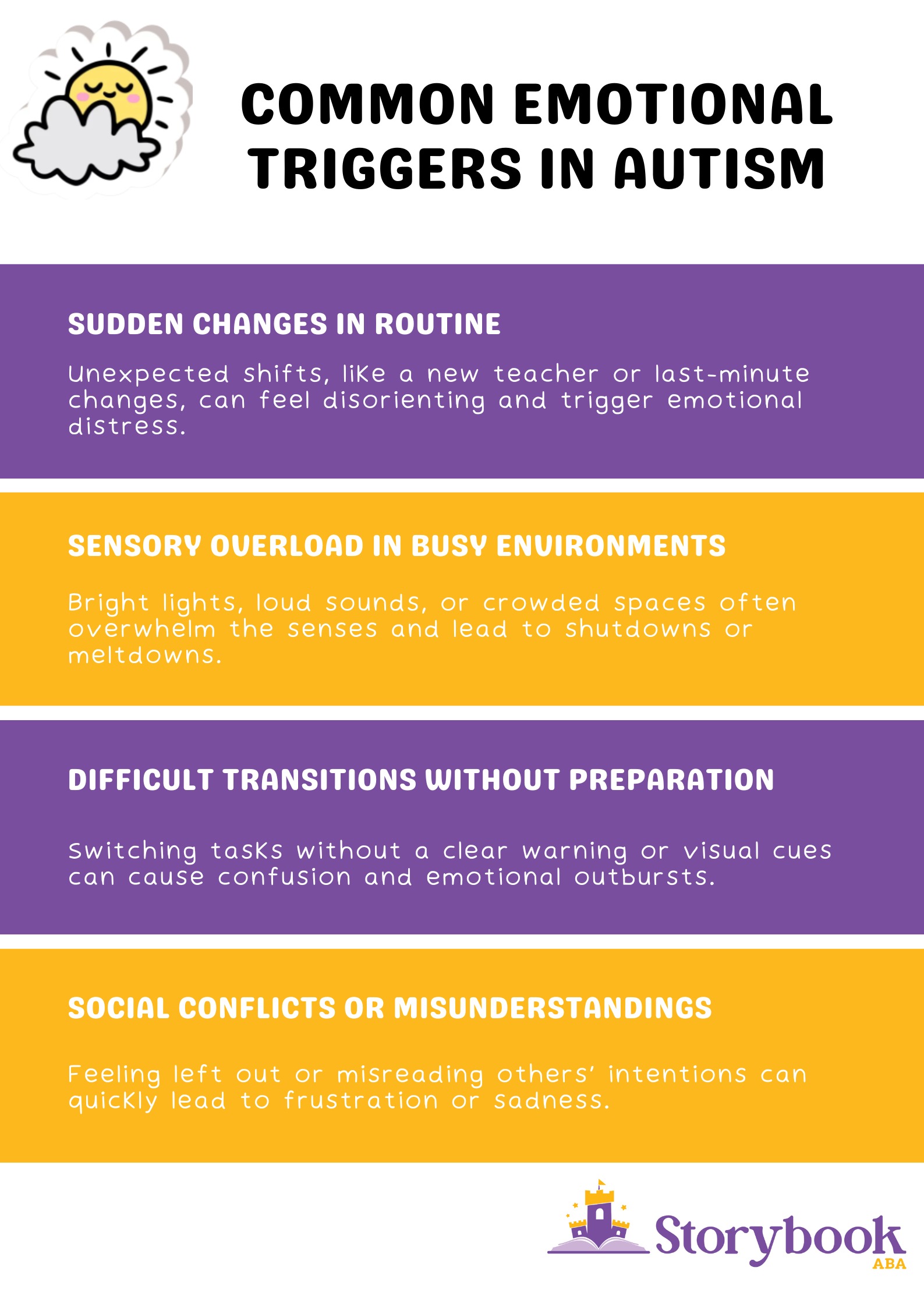
By recognizing patterns in emotional responses, caregivers can anticipate challenges and provide proactive support to reduce distress.
How Does Emotional Sensitivity Impact Daily Life?
When emotional sensitivity goes unaddressed, it can affect nearly every aspect of a child’s life. From school participation to peer relationships, even basic tasks like getting dressed or trying new foods can become sources of anxiety or conflict.
In school, emotionally sensitive children may avoid group activities, struggle with following instructions, or become overwhelmed during loud assemblies or unstructured time. At home, they may have frequent meltdowns or cling to routines as a way of feeling safe. Over time, these difficulties can lead to withdrawal, low self-esteem, or social isolation.
Caregivers may find themselves constantly “walking on eggshells” to avoid emotional outbursts, not realizing that the child is doing the same internally—just to make it through the day, often teetering between emotional overwhelm and shutdown, a distinction further explored in Identifying Autistic Shutdowns and How They Differ from Panic Attack.
What Are the Signs of Emotional Sensitivity in Autism?
While emotional intensity can look different across age groups and developmental levels, there are consistent behaviors that may signal heightened emotional reactivity in children on the spectrum.
Key signs to watch for include:
1. Meltdowns or Shutdowns Under Stress
Emotional overload can lead to explosive outbursts or complete withdrawal, especially in chaotic or overstimulating settings.
2. Fear-Based Avoidance of New Situations
They may resist trying new activities due to anxiety about unfamiliar experiences or potential emotional discomfort.
3. Heightened Empathy or Emotional Mirroring
Some children feel others’ emotions so strongly that they become overwhelmed by them, even when not directly involved.
4. Unusual or Limited Facial Expressions
They may show either very intense or very muted facial reactions, making it harder for others to interpret their emotional state.
5. Unexplained Emotional Outbursts
Outbursts can happen without a clear trigger, especially in sensory-rich environments where emotional cues may be misinterpreted.
Parents often recognize these patterns over time but may not always link them to sensory or processing difficulties.
How Can Parents Support Emotional Regulation?
Supporting emotional sensitivity starts with meeting the child where they are emotionally—not where we wish they were. Strategies that are proactive, respectful, and consistent often make the biggest impact.
Helpful approaches include:
- Labeling emotions in real time using simple words and visuals.
- Creating calming routines for times of stress (e.g., breathing, squeezing a stress ball).
- Practicing emotional expression through stories, role-play, or games.
- Using emotion charts to help children communicate their feelings nonverbally.
- Teaching body awareness, such as noticing when their heart is beating fast or their hands feel tense.
Consistent responses help children learn that emotions are manageable—not something to be feared or avoided.
What Are the Best Tools for Managing Emotional Sensitivity?
When it comes to emotional development in autism, tools and visuals are often more effective than verbal explanations alone. External supports help children process emotions at their own pace and give structure to moments that might otherwise feel chaotic.
Below are some widely used tools and strategies that parents, teachers, and therapists rely on to support emotionally sensitive children.
Effective tools and support include:
1. First-Then Boards to Support Transitions
By showing what’s happening now and what’s next, these visuals reduce anxiety and resistance during emotional or non-preferred tasks.
2. Calm-Down Kits for Self-Regulation
Kits stocked with sensory tools—like noise-canceling headphones, weighted items, or fidgets—offer tactile ways for children to soothe themselves.
3. Social Stories for Emotional Learning
Custom narratives teach children how to navigate specific emotional challenges, from handling disappointment to asking for help.
4. Feelings Thermometers to Track Intensity
Visual scales help children assess how strong their emotions are, promoting early intervention and response before overwhelm sets in.
5. Safe Spaces for Emotional Decompression
Designated quiet areas give children a retreat to recover from overstimulation or emotional stress without punishment or shame.
Choosing the right tools depends on the child’s age, interests, communication style, and triggers. But most children benefit from having predictable supports in place when their emotions become difficult to manage.
How Can ABA Therapy Help with Emotional Sensitivity?
Applied Behavior Analysis (ABA) is a highly structured, individualized approach that supports emotional and behavioral development through positive reinforcement and measurable goals. For children experiencing emotional sensitivity in autism, ABA provides practical methods to identify triggers, build coping skills, and respond in ways that promote emotional resilience.
Unlike reactive discipline, ABA focuses on what happens before the emotion escalates—and teaches more adaptive responses. The therapy is tailored to each child’s environment and skill level, whether that’s recognizing feelings, asking for a break, or using words instead of tantrums.
Most importantly, ABA therapy doesn’t “fix” emotions—it supports a child’s ability to experience and manage them in safer, healthier ways.
Help Your Child Thrive with ABA Therapy
Children with autism and emotional sensitivity need support that respects their feelings and teaches practical skills for coping with them. At Storybook ABA, we specialize in behavior-based programs that help children understand, regulate, and express emotions in ways that support their growth—not suppress it.
Through ABA therapy in Maryland and Virginia, our team helps children recognize emotional triggers, build flexibility, and develop lasting coping strategies. Whether your child struggles with meltdowns, social anxiety, or emotional overload, our therapy sessions are built around individualized goals that make day-to-day life more manageable.
Contact us today to learn how targeted ABA therapy can support your child’s emotional well-being.