
What is the Role of Magnesium in the Body?
Magnesium is a vital mineral involved in over 300 biochemical reactions that keep the body functioning properly. It plays a key role in maintaining healthy bones, regulating heart rhythm, and supporting the immune system.
For children, and especially those with autism, magnesium can be particularly important due to its influence on systems that affect behavior, mood, and physical well-being.
It contributes to:
- Nerve transmission and muscle function
- Mood stabilization
- Sleep quality
- Glucose metabolism
- Production of neurotransmitters like serotonin and dopamine
For neurodevelopmental conditions like ASD, magnesium’s calming effect on the nervous system makes it an area of interest for researchers and caregivers alike.
Why Are Magnesium Levels Often Low in Autistic Children?
Children on the autism spectrum often exhibit selective eating habits, which may contribute to nutrient deficiencies. Magnesium, being a mineral commonly found in leafy greens, nuts, seeds, and whole grains, might be under-consumed due to food aversions.
Other contributing factors include:
- Poor gut absorption: Many autistic children have gastrointestinal issues, which can reduce nutrient absorption.
- Increased stress levels: Chronic stress depletes magnesium reserves in the body.
- Metabolic differences: Some children with ASD may have unique metabolic needs or imbalances that affect how they use magnesium.
Over time, a deficiency in magnesium may amplify symptoms like irritability, inattention, and poor sleep.

What Are the Signs of Magnesium Deficiency in Children with Autism?
Before considering magnesium supplementation, it’s essential to recognize the signs that may point to a deficiency. These symptoms can sometimes overlap with typical autism-related behaviors, making professional evaluation crucial.
Common signs of magnesium deficiency in autistic children may include:
- Irritability or mood swings
- Restless sleep or difficulty falling asleep
- Muscle cramps or twitching
- Sensitivity to loud sounds or bright lights
- Constipation
- Difficulty concentrating or staying calm
- Anxiety or panic-like symptoms
Blood tests or red blood cell magnesium assessments can help determine actual magnesium levels, though clinical observation is often used as well.
How Might Magnesium Help Children on the Autism Spectrum?
While magnesium is not a standalone treatment, it can help regulate systems often impacted by autism. When paired with therapeutic approaches like ABA, nutritional support may offer enhanced benefits.
Potential benefits of magnesium for children with autism:
1. Improved Sleep
Magnesium supports melatonin production and helps relax muscles, promoting deeper and more consistent sleep. This can be especially helpful for children with autism who often struggle with falling or staying asleep.
2. Reduced Hyperactivity
Magnesium may also help reduce hyperactivity and improve attention span. This effect can make it easier for children to participate in daily routines and learning activities.
3. Mood Regulation
Magnesium influences neurotransmitter activity and may help lower irritability and anxiety. Maintaining balanced magnesium levels can contribute to a more stable and positive emotional state.
4. Better Focus
Stabilizing magnesium levels can improve concentration and reduce sensory overload. Children may find it easier to stay engaged with tasks and follow instructions.
5. Enhanced Sensory Processing
By calming the nervous system, magnesium may reduce hypersensitivities to sounds, textures, or lights. This can lead to fewer sensory-related meltdowns and improved comfort in everyday environments.
These benefits are typically most noticeable when magnesium is introduced in a balanced, monitored way under guidance from a healthcare provider.
What Types of Magnesium Are Best for Children with Autism?
There are several forms of magnesium, but not all are equally absorbed or tolerated. It’s important to choose a type that is gentle on the digestive system and has high bioavailability.
Commonly recommended forms include:
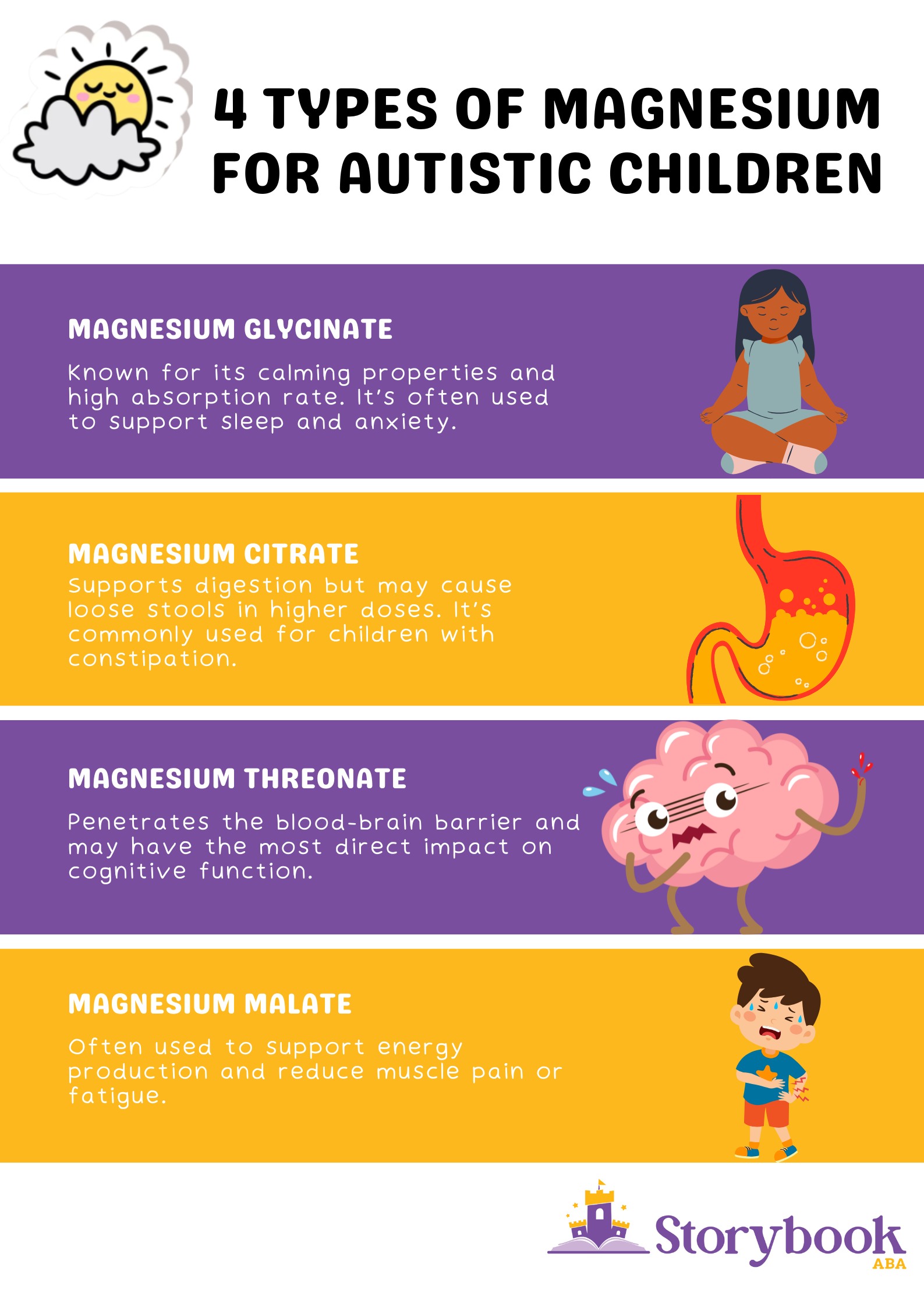
Each child may respond differently, so personalization and professional oversight are key.
Can Magnesium-Rich Foods Support Autism Management?
Yes, incorporating magnesium-rich foods into a child’s diet is often the first step before considering supplements. Whole foods offer a natural and balanced way to increase magnesium intake, and they come with additional nutrients that support overall health. This approach can naturally support behavioral and emotional regulation without the risk of side effects linked to high-dose supplementation, such as diarrhea or stomach upset.
For children with autism who may have selective eating habits, introducing magnesium-rich foods can be a gradual process. Encouraging varied and nutrient-dense meals through food therapy or occupational therapy can help manage sensory-based food aversions over time.
Over weeks or months, children may become more open to trying new textures and flavors, which helps create a more balanced and supportive diet that benefits both neurological and physical well-being.
Are There Any Risks or Side Effects of Magnesium Supplements?
While magnesium is generally safe, excessive intake or incorrect forms can lead to side effects. Supplements should only be used when recommended by a healthcare provider, especially for children.
Potential side effects include:
- Diarrhea
- Nausea
- Abdominal cramping
- Interactions with medications (e.g., antibiotics, diuretics)
- Risk of overdose if improperly dosed
Monitoring is crucial, especially for children with kidney issues or other health conditions. Regular check-ups ensure that treatments, like stimulant medication used in autism and ADHD, are safely managed and tailored to each child’s needs. For more insights on this topic, check out our article, “Exploring Stimulant Medication in Autism and ADHD Treatment.”
It’s crucial to work closely with a healthcare provider to ensure that any supplementation is safe and effective for the child’s overall well-being.

How Can Parents Decide If Magnesium Is Right for Their Child?
Every child with autism is different, with unique nutritional needs, sensitivities, and medical considerations. What works well for one child may not be suitable for another, especially when it comes to supplements that can affect neurological and digestive systems. Below are some helpful steps for parents to consider:
1. Get a Nutritional Assessment
A nutritional assessment helps identify any potential deficiencies affecting your child’s behavior and health. Addressing these deficiencies supports their physical and cognitive development.
2. Rule Out Other Causes
Behavioral changes or sleep issues can stem from various factors. It’s important to rule out other causes before focusing on dietary interventions.
3. Start Dietary Changes First
Implementing dietary changes before supplements allows your child to benefit from natural nutrients, supporting long-term health without the side effects of supplements.
4. Track Patterns and Improvements
Keeping a journal of behavior, sleep, and diet helps identify triggers and track progress, making it easier to adjust strategies as needed.
5. Collaborate with an ABA Therapist
Working with an ABA therapist ensures dietary changes align with therapy goals, creating a holistic approach to support your child’s development.
Understanding your child’s whole health picture ensures that magnesium use is safe and targeted.
Support Your Child’s Growth with ABA Therapy
At Storybook ABA, we offer personalized ABA therapy in Maryland and Virginia to support children on the autism spectrum. We understand that each child is unique, and we work closely with families to develop treatment plans that nurture emotional, social, and behavioral development.
If you’re exploring ways to support your child, whether through nutritional guidance, behavior strategies, or both, Storybook ABA can be part of your journey. Our team of compassionate professionals helps children build foundational skills that last a lifetime.
Learn how ABA therapy can support your child. Contact us today to schedule a consultation in Maryland or Virginia.