

Key Points:
- Many autistic individuals experience hypersensitivity or hyposensitivity to smell, which can trigger emotional or behavioral responses.
- Smell-related sensitivities may affect daily routines, school environments, and even social interactions.
- Practical strategies—like scent-free zones, coping tools, and ABA support—can help manage smell sensitivity effectively.
Smell can be a powerful—and often overwhelming—sense for children on the autism spectrum. For many families, autism smell sensitivity is a daily challenge that impacts routines, learning environments, and emotional regulation. Unlike typical scent preferences or dislikes, this sensitivity is often extreme and can lead to intense discomfort or distress from smells that others barely notice.
According to research, over 50% of autistic children experience unusual sensitivities to smell. These sensitivities can shape how a child engages with the world and may be misunderstood as behavioral issues when they are actually sensory responses.
What Is Smell Sensitivity in Autism?
Smell sensitivity refers to a heightened or reduced response to olfactory input, where smells are either intensely overwhelming or barely noticed by the individual. This sensory sensitivity can cause discomfort, avoidance, or even meltdowns in children with autism.
Some autistic individuals may be hypersensitive—smells that seem neutral to others may feel unbearable. Others may be hyposensitive, showing little to no reaction to strong odors or even seeking out intense smells to regulate their sensory input. These differences can impact eating habits, hygiene routines, classroom learning, and social participation.
How Can Smell Sensitivity Affect Daily Life?
For children with autism, intense reactions to smell aren’t about being picky or dramatic—they’re real neurological responses. Families often discover these sensitivities through trial and error: a meltdown every time they walk into a certain grocery store or resistance to wearing clean clothes washed in a particular detergent.
Smell sensitivity can show up in many parts of daily life:
- Food refusal based on smell rather than taste.
- Avoidance of people or places with strong scents (perfume, cleaning supplies, etc.).
- Discomfort in public spaces like malls, restrooms, and cafeterias.
- Stress around hygiene due to strong-smelling soap, shampoo, or toothpaste.
- Behavioral reactions like gagging, covering the nose, crying, or fleeing.
Understanding your child’s olfactory triggers is the first step toward creating a more comfortable, accessible environment.
What Are Common Smell Triggers in Autism?
Each child with autism is different, but there are common scent-related triggers that parents and educators should be aware of. Smell sensitivities may be linked to specific categories like chemical odors or biological scents.
Here are some frequent triggers:
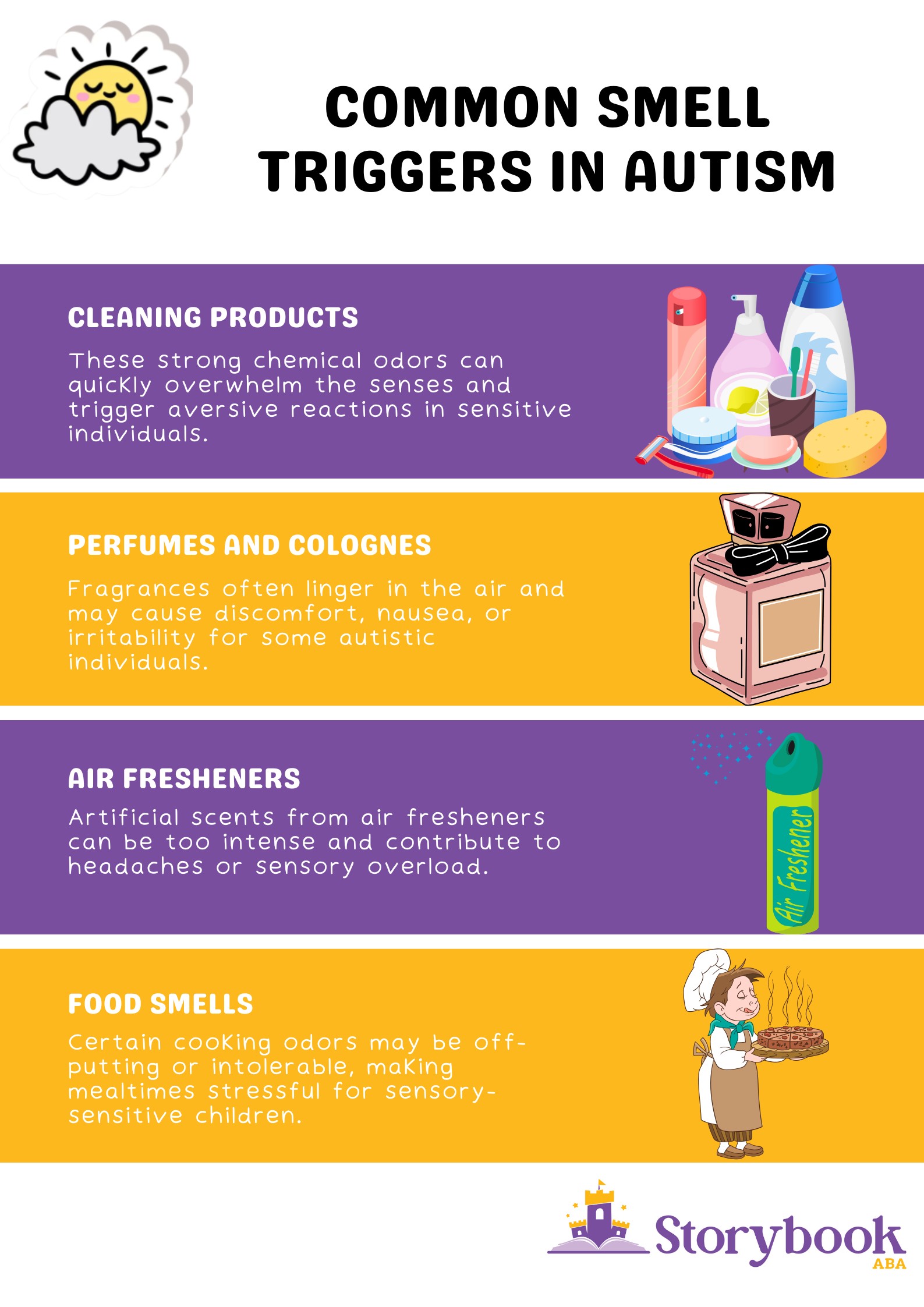
Tracking what your child reacts to can help identify patterns and prevent overwhelming encounters in the future.
Can Smell Sensitivity Be Reduced Over Time?
Smell sensitivity may not completely go away, but with the right strategies and supports, children often become more adaptable over time. Gradual exposure, paired with positive reinforcement and coping tools, can help some children build tolerance for previously overwhelming scents.
That said, it’s not about forcing desensitization. Pushing children too fast or without consent can backfire and increase stress. Instead, support should focus on helping them understand their sensory experiences, advocate for their needs, and access tools that help them function comfortably in various environments.
Working with a behavior therapist or occupational therapist can be useful in developing structured, individualized plans for exposure or tolerance-building, especially when smell sensitivities interfere with daily functioning like hygiene or mealtime.
What Strategies Help Manage Smell Sensitivity?
Managing olfactory sensitivity in autism involves a combination of avoidance, accommodation, and gradual desensitization where appropriate. It’s important to validate your child’s sensory experience and build routines that respect their sensory boundaries.
Here are some proven strategies that can help:
1. Create Scent-Free Zones at Home
Designate specific rooms as fragrance-free by using unscented products, promoting a calm, predictable sensory environment where your child can feel safe and in control.
2. Offer Scent Choices
Allowing children to choose between tolerable options empowers them and reduces distress when total avoidance of a scent isn’t possible.
3. Use Essential Oil Rollers as Scent Blockers
Applying a small amount of a preferred essential oil under the nose can mask distressing smells, helping children feel more comfortable in challenging environments.
4. Carry Scent-Neutralizing Items
Items like unscented wipes, cloth masks, or barrier balms can provide instant relief when navigating public spaces with unpredictable or strong odors.
5. Encourage Open Communication
Teach your child to use visuals, gestures, or safe words to alert you when a smell becomes overwhelming, promoting autonomy and self-advocacy.
6. Prepare for Outings
Before leaving home, inform your child of potential scent exposures and pack tools like masks or calming scents to help them manage transitions better.
7. Use Positive Reinforcement
Praise and small rewards for managing mild scent discomfort help build tolerance gradually while validating your child’s effort and sensory experience.
These strategies work best when individualized. Some children may benefit from gradual exposure in low-stress settings, while others need firm boundaries and consistent avoidance of triggers.

How Can Schools Support Children with Smell Sensitivity?
Schools can be challenging environments for children with autism and sensory sensitivities, especially with unpredictable smells in classrooms, cafeterias, restrooms, and hallways. Fortunately, educators can play a big role in reducing sensory overload.
Start by working with the school to include accommodations in an IEP (Individualized Education Program) or 504 Plan.
Helpful accommodations may include:
1. Scent-Free Classroom Policies
Implement fragrance-free guidelines to minimize exposure to perfumes, cleaning agents, or air fresheners that could trigger distress in children with smell sensitivities.
2. Strategic Seating
Seat the child away from high-traffic zones, trash bins, or near cafeteria doors to reduce exposure to unpredictable or intense odors during class time.
3. Early Access to Cafeterias or Restrooms
Allowing earlier entry helps the child avoid crowded spaces where food, hygiene products, or cleaning agents may create sensory overwhelm.
4. Personal Sensory Kits
Equip students with discreet tools like mint gum, scent-masking balms, or unscented wipes to help them manage discomfort independently and with confidence.
5. Use of Fidgets or Distractions
Providing fidget toys or quiet distractions during minor sensory discomfort can help the child stay engaged and reduce emotional escalation in class.
6. Sensory Breaks
Give the student permission to leave the room or use a designated calm space when smells become intolerable, helping prevent meltdowns and restore focus.
7. Train Staff to Recognize Smell-Related Behaviors
Educators and aides should learn to spot signs of scent overload—like nose covering or restlessness—to respond supportively and avoid mislabeling the behavior.
Training staff to recognize smell-related behaviors—like covering the nose or fleeing—can improve support and reduce misinterpretation.
What Role Does ABA Therapy Play in Supporting Smell Sensitivity?
ABA therapy (Applied Behavior Analysis) can be a valuable tool in helping children manage sensory challenges, including those related to smell. While ABA is not a sensory therapy by design, its principles can be used to build functional routines, coping skills, and self-advocacy.
Ways ABA therapy can help include:
1. Identifying Patterns and Triggers
ABA therapists collect data to understand which smells cause distress, helping create personalized plans that reduce exposure and teach coping strategies.
2. Teaching Communication Strategies
ABA supports children in learning how to express discomfort through words, visuals, or gestures, empowering them to ask for help or take breaks.
3. Reinforcing Replacement Behaviors
Instead of reacting with avoidance or distress, children can be taught to use calming tools like scent masks or request a sensory-friendly space.
4. Building Tolerance
With consent and careful planning, ABA can use gradual exposure techniques, pairing small scent exposures with positive reinforcement to increase comfort over time.
5. Collaborating with Caregivers and Teachers
ABA teams work with families and educators to ensure consistent strategies across environments, making it easier for the child to generalize new skills.
6. Promoting Functional Independence
Through structured support, ABA helps children manage smell sensitivities in real-world settings, improving daily functioning and participation in routines.
7. Integrating with Sensory-Informed Approaches
ABA therapy can complement occupational therapy by aligning behavior goals with sensory needs, creating a well-rounded plan tailored to each child.
When paired with sensory-informed supports, ABA therapy can create a holistic plan for helping children thrive despite smell sensitivity.
Create Structure and Support With ABA Therapy
Understanding and supporting autism smell sensitivity is about more than avoiding strong scents—it’s about helping your child feel safe, regulated, and understood in the world around them. From home to school to the community, consistent strategies and support systems make a significant difference.
At Storybook ABA, we provide family-centered ABA therapy in Virginia and Maryland. Our team is experienced in helping children manage sensory sensitivities through individualized behavior plans, collaboration with families, and strategies that respect each child’s unique needs.
Contact us today to learn how our ABA therapy in Maryland or Virginia can support your child’s journey to greater comfort, communication, and confidence.