

What Are the Potential Benefits of Low-Dose Naltrexone in Autism?
Many parents exploring alternative treatments for autism are looking for ways to complement proven therapies like ABA. LDN is not a substitute for ABA therapy or educational support, but it may serve as an adjunct for certain symptoms.
Here are some of the key benefits that are currently being researched or reported:
1. Decreased Aggression
LDN may help reduce aggressive outbursts or self-injurious behaviors in some children by balancing immune and neurological responses that may contribute to heightened reactivity or impulsivity.
2. Improved Social Responsiveness
Some parents suggest that LDN may increase eye contact, social interaction, and overall engagement, helping children connect more effectively with caregivers and peers.
3. Better Sleep Quality
Some parents have observed improved sleep patterns in children taking LDN, including easier sleep onset and fewer night terrors or awakenings, contributing to better rest and daytime functioning.
4. GI Symptom Relief
For children experiencing constipation, bloating, or abdominal discomfort, LDN may offer relief by reducing inflammation in the gut and supporting improved gastrointestinal function.
How Is Low-Dose Naltrexone Administered?
LDN is typically administered as a compounded medication through a pharmacy that specializes in custom dosing. Standard dosing for LDN in children ranges from 0.5 mg to 4.5 mg, depending on body weight and tolerance. It’s most often given orally at night, as this timing may help maximize the natural release of endorphins.
Here are some key guidelines for dosing and use:
- Start low and go slow: Starting at a lower dose helps reduce potential side effects.
- Monitor symptoms: Behavioral and physical changes should be documented and shared with the prescribing physician.
- Consistency matters: LDN should be taken consistently at the same time each day.
- Pharmacy matters: Use a reputable compounding pharmacy to ensure accurate dosing.
Parents should also have regular follow-ups with their child’s physician or specialist to assess tolerance, effectiveness, and whether adjustments are needed.
What Are the Risks or Side Effects of LDN in Children?
Although LDN is generally well tolerated, parents should be aware of possible side effects and the importance of medical supervision. It is critical not to use naltrexone without the guidance of a healthcare provider.
Common side effects of taking LDN for autism include:
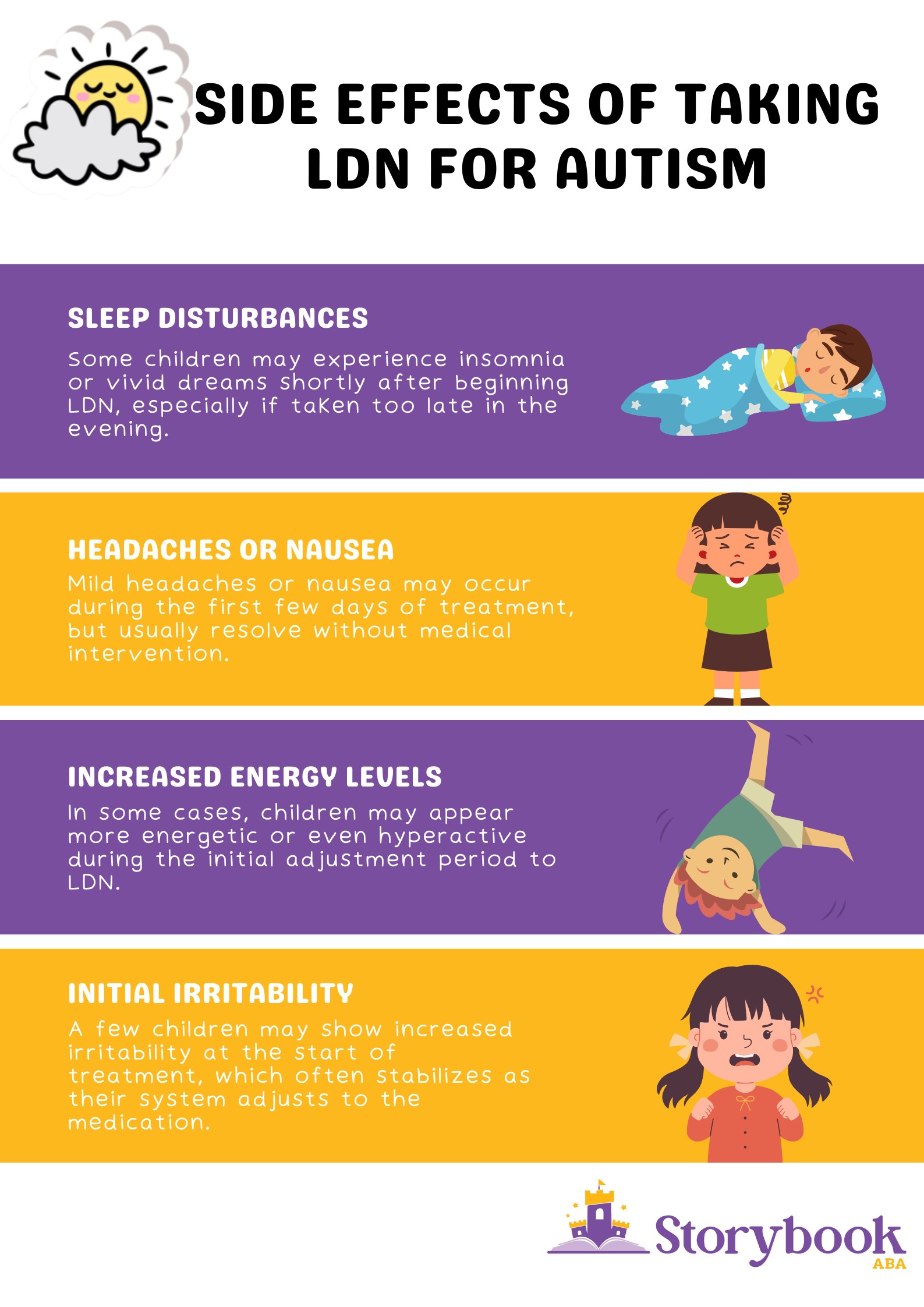
It’s also worth noting that naltrexone blocks opioid receptors, meaning it can interfere with medications or conditions involving pain management. Parents should disclose any current medications their child is taking before starting LDN. For those exploring alternative pharmacological options, Looking Into Aripiprazole as a Treatment for Adults with Autism offers insight into another potential approach.
Can LDN Replace Behavioral Therapies Like ABA?
No. Low-dose naltrexone is not a replacement for evidence-based therapies such as Applied Behavior Analysis (ABA). Rather, it may offer supplemental support by potentially addressing underlying biological contributors to certain symptoms.
ABA therapy remains one of the most well-supported early interventions for children with autism, especially for teaching functional skills, improving behavior, and increasing communication. If LDN helps reduce inflammation or irritability, it might enhance a child’s ability to engage more effectively in ABA sessions.
Is Low-Dose Naltrexone Right for My Child?
Deciding whether to try low-dose naltrexone (LDN) for your child is a personal decision best made in collaboration with your healthcare provider. However, it’s important to remember that every child with autism is different, and what helps one may not benefit another in the same way.
LDN shows the most promise in children with immune or inflammatory symptoms—such as frequent infections, GI issues, or significant irritability. If your child struggles in these areas and hasn’t responded well to other approaches, it may be worth discussing LDN with your doctor. A careful trial under medical supervision can help determine if it’s a good fit.
As with any intervention, it’s important to track changes closely and prioritize open communication with your care team. With the right support, LDN could become a helpful part of your child’s broader treatment plan.
Get the Right Support with ABA Therapy and Maryland and Virginia
While low-dose naltrexone for autism may offer supplementary support in specific cases, evidence-based therapies like ABA remain the gold standard in helping children build essential life skills. At Storybook ABA, we provide personalized ABA therapy in Maryland and Virginia, designed to meet your child’s unique needs.
Our programs focus on improving communication, social skills, behavior, and daily living skills—working alongside families every step of the way. Whether your child is just starting out or transitioning into school, our team is here to help. Contact us today to learn more about our services in your area.