

Key Points:
- Managing autism meltdowns requires understanding triggers, proactive planning, and effective calming strategies tailored to each child’s needs.
- Techniques such as creating safe spaces, using visual supports, and practicing sensory regulation help reduce the frequency and intensity of meltdowns.
- Early intervention and consistent routines combined with professional support can empower families to navigate meltdowns more smoothly.
Autism meltdowns can be overwhelming for both children and their families. Research shows that meltdowns occur in many children on the autism spectrum due to difficulties with communication, sensory overload, and emotional regulation.
Managing autism meltdowns effectively is crucial to reduce stress, prevent escalation, and support your child’s emotional well-being. In this article, we’ll go over practical strategies and actionable techniques you can use to understand, anticipate, and manage meltdowns, making daily life more manageable for your family.
What Does It Mean to Manage Autism Meltdowns?
Managing autism meltdowns means using specific strategies and interventions to reduce their occurrence, intensity, and duration, while supporting the child through the episode. It involves recognizing triggers, understanding early signs, and applying calming techniques that suit the individual’s needs.
During a meltdown, the focus shifts to safety and emotional support rather than discipline. Staying calm, using minimal language, and providing comfort without pressure are key. Over time, families can also work on reducing meltdown frequency through proactive strategies like visual schedules, social stories, or occupational therapy tools.
Managing meltdowns is about helping the child feel secure and understood, while building skills that foster long-term emotional regulation and resilience.
What Causes Autism Meltdowns?
Autism meltdowns are intense, involuntary responses to overwhelming situations. Unlike tantrums, which are goal-oriented, meltdowns result from a breakdown in a child’s ability to regulate emotions or sensory input. Understanding what causes these episodes is essential for parents, educators, and caregivers to provide meaningful support.
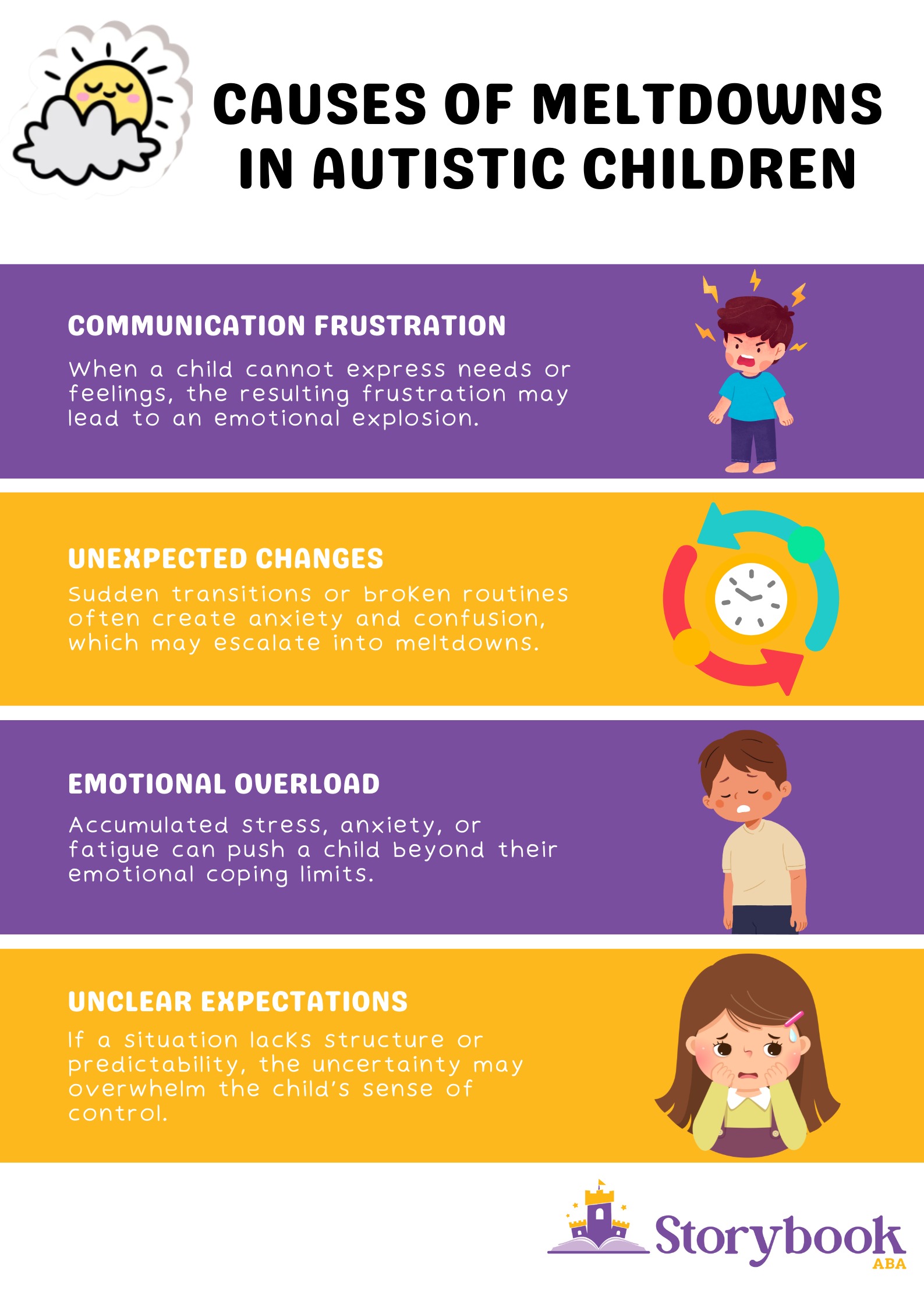
Below are five common causes of meltdowns in children with autism:
How Can You Recognize Early Signs of a Meltdown?
Recognizing the early warning signs of a meltdown allows parents to intervene before the situation escalates. These signs vary depending on the child but often include physical, emotional, and behavioral cues.
Early signs may include increased agitation, avoidance behaviors, repetitive behaviors (stimming), withdrawal, or changes in facial expression. Your child might become quieter or conversely more vocal, showing frustration through crying, yelling, or aggression. Changes in breathing patterns or body language, such as pacing, clenching fists, or covering ears, may also signal rising distress.
Learning to read these subtle cues requires close observation and patience. By catching meltdowns early, parents can apply calming techniques or remove the child from the triggering environment, preventing the situation from worsening.
What Are the Most Effective Strategies for Managing Autism Meltdowns?
Managing autism meltdowns effectively means having a toolkit of strategies to calm and support your child during a crisis. These techniques should be tailored to your child’s unique preferences and needs, with trial and error to find what works best.
Below are several proven strategies that help reduce the intensity and duration of meltdowns:
1. Create a Safe and Quiet Space
Designate a calm, low-stimulation area in your home where your child can retreat during distress. This space should have minimal noise, soft lighting, and comforting items like weighted blankets or favorite toys. Having a predictable, safe spot provides security and helps the child self-regulate.
2. Use Visual Supports and Schedules
Visual schedules, timers, or cue cards help prepare children for transitions and changes, reducing anxiety. Visual aids also assist in communication, making it easier to express feelings or choices. Knowing what to expect can prevent meltdowns triggered by uncertainty.
3. Teach and Encourage Coping Skills
Practice deep breathing exercises, counting, or using sensory tools like fidget toys during calm times so the child can use these when upset. Role-playing scenarios can build emotional awareness and self-regulation over time.
4. Sensory Regulation Techniques
Offer sensory breaks that involve activities like swinging, jumping, or using a weighted vest. These input activities help regulate the nervous system and reduce sensory overload. Identify your child’s sensory preferences and incorporate them regularly.
5. Minimize Demands and Offer Choices
During stressful moments, reducing demands or offering simple choices can empower your child and decrease resistance. For example, instead of insisting on a specific task, give options to pick from to increase control and cooperation.
6. Stay Calm and Use Simple Language
Your calm presence helps model self-regulation. Speak softly and use clear, concise sentences. Avoid arguing or reasoning during a meltdown, as the child is often unable to process complex information at that moment.
How Can Parents Prepare for Meltdowns?
Preparation is key in managing autism meltdowns effectively. Parents can take proactive steps to reduce the frequency and severity of meltdowns by incorporating structure and communication supports into daily routines.
Building predictable schedules reduces uncertainty and anxiety. Including regular sensory breaks and downtime helps prevent overload before it begins. Preparing your child for upcoming events by using social stories or visual cues can ease transitions. Teaching self-advocacy skills empowers children to communicate needs before stress escalates.
What Role Does Communication Play in Managing Meltdowns?
Communication challenges are at the heart of many meltdowns. Children on the spectrum often have difficulty expressing their feelings, needs, or discomfort verbally. Improving communication is essential to managing autism meltdowns effectively.
Augmentative and Alternative Communication (AAC) methods, such as picture exchange systems, communication apps, or sign language, provide alternatives for nonverbal children. These tools reduce frustration by giving children a way to express themselves clearly.
What Should You Avoid During a Meltdown?
While managing autism meltdowns, certain actions can unintentionally worsen the situation. Understanding what to avoid is as important as knowing what to do. Avoid trying to reason or discipline during a meltdown; your child is likely overwhelmed and unable to process logic. Physical restraint or punishment increases stress and can damage trust.
Do not demand eye contact or force verbal communication—this can intensify anxiety. Avoid loud voices, sudden movements, or rushing the child, as these may increase sensory overload. Instead, focus on staying calm, providing reassurance, and giving the child space and time to recover at their own pace.
How Can ABA Therapy Support Managing Autism Meltdowns?
Applied Behavior Analysis (ABA) therapy offers targeted strategies that help children build coping skills, improve communication, and reduce challenging behaviors like meltdowns. ABA focuses on understanding the function behind a meltdown and teaching alternative responses.
Through consistent and individualized intervention, ABA helps children develop emotional regulation techniques, enhances communication abilities, and supports sensory integration. Therapists work closely with families to create practical plans for managing meltdowns at home, school, and in the community.
Encourage Lifelong Learning With ABA Therapy
If you’re seeking expert help with managing autism meltdowns, Storybook ABA offers compassionate, evidence-based ABA therapy in Maryland and Virginia. Our team specializes in working with children on the spectrum to develop personalized plans that address behavioral challenges, improve communication, and teach emotional regulation skills.
Through tailored therapy sessions and parent training, we empower families with the tools they need to handle meltdowns effectively and foster positive growth. Storybook ABA’s approach respects each child’s unique needs and supports the whole family.
Get in touch with us today to learn how Storybook ABA can help your family manage autism meltdowns and build a calmer, more joyful daily routine.