
Key Points:
- Medications for autism do not treat the core symptoms but can help manage behaviors like irritability, hyperactivity, anxiety, or sleep disturbances.
- Parents should weigh potential benefits and side effects, and always work closely with a medical professional.
- Medication often works best when combined with behavioral therapies like ABA for comprehensive support.
Families navigating an autism diagnosis often face the complex decision of whether to consider medication as part of their child’s treatment plan. While medications won’t cure autism spectrum disorder (ASD), they can sometimes ease certain associated symptoms—such as aggression, anxiety, or trouble sleeping—that interfere with daily life. Understanding the purpose, risks, and options available is essential for making informed choices about your child’s care.
In fact, studies show that nearly 50% of children with autism in the U.S. take at least one prescription medication to help manage co-occurring symptoms. This highlights how common it is for families to explore medication as one part of a larger support system. Whether you’re considering a widely used option like risperidone or something less conventional like low-dose naltrexone (LDN), the key is to evaluate the potential benefits alongside any possible risks.
Having open conversations with your child’s medical team can ease uncertainty and help you feel more confident in your decisions. Remember, you’re not alone—many families are weighing these same options and working toward the same goal: helping their child thrive.
What Are Medications for Autism and Do They Work?
Medications for autism are not a cure, but they can help manage specific symptoms such as irritability, aggression, ADHD-like behavior, anxiety, or sleep issues when used under medical supervision.
These medications are used to target co-occurring challenges that may accompany ASD, not autism itself. The effectiveness varies widely from child to child, and there is no one-size-fits-all approach. They are often most helpful when used alongside therapies like ABA that focus on behavior and skill development.
What Symptoms Can Medications Help With?
Autism presents differently in each child, but there are common symptoms that medications may help manage. These symptoms often interfere with learning, social interactions, or quality of life. Medications are typically considered when these behaviors are severe enough to prevent progress in therapy or daily routines.
Children with autism may benefit from medication if they experience:
1. Irritability and Aggression
Many children with autism experience frequent irritability or aggressive outbursts. Addressing these symptoms can improve safety, reduce stress at home, and support more positive interactions with others.
2. Hyperactivity and Inattention
Hyperactivity and difficulty focusing are common in children with autism. Managing these behaviors can enhance learning, increase participation in therapy, and help children navigate daily routines more successfully.
3. Repetitive Behaviors
Repetitive behaviors, such as hand-flapping or vocal stimming, are often soothing for autistic children but can interfere with learning or social engagement when excessive or disruptive.
4. Anxiety and Mood Issues
Children with autism may struggle with anxiety, mood swings, or emotional regulation. Treating these issues can lead to improved coping skills, better peer interactions, and fewer emotional meltdowns.
5. Sleep Disturbances
Difficulty falling or staying asleep is common in autism. Addressing sleep issues can improve daytime behavior, attention, and emotional stability, benefiting both the child and the family.
Parents should remember that meds for autism are not designed to treat social communication delays or sensory sensitivities directly, but reducing certain behavioral challenges can indirectly support developmental gains. For more details on one commonly prescribed option, see A Helpful Guide to Risperidone Dosage in Autistic Adults.
What Are the FDA-Approved Medications for Autism?
Currently, the FDA has only approved two medications specifically for autism-related symptoms in children, both focused on reducing irritability and aggression. However, several other medications are used off-label based on symptom profiles.
The FDA-approved options include:
- Risperidone (Risperdal): Approved for children ages 5 and older. Often prescribed for aggression, self-injury, and severe tantrums.
- Aripiprazole (Abilify): Approved for children ages 6 and up. Used for similar symptoms, including mood instability and irritability.
Both are antipsychotic medications. While they can be highly effective for some children, they come with risks that must be monitored closely, including weight gain, sedation, and hormonal changes.
What Other Medications Are Used Off-Label for Autism?
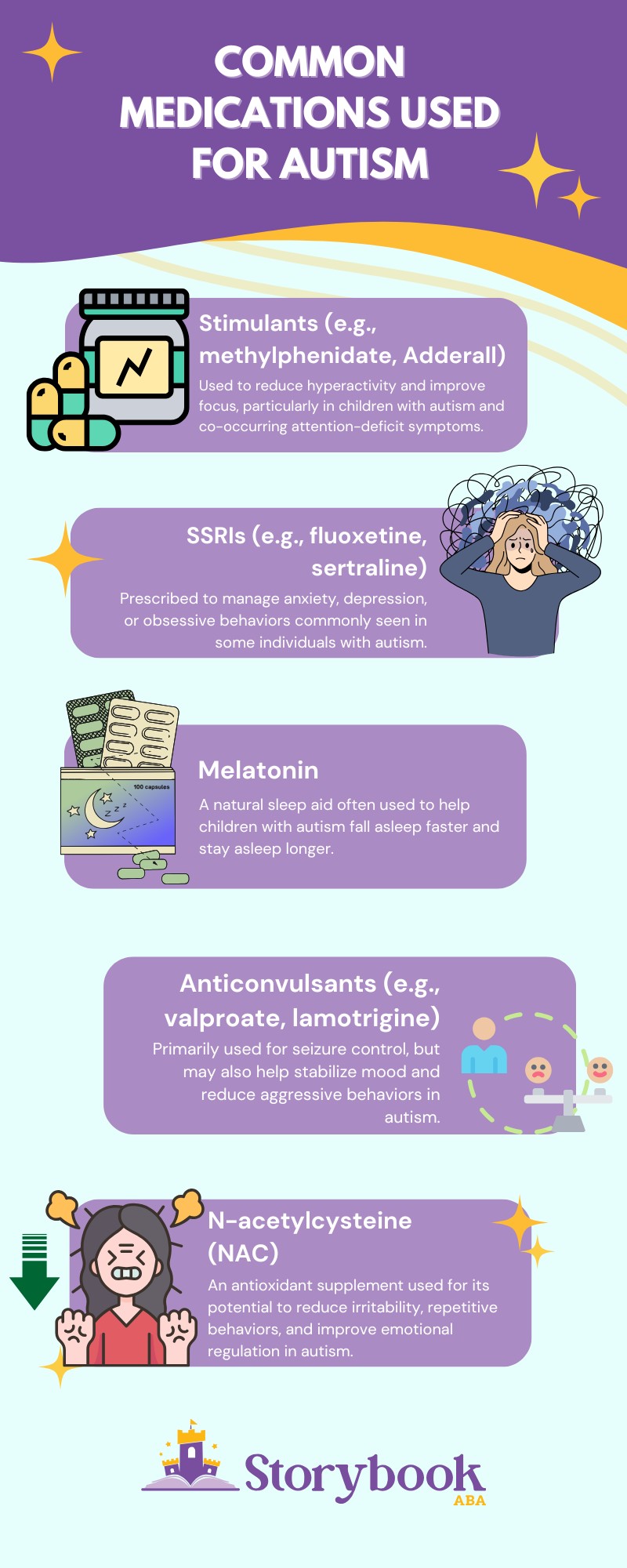
Beyond the FDA-approved drugs, many medications are prescribed “off-label” to address specific symptoms associated with ASD. This means they are not officially approved for autism, but physicians may use them when clinically appropriate.
The following medications are commonly used to support specific symptom areas in children with autism:
Each of these medications targets a narrow range of symptoms, and parents should work closely with a physician who specializes in pediatric neurodevelopmental disorders.
What Should Parents Consider Before Starting Medication?
Starting medication for autism-related symptoms is an important decision that should be made in partnership with your child’s healthcare provider. It’s essential to weigh the potential benefits—like reduced anxiety or improved focus—against possible side effects and how the medication fits into your child’s overall treatment plan.
Every child is different, and it may take some trial and error to find the right medication and dosage. Regular check-ins with your doctor will help monitor progress and make adjustments as needed.
Additionally, your child’s medical history, current therapies, and specific needs all play a role in shaping the best approach. Medication is most effective when combined with other supports, such as behavioral therapy, routines, and family involvement.
What Are the Potential Side Effects of Autism Medications?
All medications carry a risk of side effects. For children with autism, side effects can sometimes worsen behaviors or create new challenges. Monitoring is essential—especially during the first few weeks or after dose changes.
Common side effects to watch out for include:
1. Weight Gain or Appetite Changes
Some medications, especially antipsychotics, can lead to increased appetite and weight gain, requiring careful monitoring of diet, activity level, and overall health.
2. Sedation or Fatigue
Drowsiness or low energy may occur, which can affect learning, participation in therapy, and day-to-day functioning if not properly managed or monitored.
3. Irritability or Agitation
Certain medications may paradoxically increase irritability, restlessness, or aggression, especially during the early stages of treatment or with dose changes.
4. Sleep Disturbances
Some medications can disrupt sleep, causing insomnia, frequent night waking, or early morning awakenings that affect daytime mood and concentration.
5. Gastrointestinal Issues
Side effects like nausea, constipation, or stomach discomfort are not uncommon and may affect appetite, hydration, or overall comfort.
6. Hormonal Changes
Medications such as antipsychotics can sometimes affect hormone levels, including prolactin, potentially impacting puberty timing or causing other hormonal shifts.
Any changes in behavior, mood, or physical health should be reported promptly to the prescribing doctor. Blood work and follow-up visits may be necessary for medications with more serious risks. To learn more about one option currently being explored in autism treatment, read our article, Understanding the Role of Low Dose Naltrexone in Autism Care.

Can Medications Replace Therapy?
No, medications are not a substitute for therapy. They may help reduce certain symptoms that interfere with learning or social development, but they do not teach new skills. That’s where evidence-based therapies like Applied Behavior Analysis (ABA) come in.
Medication may create better conditions for therapy to succeed—for example, by improving focus or reducing tantrums—but on its own, it cannot address core developmental delays. The most effective approach for autism often combines medication (when appropriate) with therapies that build communication, daily living skills, and independence.
How Should Parents Track Medication Effectiveness?
Tracking changes after starting a new medication is essential to determine whether it’s helping, causing side effects, or doing neither. Parents are in the best position to observe patterns in daily life and report them accurately to providers.
Here are some effective tracking strategies:
- Keep a symptom journal: Record mood, sleep, appetite, and behaviors daily.
- Rate symptoms on a scale: Quantify the severity of specific behaviors before and during treatment.
- Communicate with therapists and teachers: Ask whether they notice changes at school or in therapy sessions.
- Use structured assessments: Some providers use tools like the Aberrant Behavior Checklist (ABC) to measure progress objectively.
Being organized and consistent helps your child’s care team make timely adjustments and prevent unnecessary complications.
Help Your Child Thrive with ABA Therapy
While medications for autism may offer valuable support for certain symptoms, they work best when paired with therapies that help your child grow and thrive. At Storybook ABA, we provide tailored ABA therapy in Maryland and Virginia, working with families to build functional skills, reduce challenging behavior, and support lasting developmental progress.
Our compassionate team focuses on what matters most—empowering your child to communicate, learn, and build meaningful connections in everyday life. ABA is not just about reducing problem behavior. It’s about increasing opportunities for your child to engage with the world.
If you’re navigating a new diagnosis or looking for extra support alongside medication, contact us today and discover how our team can help your family move forward with confidence.