

Key Points:
- Outdoor sensory activities for autism engage multiple senses to support regulation, motor skills, and emotional well-being.
- Activities should be varied—incorporating vestibular, proprioceptive, tactile, auditory, and visual input—and tailored to the child’s preferences.
- With the right strategies and supports, outdoor sensory play becomes an enriching, functional part of daily routines.
Outdoor play is vital for children, but for autistic kids, it offers more than sunshine and fresh air—it’s an opportunity for meaningful sensory engagement. Outdoor sensory activities for autism help kids self-regulate, develop gross motor skills, and experience sensory input in a natural, enjoyable context.
Below is a collection of 15 engaging, purposeful outdoor sensory activities—from water play to nature walks—designed to support sensory modulation, physical coordination, and emotional resilience.
What Are the Best Outdoor Sensory Activities for Autism?
The best outdoor sensory activities for autism include nature walks, swinging, sandbox play, water play, and obstacle courses. These activities offer rich sensory input that supports regulation, motor skills, and emotional well-being.
Outdoor environments provide natural opportunities for vestibular, tactile, and proprioceptive input in a low-pressure setting. Activities like climbing, gardening, and animal walks can be tailored to meet a child’s unique sensory needs while promoting fun and engagement.
Below are some of the best outdoor activities for autism:
1. DIY Nature Obstacle Course
Creating a course in the backyard or park using cones, logs, and ropes offers rich vestibular, proprioceptive, and tactile input. Climbing over logs, crawling under ropes, and stepping across rocks encourages balance, coordination, and motor planning. Use a visual map to make it predictable and fun while reinforcing sequencing skills.
2. Sand and Water Play
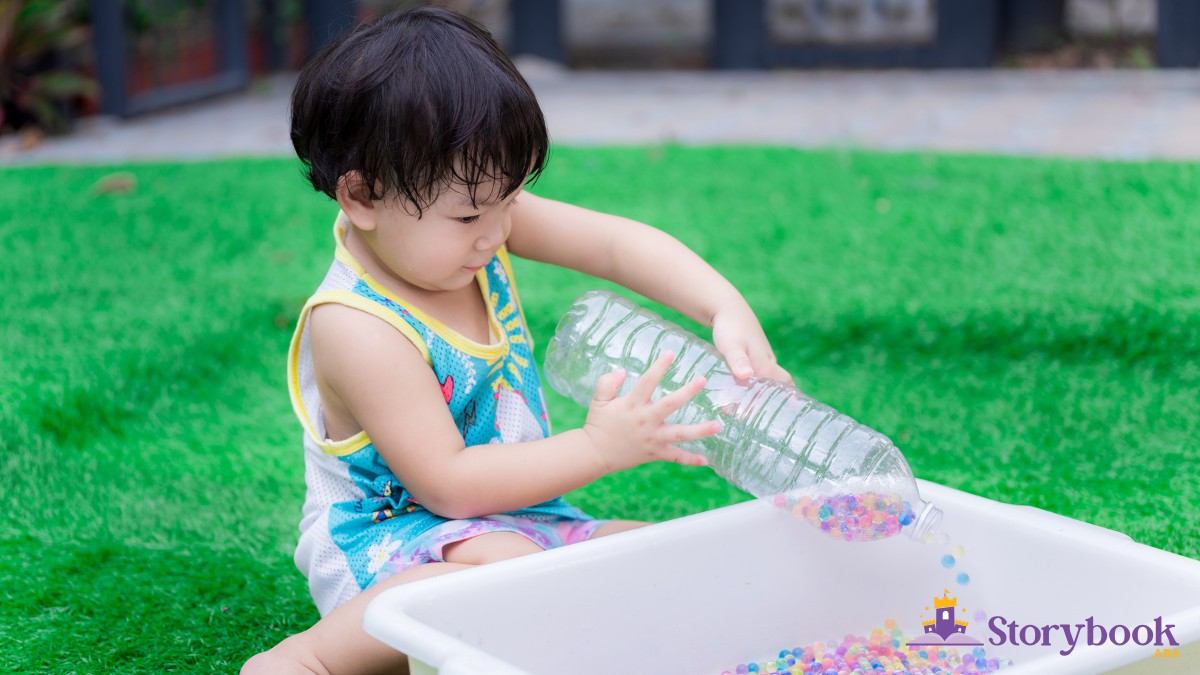
Digging, pouring, and molding allow children to explore texture, weight, and cause-and-effect. Tactile input from wet/dry sand combines with sensory feedback from scooping to build hand strength. Add measuring cups or funnels to introduce light math concepts naturally.
3. Chalk Body Trace Game
With sidewalk chalk, trace the child’s outline and then let them color or texture-fill the shape. This tactile-visual activity supports body awareness, encourages fine motor practice, and doubles as expressive art time.
4. Swinging or Hammock “Calm Zones”
Swings and hammocks offer vestibular input that can be calming or alerting, depending on motion style. Label a swing area as a “calm corner” and allow short, scheduled breaks. Use social narratives to teach children how to ask for time when they need it.
5. Jumping on a Trampoline or Air Track
Ideal for sensory seekers, repetitive jumping provides strong vestibular and proprioceptive feedback. For safety, supervise closely and set time limits—5–10 minutes work well for intensity and tiredness.
6. Leaf & Petal Sensory Bins
Use containers to collect leaves, bark, petals, and sticks. Let the child explore mixing, crushing, or smelling the materials. This component of nature sensory play encourages tactile exploration and introduces botanical
vocabulary.
7. Playground Rock Wall or Climbing Station
Climbing maneuvers offer full-body strength, spatial planning, and motor coordination. Use a mirrored approach—demonstrate first, then assist physically and verbally to increase confidence.
8. Sound Safari
Take a walk and identify natural sounds—leaves rustling, birds chirping, water flowing. Bring sound-masking earbuds for kids who are noise-sensitive. Encourage them to point out or mimic sounds to build listening and labeling skills.
9. Bubble Chasing
Combining visual, movement, and breath control, bubbles are an accessible sensory activity. Use wands or bubble machines. Encourage kids to run, chase, pop, or even blow bubbles to practice breathing.
10. Garden Planting
Plant seeds or seedlings in soil. The tactile feel of dirt and water input is grounding, while the responsibility of caring for a plant enhances social-emotional learning. Use textured gloves or bare hands based on comfort.
11. Tactile Texture Walk
Create a path with different outdoor textures—sand, gravel, grass, bark. Use a blindfold for safety under supervision to create an indoor–outdoor tactile awareness game.
12. Scooter or Ride-on Toys
Riding toys engage gross motor planning, proprioception, and spatial awareness. Add cones or markers to build obstacle awareness and directionality tasks.
13. Sidewalk Writing & Spelling
Combine movement and literacy. Write letters or words on the pavement with chalk and call out prompts (“hop to the A!”). Great for kinesthetic learners who benefit from whole-body engagement in academic concepts.
14. Nature Scavenger Hunt
Provide a checklist with pictures to find things like pinecones, flowers, or colored leaves. Combines visual attention, fine motor picking, and spatial searching. Younger children can hunt for colors or shapes instead of items.
15. Water Hose Paint
Use a low-pressure hose with colored water or spray bottles to “paint” sidewalks, fences, or plants. Offers tactile cooling, cause-and-effect play, and gross motor control while being accessible and unscripted.
How Do You Choose the Right Outdoor Activity?
Choosing the right outdoor activity for a child with autism depends on their sensory preferences, energy level, and comfort with new environments. Start by observing how your child responds to different types of movement and input.
Some children thrive with active play like climbing or jumping, while others prefer calm, repetitive activities like water play or nature walks. Always prioritize safety, autonomy, and enjoyment. Offering choices and using visual supports can make outdoor time more predictable and empowering for your child.
How to Structure a Session of Outdoor Play
When outdoor time is framed with clear transitions and visual cues, it becomes more than just free play—it becomes a therapeutic tool that supports sensory regulation, communication, and autonomy. Whether your child seeks high-energy movement or calming sensory input, planning the flow of the session makes the experience more meaningful and manageable for both of you.
Below are some tips on how to structure an outdoor activity session:
1. Schedule a Sensory-Friendly Segment
Choose a time of day when your child is most receptive, such as after school or before evening fatigue sets in.
2. Provide Visual Support
Use visual aids like step cards, timers, or schedules to help your child anticipate activities and transitions.
3. Include Transitions
Pair active play with calming activities to support regulation, like jumping first, then swinging or relaxing in a hammock.
4. Monitor and Adjust
Watch for signs of overstimulation, avoidance, or fatigue, and be ready to modify activities or take breaks as needed.
5. Close With a Wind-Down
End with a calming outdoor moment, such as nature viewing or quiet reading, to ease the transition back indoors.
What Are the Benefits of Outdoor Sensory Activities?
Whether it’s running through an obstacle course or relaxing in a shaded hammock, structured outdoor play can boost physical coordination, self-regulation, and even social connection. With the right supports in place, outdoor environments become safe, empowering spaces for growth.
Below are some examples:
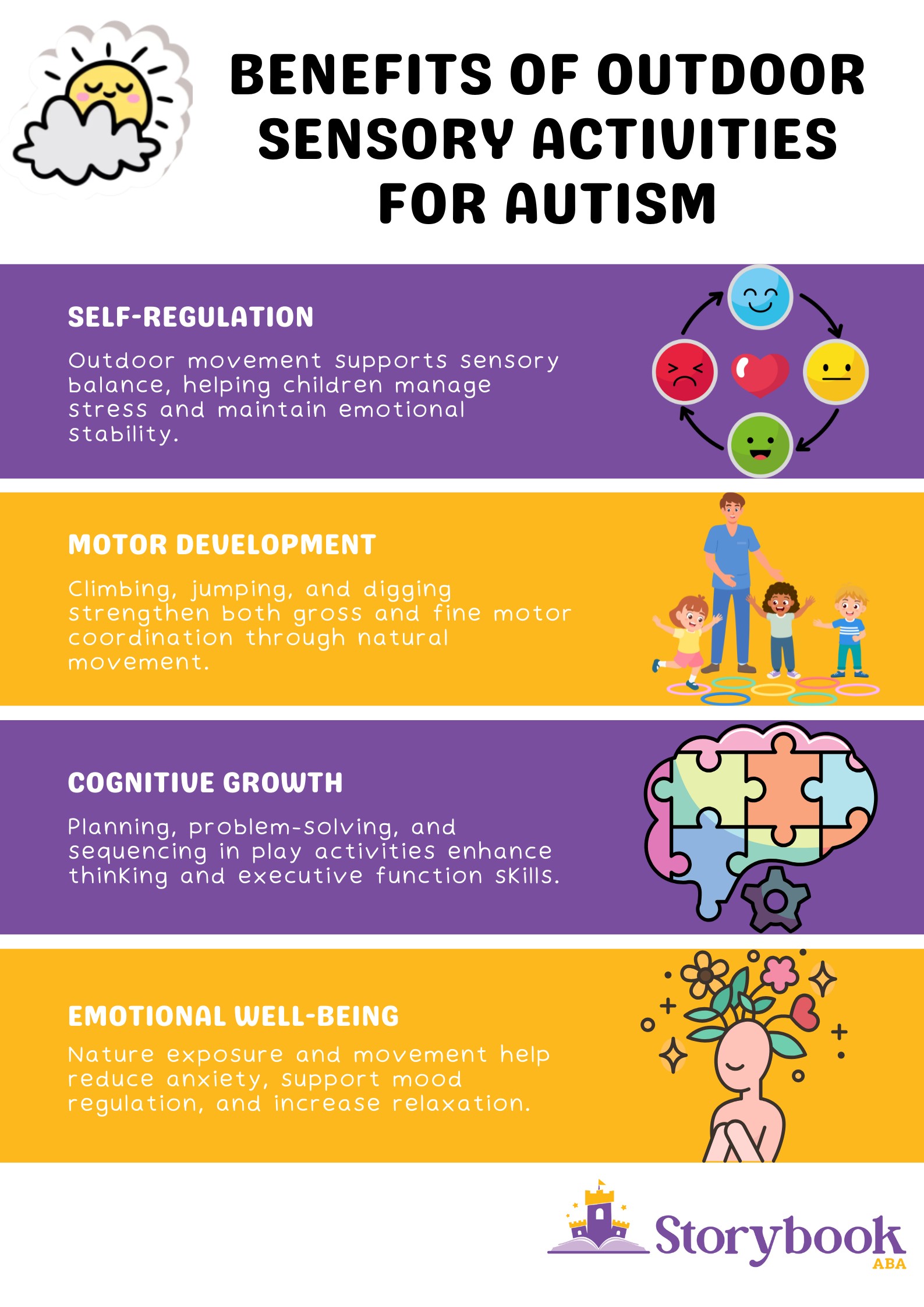
Participating in outdoor sensory activity isn’t just play—it’s therapeutic, developmental, and essential for self-regulation.
Can ABA Therapy Support Outdoor Sensory Activities?
Yes, ABA therapy can support outdoor sensory activities by using structured routines, visual supports, and reinforcement strategies to help children engage successfully. These activities can be tailored to meet individual sensory and behavioral goals.
ABA therapists may incorporate movement breaks, social skills practice, or communication strategies into outdoor settings, making sensory play both enjoyable and purposeful. When aligned with a child’s sensory profile, ABA enhances the benefits of outdoor time.
Encourage Lifelong Learning With ABA Therapy
At Storybook ABA, we design personalized ABA therapy in Maryland and Virginia that integrates sensory-informed techniques, including outdoor activities. We help families build routines that blend movement, play, and learning, mapped to each child’s unique profile.
Whether your child enjoys movement or craves tactile input, we incorporate strategies to support independence, self-regulation, and confidence—indoors and out. Get in touch with us to find out how ABA therapy in Maryland or Virginia can support your child’s outdoor play, sensory development, and emotional growth.