

Key Points:
- Parent training for autism helps caregivers apply consistent, evidence-based strategies at home to support their child’s development.
- Techniques like positive reinforcement, visual supports, and structured routines can significantly reduce challenging behaviors.
- Applied Behavior Analysis (ABA) methods are often at the core of successful parent-led interventions.
Understanding autism doesn’t stop with a diagnosis. Many families quickly realize that day-to-day support is critical—and that’s where parent training for autism becomes essential. Parent training for autism empowers families to become active participants in their child’s development.
It focuses on practical strategies that parents can use to improve communication, reduce challenging behaviors, and promote independence at home. In this article, we’ll walk you through actionable tips, backed by evidence, to help make your parenting journey more effective and less stressful.
What Is Parent Training for Autism?
Parent training for autism involves structured teaching strategies that help caregivers support their child’s behavior, communication, and daily living skills at home. It is typically based on the principles of Applied Behavior Analysis (ABA) and helps create consistency between home and therapy settings.
These training programs equip parents with tools to manage behaviors, foster communication, and build life skills using proven behavioral techniques. The ultimate goal is to improve the child’s overall quality of life by strengthening their home environment.

Why Is Parent Training Important for Children with Autism?
Parent involvement is a powerful factor in a child’s developmental progress. Training provides families with the skills to manage day-to-day challenges and actively reinforce learning that happens during therapy sessions.
Children on the autism spectrum often benefit most when strategies are practiced across environments. When parents understand the methods used in therapy—like positive reinforcement or prompting—they can help generalize those skills in real-life situations.
Consistent parent participation can:
- Increase communication success
- Reduce tantrums and aggression
- Promote independence in self-care tasks
- Encourage social interaction in natural settings
What Are the Core Elements of Effective Parent Training Programs?
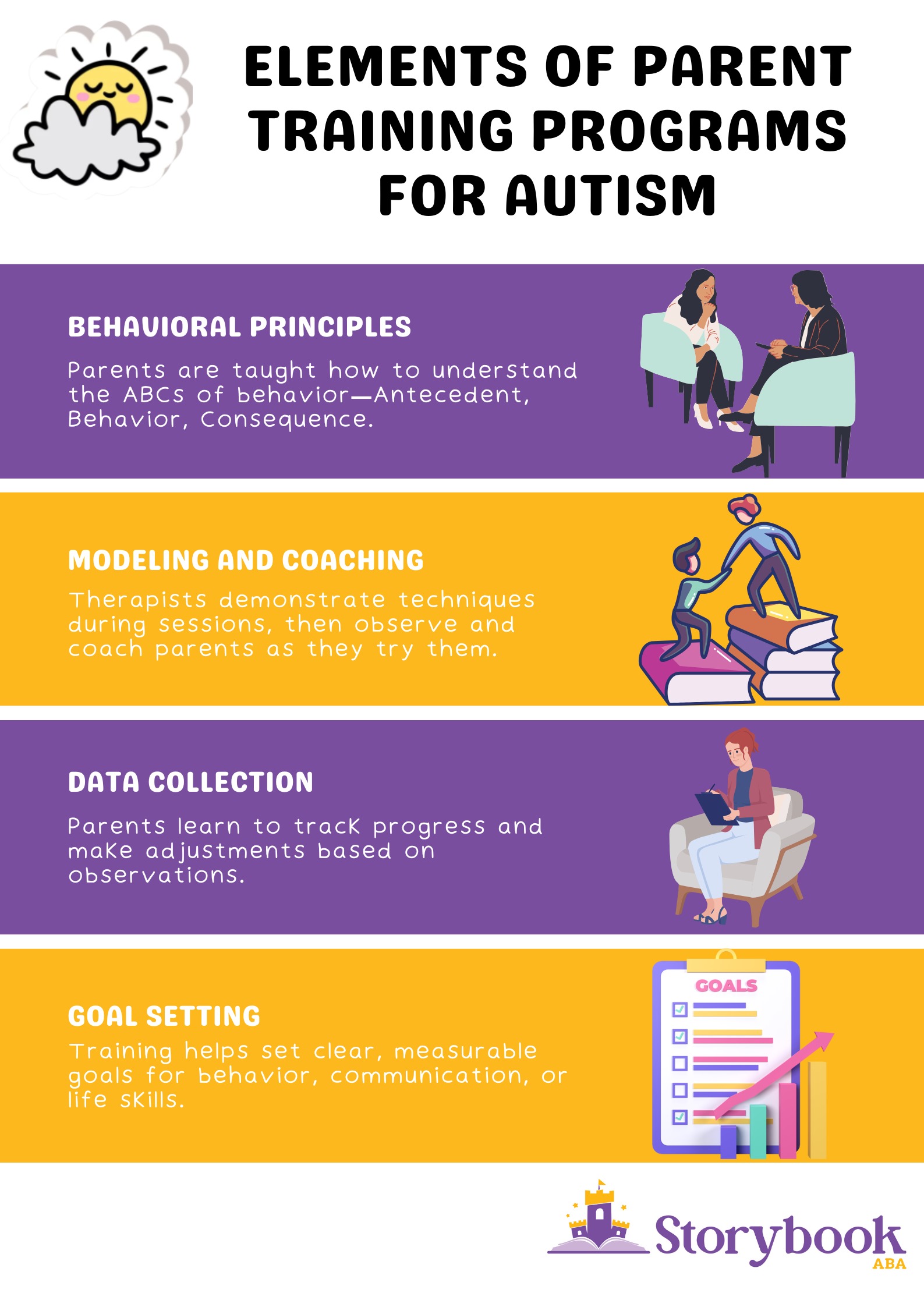
Effective programs don’t just tell parents what to do—they show them how to do it through modeling, practice, and feedback. These programs are typically individualized and tailored to a child’s specific needs and goals.
Here are the most common components found in evidence-based parent training programs:
What Topics Are Typically Covered in Parent Training?
Parent training for autism typically covers essential topics that help caregivers support their child’s development and manage everyday challenges. Common areas include behavior management techniques, communication strategies, building daily routines, and emotional regulation support.
These topics are tailored to each child’s needs and empower parents to create a more structured, responsive environment at home. In many programs, parents also learn how to reinforce skills taught in therapy, use visual supports, and handle meltdowns or transitions more effectively. The goal is to equip families with tools that improve long-term outcomes and reduce stress.
What Strategies Should Parents Focus On?
Every child is different, but many core strategies are widely used across parent training approaches. These techniques support positive behavior change and can be adjusted based on your child’s age and ability.
Strategies include:
1. Use Positive Reinforcement
Rewarding desired behaviors with praise, tokens, or activities helps motivate children to repeat those actions. Consistent, meaningful reinforcement strengthens skills and builds confidence over time.
2. Establish Structured Routines
Clear, predictable routines reduce anxiety and improve cooperation. Knowing what to expect helps children transition between tasks and learn responsibility in manageable steps.
3. Provide Communication Support
Use tools like visual aids, sign language, or simple speech to support your child’s understanding and expression. Strengthening communication reduces frustration and encourages meaningful social interaction.
4. Address Challenging Behaviors Proactively
Identify triggers, teach alternative behaviors, and stay calm during outbursts. Consistency and early intervention help reduce negative patterns and support emotional and behavioral growth.
How Can Parents Stay Consistent With ABA Strategies?
Learning a technique is one thing—using it consistently is another. Many families struggle to maintain strategies across different situations or when life gets hectic. But consistency is what drives real progress.
To stay consistent, parents should:
1. Create a Clear Behavior Plan
Write out specific behavior goals, strategies, and consequences so everyone knows what to do. A shared plan ensures consistency across caregivers and settings, avoiding mixed messages.
2. Use Visuals and Reminders
Visual schedules, token boards, or cue cards help both parent and child stay on track. These tools make expectations visible and reduce the need for repeated verbal instructions.
3. Reinforce Small Successes
Don’t wait for big milestones—acknowledge every step forward. Positive reinforcement, even for tiny wins, keeps children motivated and helps parents stay encouraged.
4. Practice Strategies Daily
Consistency builds habits. Incorporate brief, focused practice sessions into your daily routine to reinforce learning and maintain progress between therapy sessions.
5. Involve All Caregivers
Share your strategies with teachers, babysitters, and relatives. When everyone uses the same approach, your child receives clearer, more consistent guidance and support.
Can Parent Training Help with Long-Term Success?
Yes, parent training can significantly improve long-term outcomes for children with autism. By learning evidence-based strategies, parents become active partners in their child’s development, helping to reinforce progress made in therapy and fostering skills in everyday life.
Consistent parent involvement can lead to better communication, behavior, and independence over time. Parent training also boosts confidence, reduces family stress, and helps create a supportive, structured environment—key factors for long-term success and emotional well-being. These benefits are especially important when addressing developmental concerns that may be difficult to distinguish at first—read our article Speech Delay vs Autism: Key Differences Explained to better understand how these challenges compare and what signs to look for.
How to Get Started With Parent Training for Autism
To begin parent training for autism, start by connecting with a licensed provider—often through your child’s ABA therapy program, developmental pediatrician, or school support team. Many Applied Behavior Analysis (ABA) providers offer structured parent training sessions that teach effective strategies for behavior management, communication, and daily routines.
Ask about individualized training options, virtual or in-person formats, and how goals will be tailored to your child’s needs. Early involvement makes a big difference, and parent training equips you with tools to support your child consistently across home, school, and community settings.
Reach New Milestones With ABA Therapy
Parent training for autism is most effective when paired with expert support. At Storybook ABA, we offer high-quality ABA therapy in Virginia and Maryland, with a strong focus on empowering families through structured parent training. Our team works closely with caregivers to build sustainable, evidence-based routines that support children at home and beyond.
Get in touch with us to learn how ABA therapy through Storybook ABA can help you feel more confident and prepared in supporting your child’s growth. Whether you’re just beginning your journey or looking to strengthen your current strategies, we’re here to walk with you every step of the way.