

Key Points:
- Secondary autism symptoms in teens are often overlooked but can be as impactful as the core symptoms of autism.
- These symptoms often emerge during adolescence as a response to the social, emotional, and developmental changes that occur at this stage of life.
- ABA therapy is an effective treatment option for addressing these secondary symptoms in teens with autism.
Adolescence is a period of profound change, not only for teens without autism but especially for those on the autism spectrum. As teens with autism navigate the hormonal shifts, social pressures, and emotional changes that are typical of this stage of life, many begin to display what are known as secondary autism symptoms.
These symptoms are not the core traits of autism, such as difficulties with social interaction or repetitive behaviors, but rather additional challenges that surface due to the pressures of growing up.
Unlike primary autism symptoms, which are present from early childhood, secondary autism symptoms in teens often arise as a reaction to the increasingly complex world around them.
These can include symptoms such as anxiety, which up to 84% of autistic individuals experience. While these symptoms may not be as immediately recognizable as classic signs of autism, they are just as important to address for the well-being of the teen.
In this article, we will explore the various secondary autism symptoms that commonly affect teens, why they arise, and how understanding these signs can lead to better support and intervention strategies.

5 Common Secondary Autism Symptoms in Teens
Recognizing secondary autism symptoms in teens can be difficult, as these symptoms may overlap with typical adolescent behaviors or be mistaken for other conditions. However, by understanding the distinct signs that often emerge in autism, parents and caregivers can identify when additional support may be needed.
Here are some of the most common secondary autism symptoms seen in teens:
1. Social Withdrawal
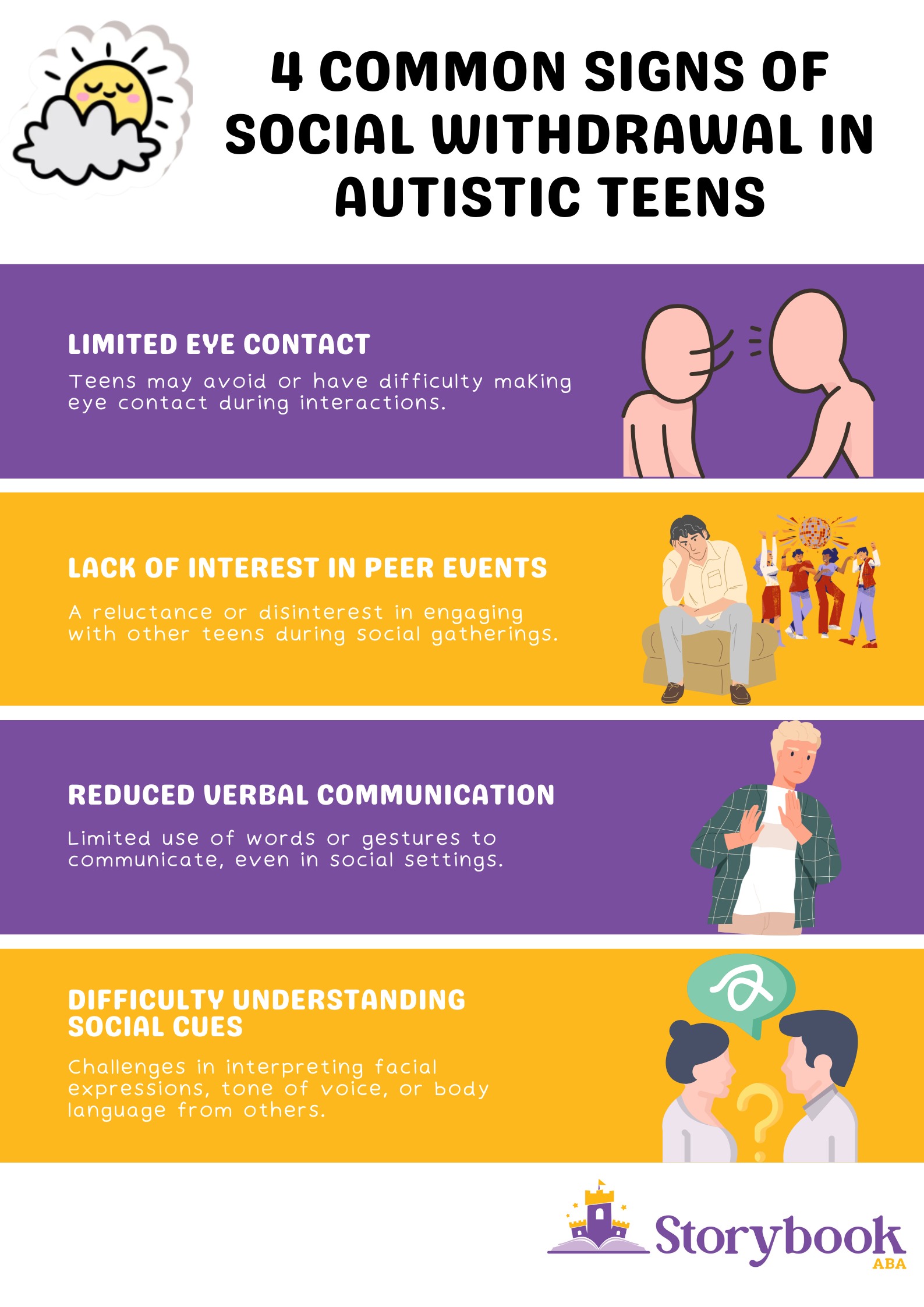
Teens with autism often experience a heightened awareness of their differences and may begin to withdraw socially. This is due to a combination of increased social pressure, difficulty understanding social interactions, and a lack of confidence.
As they grow older, they may avoid group activities, parties, or events that require socializing. This withdrawal is often a coping mechanism to avoid the anxiety or frustration that comes with social interaction.
Below are some common signs of social withdrawal in autistic teens:
2. Increased Sensory Sensitivities
Sensory sensitivities, which are common in individuals with autism, may become more pronounced during the teenage years. Teens may experience heightened sensitivities to lights, sounds, textures, or smells, leading to sensory overload.
These sensitivities can lead to difficulties in public spaces, at school, or in social situations, often resulting in irritability or meltdowns when overwhelmed by sensory stimuli.
3. Anxiety and Depression
As teens with autism become more aware of their social differences, they may experience feelings of anxiety and depression. Social pressures, bullying, or difficulty fitting in can contribute to a sense of isolation.
Anxiety can manifest in various ways, such as excessive worry, physical symptoms like stomachaches, or an aversion to certain situations that provoke discomfort. In some cases, depression may emerge as a response to these overwhelming feelings.
4. Changes in Behavior or Repetitive Patterns
While repetitive behaviors, such as hand-flapping or rocking, are characteristic of autism from a young age, teens may develop new repetitive behaviors in response to stress or emotional overload.
These behaviors may become more complex or intense, and can sometimes appear as a way to self-soothe or manage overwhelming emotions. For instance, a teen might develop more noticeable vocal tics, pacing, or repetitive routines that help them feel in control.
5. Difficulty with Emotional Regulation
Emotional regulation issues are common in adolescence, but for teens with autism, these challenges may be intensified. Teens with autism may struggle to express or control their emotions in response to stressors, leading to outbursts, irritability, or emotional shutdowns.
These emotional difficulties can be a significant challenge for both the teen and their family, as they may not have the tools to manage their feelings in the same way their neurotypical peers might.
Why Do Secondary Autism Symptoms Develop in Teens?
Understanding the causes behind secondary autism symptoms in teens is important for providing effective support. These symptoms arise as teens navigate the challenges of adolescence while dealing with the foundational traits of autism, such as difficulties with social communication and sensory sensitivities. Below are other common causes:
1. Hormonal Changes
Puberty brings about significant hormonal changes, which can affect emotional regulation, mood, and behavior. For teens with autism, these hormonal changes may be more difficult to process, leading to heightened emotional responses or behavioral challenges.
As hormones shift, a teen with autism may experience an increase in anxiety, irritability, or mood swings, making it harder to manage day-to-day life.
2. Social and Peer Pressures
The teenage years are marked by the development of stronger peer relationships and the desire to fit in with others. For teens with autism, the social demands of adolescence—such as navigating friendships, dating, and fitting into group dynamics—can feel overwhelming.
The pressure to conform to social norms can exacerbate feelings of isolation and frustration, leading to secondary symptoms like social withdrawal, anxiety, or even depression.
3. Increased Awareness of Differences
As teens mature, they become more aware of how they differ from their peers. This awareness can be particularly challenging for teens with autism, as they may realize they struggle with tasks or social interactions that come easily to others.
This realization can contribute to negative self-esteem, social anxiety, and a sense of isolation. These emotional responses are key contributors to the secondary symptoms that emerge in adolescence.
4. Coping with Stress
Adolescence is often a time of increased stress, whether from school, family dynamics, or social expectations. For teens with autism, stress may feel even more overwhelming due to sensory sensitivities, difficulty with change, and communication challenges.
Stress can trigger an increase in repetitive behaviors, emotional outbursts, or other signs of distress, which are often seen as secondary autism symptoms.
4 Approaches Used to Manage Secondary Autism Symptoms
Effective intervention is crucial in managing secondary autism symptoms in teens. Addressing these symptoms early on can help improve emotional well-being, increase social functioning, and reduce behavioral challenges. Below are some common interventions:
1. ABA Therapy (Applied Behavior Analysis)
ABA therapy is a highly effective method for helping teens with autism manage both primary and secondary symptoms. ABA therapy focuses on teaching practical skills, improving communication, and reducing challenging behaviors through positive reinforcement.
In the case of secondary autism symptoms, ABA therapy can address issues such as social anxiety, emotional regulation, and repetitive behaviors by providing teens with structured strategies to manage their responses to various situations.
2. Social Skills Training
Since social interaction can be a significant challenge for teens with autism, social skills training can be incredibly helpful. This type of therapy focuses on teaching appropriate social behaviors, including understanding social cues, making and maintaining friendships, and navigating complex social scenarios.
As teens with autism develop stronger social skills, they may experience less anxiety in social situations, reducing the incidence of secondary symptoms like social withdrawal and stress.
3. Cognitive Behavioral Therapy (CBT)
Cognitive Behavioral Therapy (CBT) can be particularly useful in addressing the emotional components of secondary autism symptoms. CBT helps teens understand the connection between their thoughts, feelings, and behaviors, and provides strategies for managing anxiety and depression.
Teens can learn to identify negative thought patterns and replace them with healthier, more constructive thoughts. CBT can also help teens build coping mechanisms for stress and sensory overload.
4. Occupational Therapy
Occupational therapy is another valuable tool in managing secondary autism symptoms related to sensory sensitivities. Occupational therapists can work with teens to develop strategies for managing sensory overload and improving daily functioning.
By addressing sensory issues, teens may be able to reduce irritability, improve focus, and feel more comfortable in various environments.
If you’re interested in understanding how certain conditions might overlap with autism, be sure to read our article, “Is Tourette Syndrome a Form of Autism? Exploring the Connection.” It offers insights into the similarities and key differences between the two, which can be especially helpful when navigating secondary symptoms in teens.
Help Your Child Thrive with ABA Therapy Today
If you’re looking for support for your teen with autism, Storybook ABA offers ABA therapy in Maryland and Virginia. Our experienced therapists specialize in addressing secondary autism symptoms and can provide tailored strategies to help your teen thrive during these challenging years.
ABA therapy is a proven approach for helping teens manage emotional regulation, social anxiety, and repetitive behaviors. Contact us today to learn how we can support your teen with autism and help them reach their full potential.