
However, it’s important to note that stimulants do not address the core characteristics of autism, such as social communication challenges or restricted behaviors. The response to stimulants in autistic children can differ significantly from neurotypical children, and side effects such as irritability, appetite changes, or sleep disturbances may be more pronounced.
How Do Stimulants Work in the Brain?
Stimulant medications act on the central nervous system to increase levels of dopamine and norepinephrine, neurotransmitters that play key roles in attention, focus, and executive function.
In children with ADHD, these medications help regulate activity in parts of the brain responsible for impulse control and attention. However, in children with both ADHD and autism, the brain chemistry and structural differences involved can lead to a more variable response.
Key effects of stimulants include:
- Improved sustained attention
- Reduced impulsivity
- Decreased physical restlessness
- Better task completion
- More regulated classroom behavior
However, because autism involves differences beyond attention and hyperactivity, such as sensory processing, communication, and social interaction, stimulants don’t address the full scope of autistic traits.
Are Stimulants Effective in Children with Autism?
The response to stimulants in autistic children is highly individual. Some experience significant improvement in attention and behavior, while others may not respond well or have adverse effects. Children with both diagnoses may benefit when:
- Hyperactivity or impulsivity is severe
- Inattention is interfering with learning
- Behavioral therapies alone are not sufficient
- Symptoms are causing safety concerns
In these cases, medication may be considered as part of a broader treatment plan, but always under careful medical supervision.
What Are the Common Stimulant Medications Used?
Stimulant medications are typically divided into two main categories: methylphenidate-based and amphetamine-based. Each class works slightly differently, and a child may respond better to one than the other.
Common stimulant medications include:
Methylphenidate (Ritalin, Concerta, Daytrana)
Methylphenidate is a commonly prescribed stimulant for managing ADHD symptoms in children with autism. Available in both short-acting and long-acting forms, it helps improve focus and reduce hyperactivity. The long-acting versions offer consistent control throughout the day with fewer doses, making it versatile for various schedules.
Dexmethylphenidate (Focalin)
Dexmethylphenidate is a refined version of methylphenidate, offering more targeted action with potentially fewer side effects. It may be beneficial for children who experience issues like appetite loss or sleep disturbances with standard methylphenidate formulations.
Mixed Amphetamine Salts (Adderall, Adderall XR)
Mixed amphetamine salts, such as Adderall and Adderall XR, help improve focus and reduce impulsivity by increasing dopamine and norepinephrine. However, they may cause side effects like appetite suppression and mood changes, requiring careful monitoring for safety and comfort.
Lisdexamfetamine (Vyvanse)
Lisdexamfetamine, or Vyvanse, is a long-acting stimulant with a slower onset, providing smoother, more stable behavior control throughout the day. Its gradual effect may be ideal for children who experience rapid mood swings or agitation with other stimulants.
Doctors usually start with a low dose and adjust based on effectiveness and side effects. In some cases, a trial of different medications may be needed to find the right fit.

What Side Effects Should Parents Be Aware Of?
Side effects are more common and sometimes more intense in children with ASD. This is one of the reasons why stimulants for autism require extra caution and consistent monitoring. Potential side effects include:
1. Decreased Appetite
Stimulants can reduce appetite, which may lead to weight loss or nutritional deficiencies. This is particularly concerning for children with existing food aversions.
2. Irritability or Mood Swings
Some children may become more irritable, anxious, or emotionally reactive while on stimulants. These changes in mood require close monitoring to ensure comfort.
3. Sleep Disturbances
Stimulants can interfere with sleep, making it harder for children to fall asleep or stay asleep. This can result in tiredness and behavioral issues the following day.
4 . Increased Repetitive Behaviors
In some children, stimulants may worsen repetitive behaviors, such as hand-flapping or rocking. This may require adjusting medication or therapy.
5. Tics or Muscle Twitches
A small number of children may develop tics or muscle twitches as a side effect of stimulant medication. These should be addressed with medical guidance.
If side effects outweigh benefits, a doctor may adjust the dose, switch medications, or explore non-stimulant alternatives.
What Are the Alternatives to Stimulants for Autism and ADHD?
Not every child will respond well to stimulants, and some families prefer to try other approaches first. There are non-stimulant medications, behavioral therapies, and lifestyle changes that may also help manage symptoms.
Alternatives include:
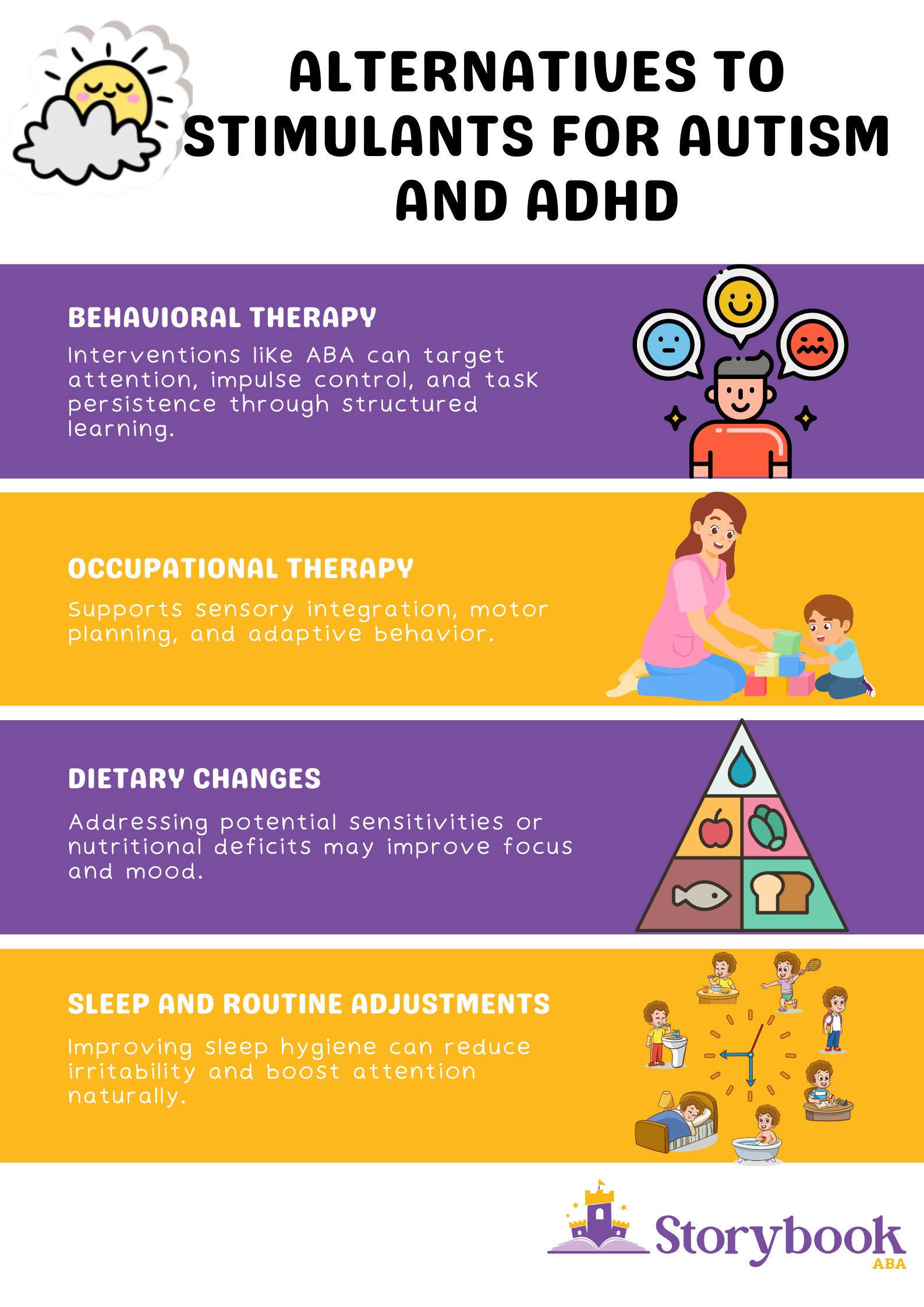
Choosing the right combination depends on the child’s individual needs and how their autism and ADHD symptoms interact.
How Can Parents Decide If Stimulant Medication Is Right?
The decision to use stimulant medication should be carefully considered, and it’s important for families to collaborate with a pediatrician, psychiatrist, or developmental specialist familiar with both autism and ADHD. A full diagnostic evaluation is essential to rule out other factors that may be contributing to inattention or behavioral issues, such as anxiety or sensory overload.
Additionally, behavioral interventions like ABA therapy should be explored first, particularly for younger children. Ongoing monitoring for changes—both improvements and potential side effects—ensures that the treatment plan remains effective and safe for the child. Through informed and collaborative decision-making, families can ensure their child receives the best support.
How Does ABA Therapy Fit into the Treatment Plan?
Even when stimulant medications are effective, they don’t teach the skills children need for long-term independence and success. That’s where Applied Behavior Analysis (ABA) comes in.
ABA focuses on shaping behavior through positive reinforcement, structured learning, and individualized goals. Whether a child is taking medication or not, ABA can help with the core developmental challenges of autism.
ABA therapy can support:
- Self-regulation and impulse control
- Social interaction skills
- Communication development
- Task completion and academic readiness
- Reducing disruptive behaviors
Medication might create the conditions for learning by helping a child stay focused, but it’s the teaching that builds lasting change. ABA provides the strategies to make that happen.

Empower Your Child with ABA Therapy in Maryland and Virginia
At Storybook ABA, we provide personalized ABA therapy in Maryland and Virginia to help children with autism thrive at home, school, and in the community. While stimulant medication may be part of the journey for some families, the foundation of lasting progress is built through evidence-based learning and support.
Our team works with parents to understand your child’s unique needs and behaviors. We build goals around attention, self-control, social skills, and more—all tailored for your child’s development.
Explore ABA therapy in Maryland and Virginia today. Let’s create a meaningful path forward, together. Contact us today to get started.