

Key Points:
- Vestibular autism refers to difficulties in how autistic individuals process movement and balance, often due to atypical vestibular system functioning.
- These challenges can affect coordination, posture, and body awareness, leading to behaviors like spinning or avoiding motion.
- Parents can support vestibular needs through tailored sensory strategies, physical activities, and ABA-informed routines.
Vestibular dysfunction in autism describes sensory processing challenges involving the body’s balance and movement system. Children and adults on the autism spectrum may experience hypersensitivity (over-responsiveness) or hyposensitivity (under-responsiveness) to vestibular input, causing significant effects on their motor coordination, body awareness, and daily comfort.
The vestibular system, located in the inner ear, helps us stay upright, move smoothly, and know where our body is in space. When vestibular processing is disrupted in autistic individuals, it can lead to unique needs, sensory-seeking behaviors, or discomfort with movement.
Is Vestibular Dysfunction Common in Autistic Individuals?
Yes, vestibular dysfunction is common in autistic individuals. Many experience challenges with balance, movement coordination, and spatial orientation due to differences in how the brain processes vestibular input.
These difficulties can impact daily tasks like walking, climbing, or riding a bike, and may contribute to behaviors such as spinning, rocking, or avoiding playground equipment. Vestibular challenges are often addressed through sensory integration strategies and support from occupational therapists.
What Is the Vestibular System, and Why Does It Matter in Autism?
The vestibular system is responsible for balance, posture, spatial orientation, and coordination. It works closely with the visual and proprioceptive systems to help regulate movement. In autistic individuals, this system may function differently, leading to either heightened or reduced sensitivity.
These vestibular differences can manifest in several ways:
- Fear or avoidance of swings, stairs, or escalators
- Constant spinning, rocking, or jumping
- Poor balance or frequent stumbling
- Delays in motor milestones like walking or climbing
Understanding how the vestibular system influences autism-related behaviors can help parents and caregivers offer appropriate supports and environments.
What Are the Signs of Vestibular Challenges in Autism?
Vestibular autism can be difficult to detect unless you’re looking for specific movement behaviors or patterns of discomfort. These signs can range from subtle to very obvious and may change over time.
Common signs of vestibular dysfunction include:
1. Frequent Spinning
Children may spin themselves or objects repeatedly to seek vestibular input and help regulate their sense of balance and motion.
2. Rocking Back and Forth
Repetitive rocking during quiet times often signals a need for self-generated movement to stay calm or focused.
3. Constant Movement or Fidgeting
Difficulty sitting still or frequent pacing may reflect an under-responsive vestibular system seeking continuous stimulation.
4. Avoidance of Heights or Jumping
Children who are hypersensitive to motion may resist climbing, jumping, or using playground equipment due to discomfort or fear.
5. Motion Sickness or Elevator Discomfort
Feeling dizzy, nauseous, or distressed in elevators, cars, or escalators suggests difficulty processing changing movement and position.
6. Poor Posture or Slouching
Low muscle tone and weak vestibular input can affect core stability, leading to slouching or difficulty maintaining upright posture.
7. Difficulty With Stairs or Uneven Surfaces
Navigating stairs or bumpy ground may be hard due to poor spatial awareness and balance linked to vestibular challenges.
These behaviors are often part of the body’s attempt to regulate its sensory input. For example, a child who spins may be seeking more movement input, while another who avoids motion might be hypersensitive to it.
What Causes Vestibular Differences in Autism?
Vestibular processing challenges in autism are believed to stem from neurological differences in how the brain integrates sensory input. The exact cause isn’t fully known, but research shows that the brains of autistic individuals may process information from the inner ear differently.
This sensory imbalance can affect coordination, balance, and even emotional regulation. Some contributing factors include:
- Delayed maturation of the vestibular system
- Inefficient sensory integration between systems (e.g., visual, tactile, proprioceptive)
- Over- or under-reactivity in brain areas responsible for sensory modulation
These root causes vary by individual and often overlap with other forms of sensory processing disorder.

How Does Vestibular Input Affect Daily Life?
Vestibular input plays a role in nearly every aspect of movement and motor planning. For an autistic child or adult with vestibular challenges, the world can feel unpredictable or physically overwhelming.
Daily challenges may include:
1. Navigating Crowded Spaces
Vestibular challenges can make walking through busy areas overwhelming, as movement and balance demands increase unpredictably in social or public settings.
2. Difficulty With Sports or Gym
Activities that involve running, jumping, or coordination may be avoided or cause distress due to impaired balance and spatial awareness.
3. Discomfort in Vehicles or Transit
Cars, buses, or trains can trigger motion sensitivity, leading to nausea, anxiety, or avoidance of travel altogether.
4. Fatigue From Constant Movement
Some individuals move frequently to feel balanced, which can lead to physical exhaustion and difficulty sustaining attention or calm.
5. Trouble With Self-Care Tasks
Balance issues can make dressing, bathing, or grooming physically challenging, increasing dependence and reducing confidence in daily routines.
6. Impact on Social and Academic Life
Struggles with movement and regulation may appear as restlessness or withdrawal, affecting peer interactions and participation in classroom activities.
In social or academic settings, this can result in frustration, withdrawal, or behaviors that appear as hyperactivity, but are really attempts to self-regulate.
What Activities Help With Vestibular Processing in Autism?
When vestibular processing is disrupted, targeted sensory activities can be a powerful tool. These activities offer structured movement input that helps regulate the brain and body, improving balance, coordination, and emotional regulation.
Helpful vestibular activities include:
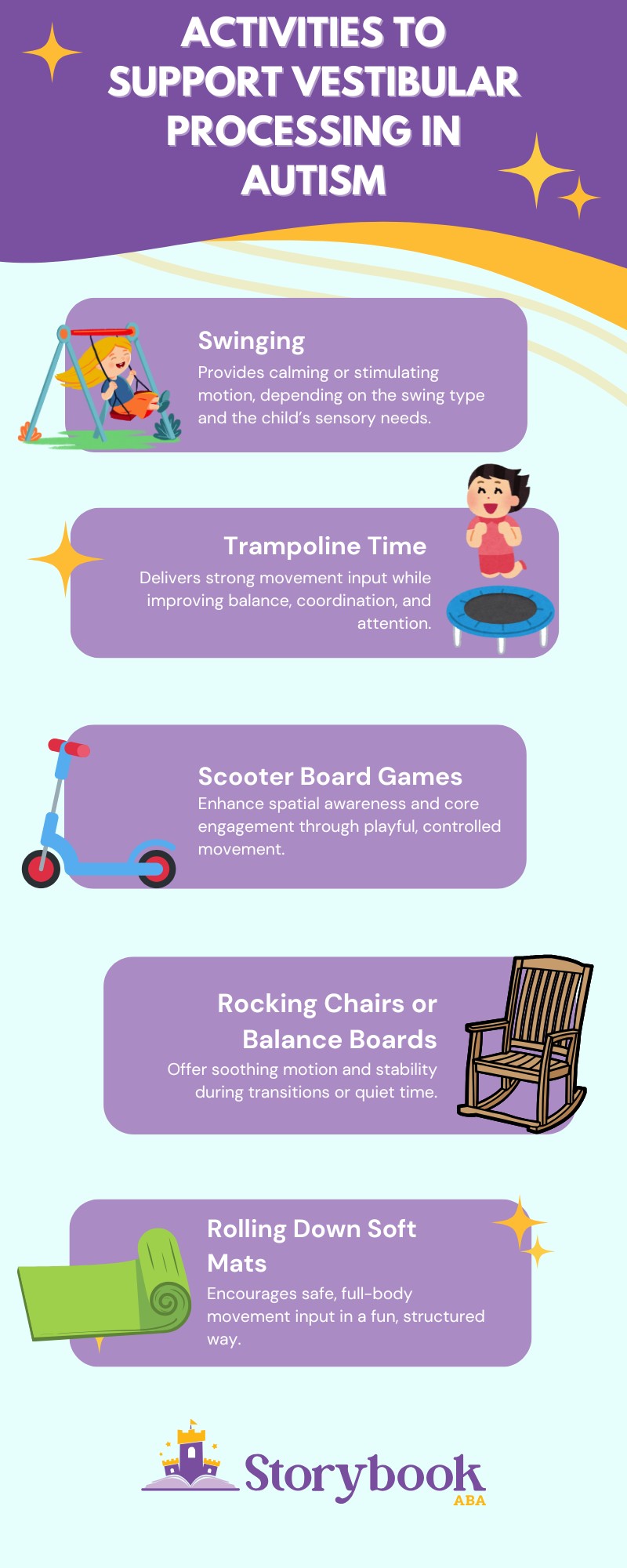
These activities can be adapted for age, preference, and sensory profile. Always introduce new movements gently and observe your child’s reactions closely.
Can Vestibular Activities Help With Emotional Regulation?
Yes. Vestibular input is directly connected to the brain’s arousal systems. Activities that target the vestibular system can help children and adults regulate mood, attention, and energy levels.
For example, a child who spins repeatedly may be trying to calm their nervous system or focus their body. When we offer structured vestibular input, it helps prevent these behaviors from becoming disruptive or unsafe.
Using vestibular activities strategically—before school, during transitions, or as part of a bedtime routine—can dramatically improve self-regulation and overall well-being.
Can ABA Therapy Support Vestibular Needs?
Yes, ABA therapy can support vestibular needs by incorporating movement breaks, teaching self-regulation strategies, and reinforcing safe sensory-seeking behaviors. While not a sensory therapy, ABA can align with occupational therapy goals.
Therapists may use data to identify patterns, create structured routines, and collaborate with caregivers to ensure consistent support. When paired with sensory-informed practices, ABA helps individuals with vestibular challenges participate more confidently in daily activities.
Create Structure and Support With ABA Therapy
Storybook ABA specializes in providing personalized, evidence-based ABA therapy in Maryland and Virginia. For families navigating sensory challenges like vestibular autism, our approach integrates functional strategies that honor each child’s unique profile.
We help children build life skills, emotional regulation, and communication while respecting their sensory needs. Whether your child seeks constant motion or avoids movement altogether, our therapy plans are built to support safe, structured development.
Contact us today to learn how we can partner with your family. Let’s work together to help your child thrive with confidence and joy!